
Water damage guide
Water Heater Leaking From the Bottom: Causes and What to Do
Why a water heater leaks from the bottom, how to tell a valve leak from a failed tank, safe shut-off steps, and when the heater needs replacing.
Short answer
Short answer: Water Heater Leaking From the Bottom: Causes and What to Do
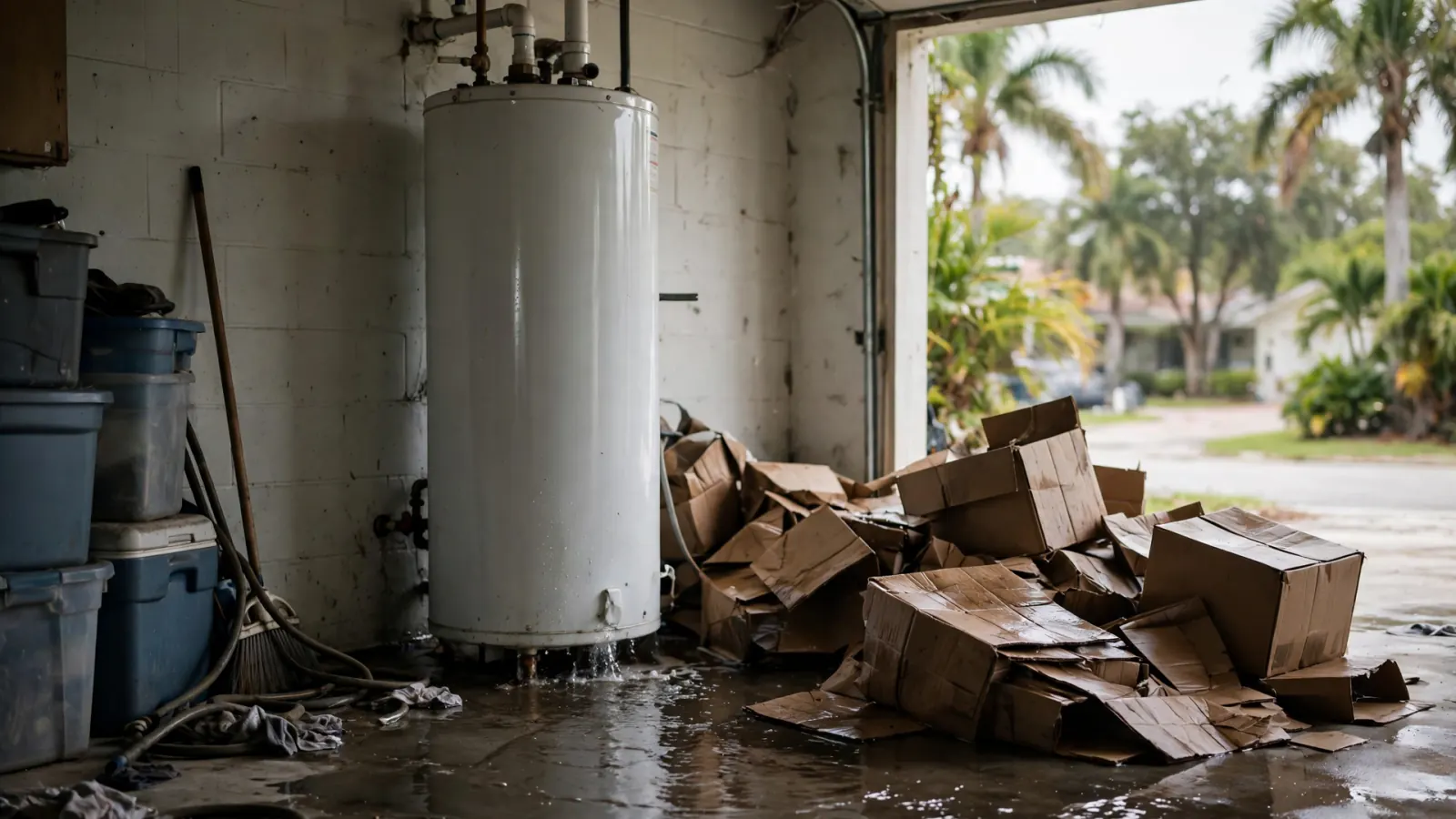
Water at the bottom of a tank water heater comes from one of three places: the drain valve, water running down from the temperature and pressure (T&P) relief valve or pipe fittings, or the tank itself. A leaking drain valve or relief valve can often be repaired, but water seeping from the tank body usually means internal corrosion and the heater needs to be replaced. Turn off the power or gas and the cold-water supply first.
- Call (772) 218-9226
- Water Heater & Appliance Leaks
- Water Removal & Extraction
- Structural Drying
In this guide
- 1Do this first
- 2Find where the water is coming from
- 3Why tanks fail with age
- 4About the temperature and pressure relief valve
- 5Repair or replace?
- 6Prevent the next leak
- 7Cleaning up the water damage
Do this first
- Turn off the power at the breaker (electric heater) or set the gas control to off or pilot (gas heater).
- Close the cold-water supply valve on the pipe at the top of the heater.
- Keep away from hot water and electrical parts; let the tank cool before inspecting it.
- Move stored boxes and belongings away from the puddle, and soak up the water.
- If water has spread under walls, flooring or into the garage, call a restoration company to dry it.
Find where the water is coming from
Dry the area and the tank with towels, then watch where water reappears. Water often runs down the outside of the tank, so a leak at the bottom may actually start higher up.
| Where you see water | Likely cause | Usually |
|---|---|---|
| Dripping from the drain valve near the bottom | Valve not fully closed or a worn valve | Repairable |
| From the relief (T&P) valve or its discharge pipe | Valve opening due to pressure or temperature, or a worn valve | Needs a plumber to diagnose; do not cap the pipe |
| Running down from fittings at the top | Loose or corroded connections | Repairable |
| Seeping from under the tank or through rust spots | Corroded inner tank | Replace the water heater |
Why tanks fail with age
Storage tank water heaters are commonly expected to last about 10 to 15 years, and ENERGY STAR advises owners of a heater more than 10 years old to plan its replacement before it fails. Over time, sediment settles at the bottom of the tank and the steel can corrode from the inside. Once the tank itself leaks, it cannot be reliably repaired.
In many Florida homes the water heater sits in the garage, where a failing tank can soak stored items and drywall before anyone notices.
About the temperature and pressure relief valve
The T&P relief valve is a safety device that releases water if temperature or pressure in the tank gets too high. Water from it is a warning sign, not just a nuisance. Never cap, plug or remove the discharge pipe. Have a licensed plumber check the temperature setting, the valve and, where required, the expansion tank.
Dealing with this right now?
Call to be connected with an independent restoration company serving Fort Pierce and St. Lucie County.
Repair or replace?
- Repair: a dripping drain valve, loose fittings or a worn relief valve on an otherwise sound tank.
- Replace: any leak from the tank body, visible rust through the tank, or a heater near the end of its typical life with repeated problems.
- Check the warranty and the manufacturer's label before paying for repairs on an older unit.
Prevent the next leak
- Flush sediment from the tank as the manufacturer recommends, often once a year.
- Have the anode rod inspected periodically.
- Install a drain pan under the heater with a drain line where possible.
- Add a water leak sensor or automatic shut-off valve near the heater.
- Note the installation date so you can plan replacement before it fails.
Cleaning up the water damage
Water heater leaks often run for a while before anyone notices, soaking drywall, baseboards and stored belongings. Water from a tank leak is clean water at first, which means drywall and flooring can often be dried in place if caught quickly. Ask for moisture readings to make sure nothing stays wet behind the walls.
Related services
Services that go with this guide
Water Heater & Appliance Leak Water Damage
Leaking water heaters, washers, dishwashers and ice makers in Fort Pierce: shut-off steps, hidden damage under cabinets, drying and insurance..
Emergency Water Removal & Extraction
Emergency water extraction in Fort Pierce: what to do first, how standing water is removed from tile, carpet and slabs, and how drying starts..
Structural Drying & Dehumidification
How structural drying works in Fort Pierce's humid climate: air movers, dehumidifiers, daily moisture readings and drying logs insurers expect..
Guides
Keep reading
- Are Water Leak Detectors Worth It?Water leak sensors, smart alarms and automatic shut-off valves compared, where to place them in a Florida home, and who benefits most.
- How to Shut Off Your Main Water ValveFind the main water shut-off in Fort Pierce and Port St. Lucie homes, learn how gate and ball valves close, and what to do when one is stuck.
FAQ
Questions people ask
Still unsure? Describe the problem on the phone and you will be connected with a restoration company serving your area.
Why is my water heater leaking from the bottom?
Usually a leaking drain valve, water running down from the relief valve or fittings, or a corroded tank.
Is a water heater leaking from the bottom dangerous?
The water can damage the home, and a relief valve releasing water can signal excess temperature or pressure. Turn off power or gas and call a plumber.
Can a leaking water heater be repaired?
Valve and fitting leaks often can. A leak from the tank body usually means replacement.
How long do water heaters last?
Tank water heaters are commonly expected to last about 10 to 15 years. ENERGY STAR suggests planning a replacement once a heater passes 10 years.
How do I turn off a leaking water heater?
Turn off the power or gas, then close the cold-water supply valve at the top of the tank.
Should I drain a leaking water heater?
If the tank is failing, a plumber may drain it to stop the leak. Let it cool first and follow the manufacturer's instructions.
Why is water coming from the relief valve pipe?
The valve may be releasing pressure or temperature, or it may be worn. Have a plumber diagnose it and never cap the pipe.
Does homeowners insurance cover a leaking water heater?
Policies often cover sudden water damage but not the heater itself or long-term leaks. Check your policy.
How do I prevent water heater leaks?
Flush sediment as recommended, inspect the anode rod, install a drain pan and a leak sensor.
What is a water heater drain pan?
A shallow pan under the heater that catches small leaks, ideally with a drain line.
Can a water heater leak cause mold?
Yes, if drywall or flooring stays wet for more than a day or two.
Is condensation on a water heater normal?
Some gas heaters can form condensation, but a steady puddle should be checked.
Should I replace an old water heater before it leaks?
Many homeowners plan replacement as the heater approaches the end of its typical life.
Who fixes the water heater itself?
A licensed plumber. A restoration company handles drying and repairing the water damage.
Who dries water heater leak damage in Fort Pierce?
Call the number on this page to be connected with an independent restoration company serving Fort Pierce.
Talk to a restoration company serving Fort Pierce
Free referral. No obligation to hire.