Skip to content

Fort Pierce, FL restoration help

(772) 218-9226
Water Damage Fort Pierce FL
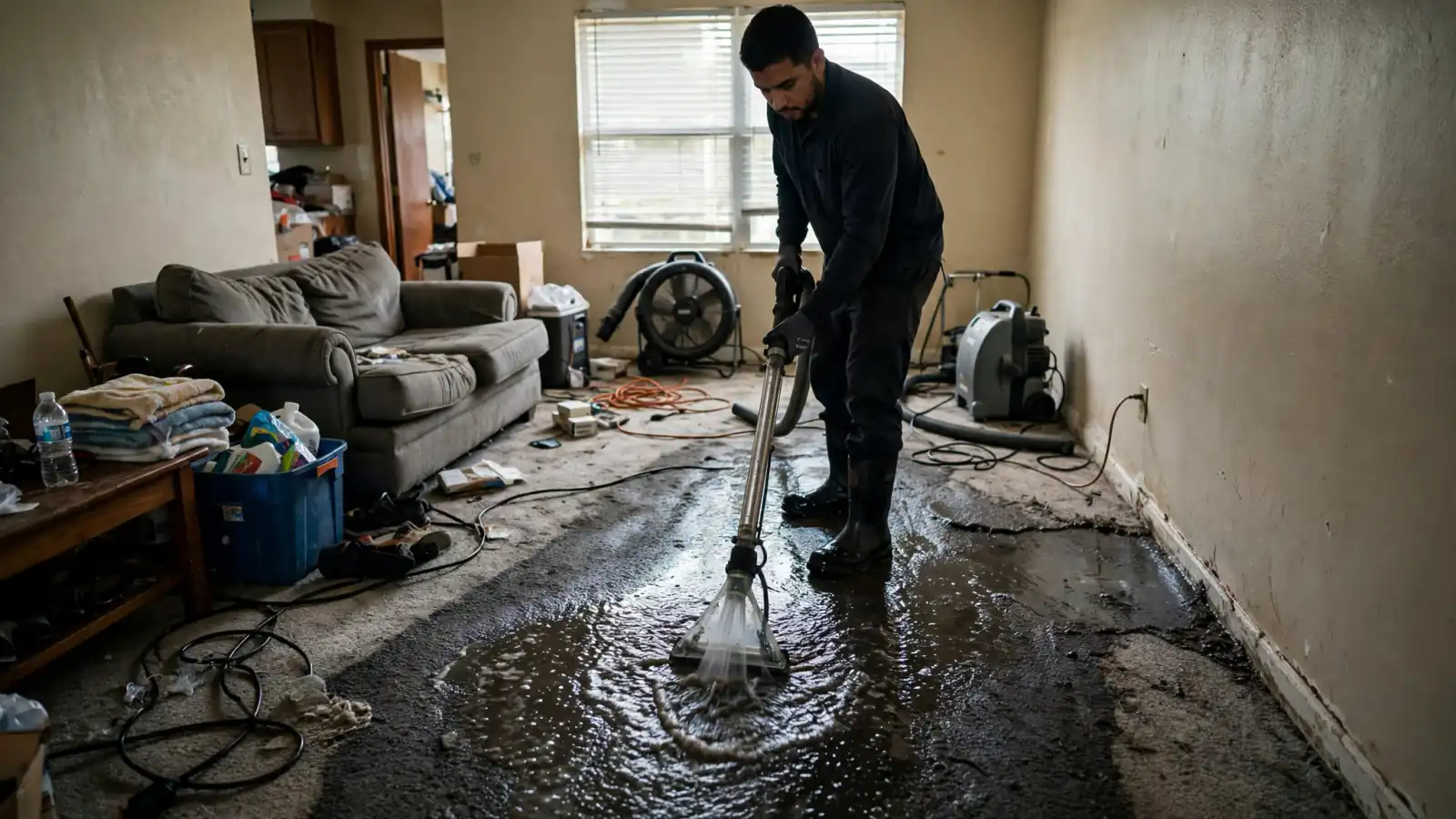
Technician extracting standing water from a living room floor

Urgent · Fort Pierce, FL

Emergency Water Removal & Extraction in Fort Pierce

Emergency water removal is the first stage of water damage restoration: a crew uses truck-mounted or portable extraction units, submersible pumps and weighted extraction tools to pull standing and absorbed water out of floors, carpet and pad before drying equipment goes in. The faster extraction starts, the less water wicks into drywall, cabinets and subfloors.

Free referral · Call now(772) 218-9226Free referral to an independent restoration company
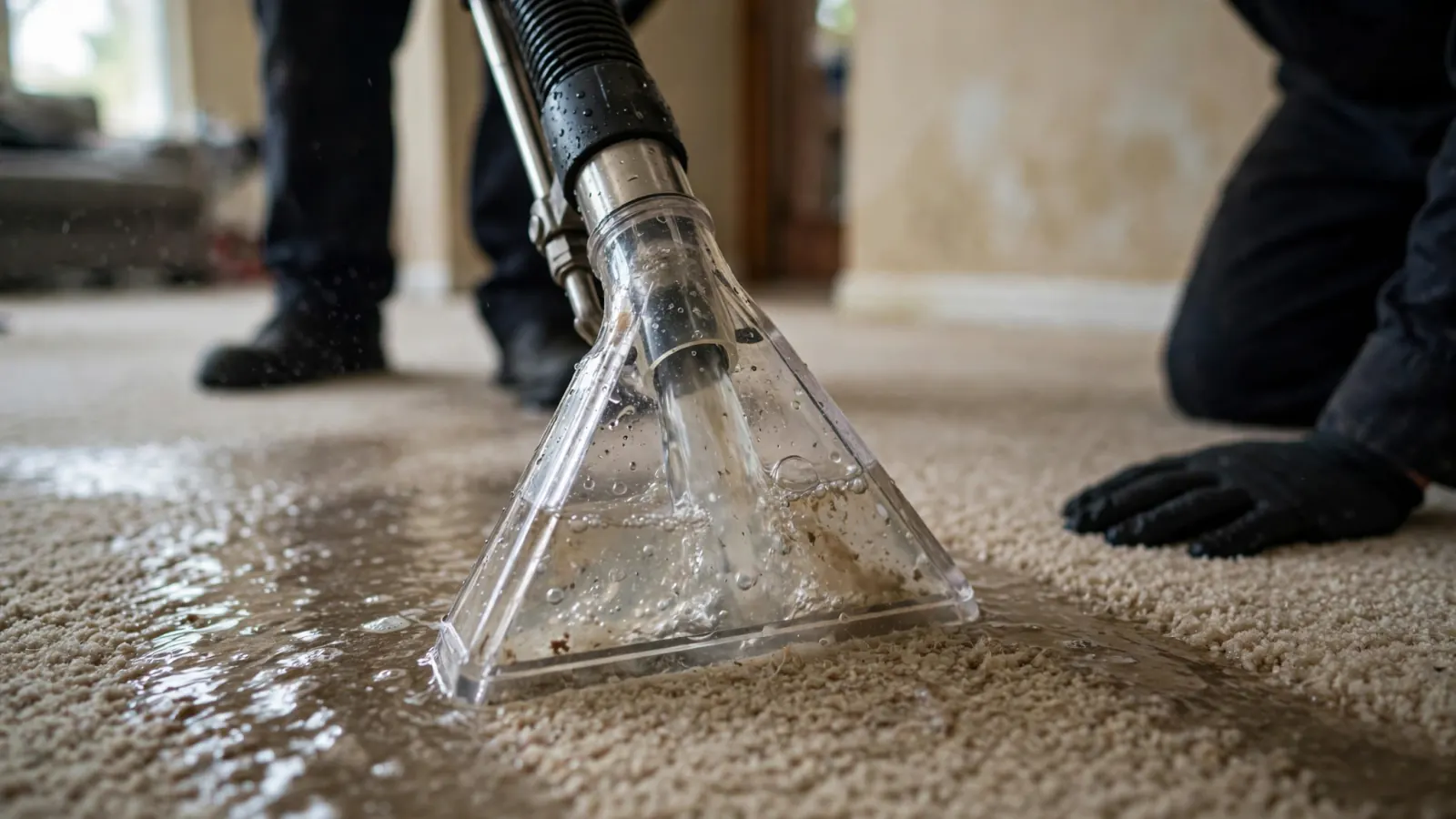
Extraction wand pulling water out of soaked carpet

Overview

Emergency Water Removal & Extraction explained

Most of the water in a typical indoor flood is removed by extraction, not by fans. Air movers and dehumidifiers are designed to evaporate moisture that is left behind in materials: they are far slower at dealing with water that is still pooled on tile or soaked into carpet pad. That is why restoration companies treat extraction as the urgent step.

In Fort Pierce, the call usually comes after a supply line or water heater fails, after an air handler pan overflows, or after heavy rain finds its way through a roof or slider. Our referral line connects you with an independent restoration company that serves St. Lucie County; the company, not this website, performs the work, quotes the job and carries the licenses and insurance.

Warning signs

Signs you need water removal & extraction help

  • 01

    Water pooled on tile, laminate or wood floors

  • 02

    Carpet that squishes underfoot or a pad that stays wet after the surface looks dry

  • 03

    Water running from under a vanity, dishwasher, washing machine or water heater

  • 04

    Wet baseboards or drywall that is darkening from the floor up

  • 05

    Water entering through a sliding door, garage or threshold during a storm

Step by step

How the work is done

What an independent restoration crew typically does, from the first call to a verified dry structure.

  1. 1

    Stop the source

    Shut off the main water valve or the fixture valve, and switch off power to wet areas if it is safe to reach the breaker panel. If water is coming from outside, the crew will focus on removal once the storm source has eased.

  2. 2

    Inspection & moisture mapping

    The technician walks the affected rooms with moisture meters and often a thermal camera to find where water has travelled: under cabinets, behind baseboards and into adjoining rooms.

  3. 3

    Extraction

    Truck-mounted or portable extractors remove water from carpet and pad; submersible pumps handle deep water. Weighted or ride-on extraction tools pull far more water from carpet than surface wands.

  4. 4

    Remove what cannot be saved

    Saturated carpet pad, swollen particleboard and contaminated materials are usually removed and documented with photos for the insurance file.

  5. 5

    Set up drying

    Once bulk water is gone, the crew places air movers and dehumidifiers and starts daily moisture readings: see structural drying.

Before & after

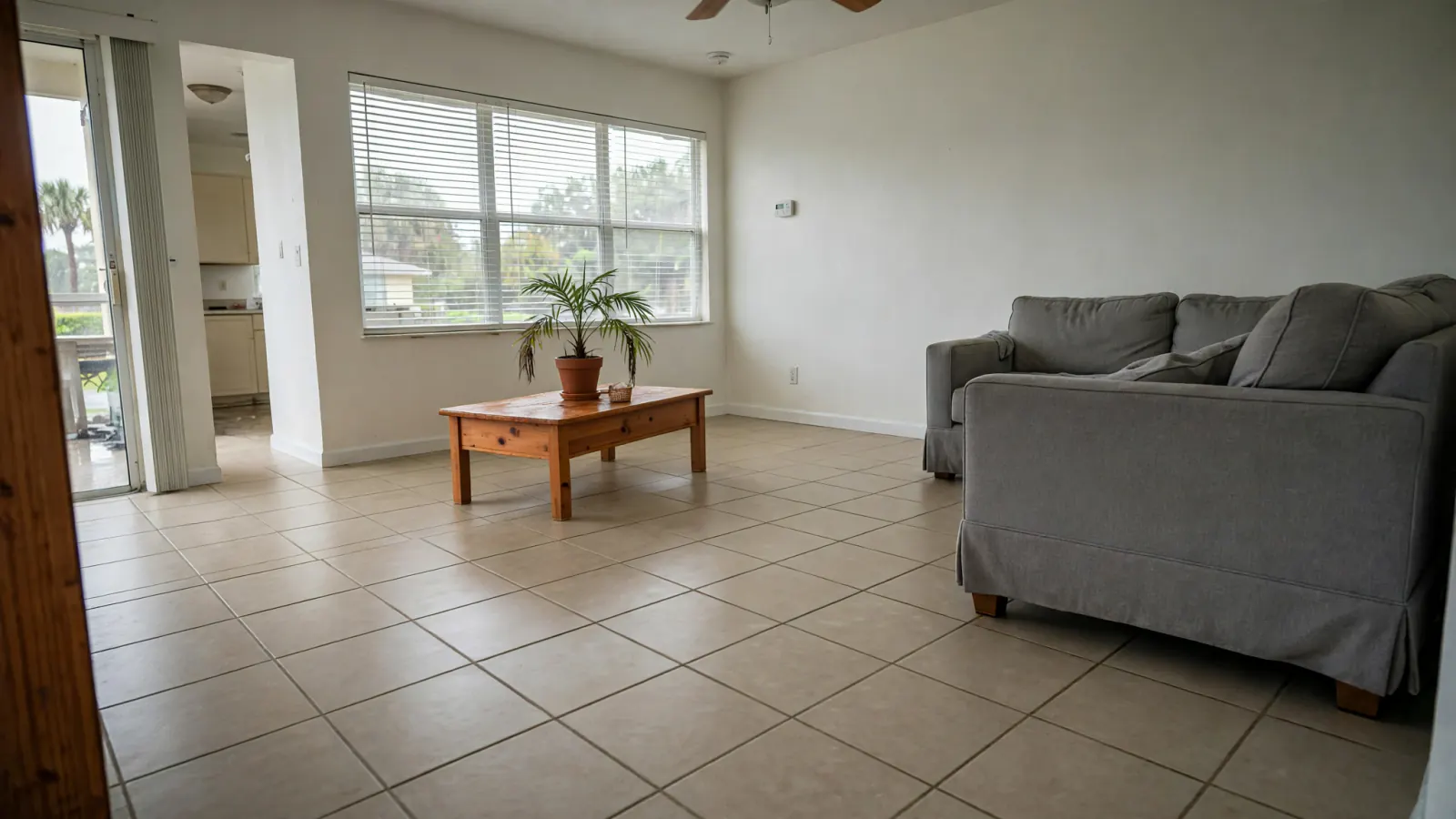
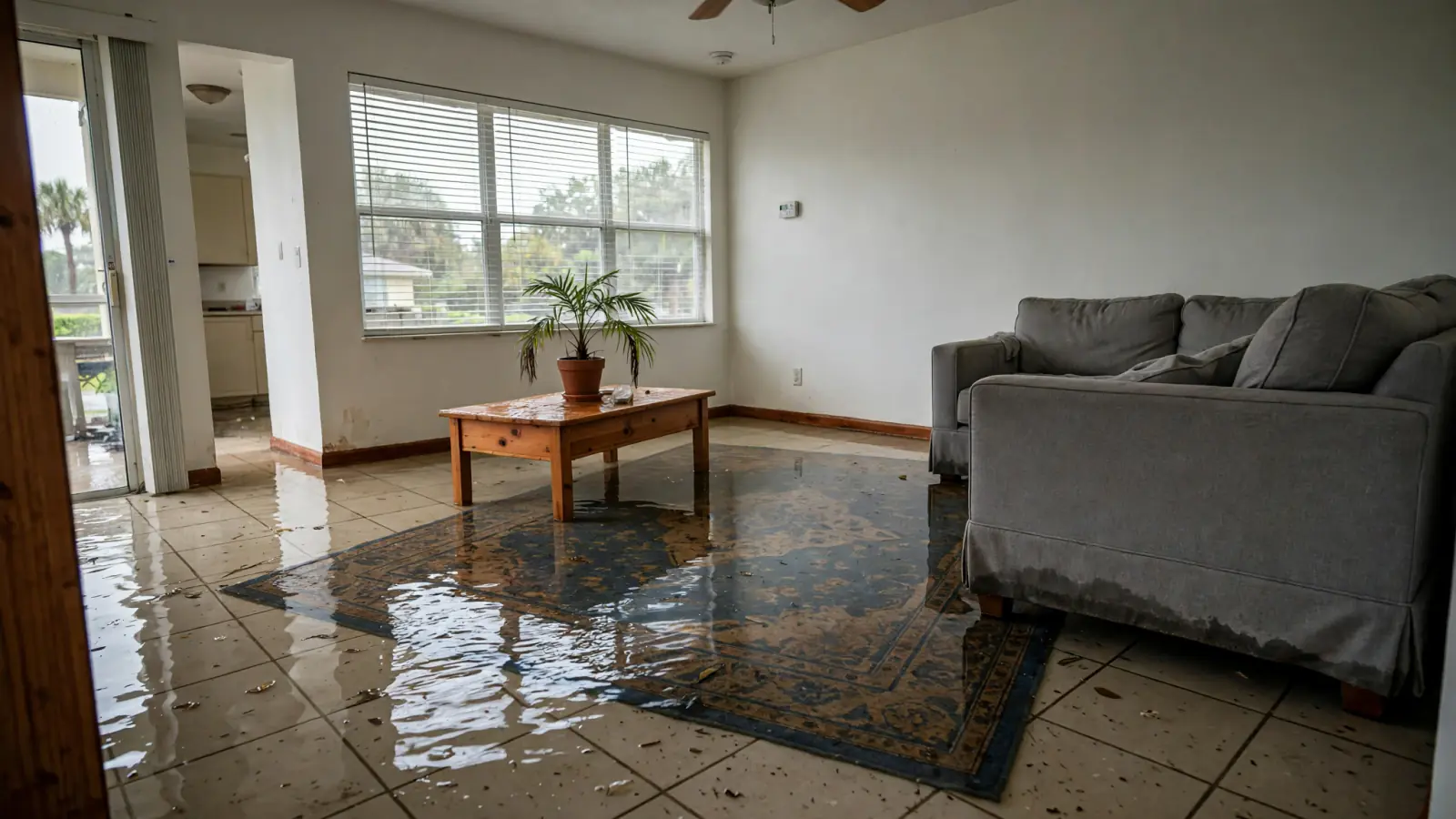
Before and after: water removal & extraction

An example of water removal & extraction work, from the damaged room to the finished repair. The independent company you're connected with will explain its own plan for your property.

Drag the handle to compare

After: The same living room with a dry tile floor after extraction
Before: Standing water across a tile living room floor and a soaked rug
BeforeAfter
Drag the handle or use the buttons to compare.

Water still coming in? Close the main valve, then call.

The first hours decide how much has to be torn out. A local restoration company can extract and start drying.

Straight answers

Water Removal & Extraction: answers for Fort Pierce homeowners

?

Who removes water from a flooded house in Fort Pierce?

Water damage restoration companies do. They bring extraction units, pumps and drying equipment, and they document the damage for insurance. A plumber stops a leaking pipe but usually does not dry the house. Our referral line connects you with an independent restoration company serving Fort Pierce.

?

Should I remove wet carpet after flooding?

If the water came from outside or from a sewer line, the carpet and pad are generally discarded. If it was clean water from a supply line and you act within a day or two, the carpet can often be extracted and dried in place, with only the pad replaced. Photograph it before anything is removed.

?

How quickly should I respond to water damage?

Immediately. Stop the water and start extraction as soon as it is safe. Materials that stay wet beyond roughly 24 to 48 hours are more likely to need replacement and to support mold, especially in a humid climate like Fort Pierce's.

Cost factors

What affects the cost

No honest company can price water damage without measuring it. These are the factors that move the number on a Fort Pierce job.

Read the Fort Pierce cost guide

Square footage affected

Extraction and equipment are priced largely by area and by how many rooms the water reached.

Water category

Clean supply-line water (Category 1) costs less to handle than gray (Category 2) or sewage/flood water (Category 3), which requires removal of porous materials and more protective equipment.

Flooring type

Carpet and pad can sometimes be dried in place; laminate and engineered wood often trap water underneath and are usually removed.

After-hours response

Nights, weekends and holidays can carry emergency-service rates. Ask before work begins.

Time since the leak

Water that has sat for a day or more has usually wicked into walls and cabinets, which increases demolition and drying time.

Insurance & details

Water extraction and your insurance claim

Insurers typically want to see what the loss looked like before cleanup: the source of the water, how far it spread and what was removed. Take wide photos of every affected room, close-ups of the source, and a short video walking through the house before the crew starts. The restoration company should add its own moisture readings, a sketch of the wet area and photos of materials it removes.

For Florida residential and commercial property policies issued on or after January 1, 2023, a contractor generally cannot take an assignment of your post-loss insurance benefits. You remain the policyholder making the claim. Read any work authorization carefully and ask how billing will be handled before signing.

What a typical first day looks like

On a typical clean-water loss, the first visit covers inspection, extraction, removal of unsalvageable materials such as carpet pad, and setup of air movers and dehumidifiers. Follow-up visits, usually daily, check readings and adjust equipment. Expect the equipment to stay for several days, and ask for a copy of each day's readings.

If the water came from outside the house, from a sewer line, or sat for several days, expect more removal and a longer job. Those losses are treated as contaminated water, and porous materials it touched are usually removed rather than dried.

Safety first

Do not walk into a room where water may be in contact with outlets, extension cords or appliances until power is off. Treat flood water and any water from a toilet overflow or sewer line as contaminated.

Call (772) 218-9226
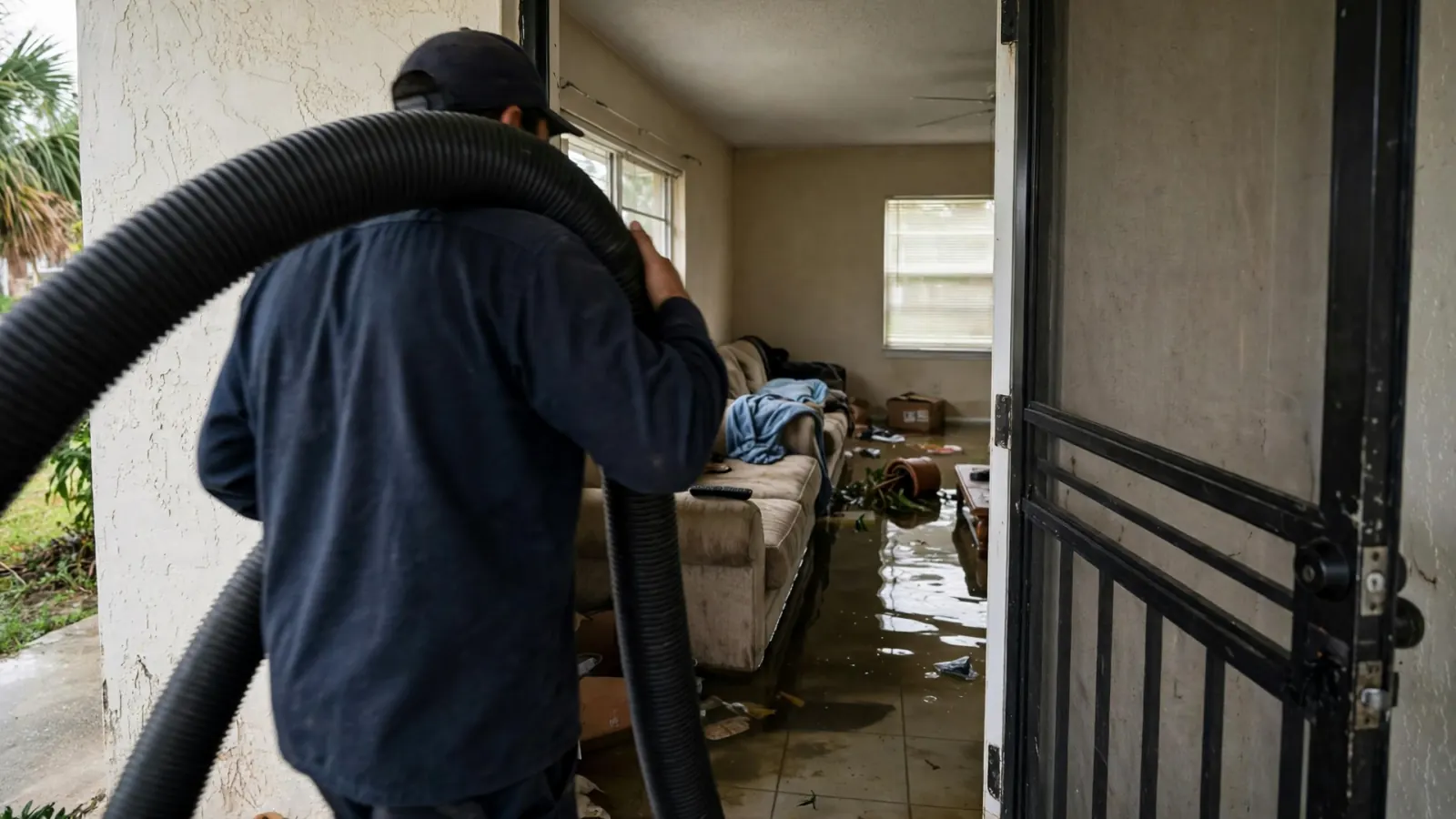
Technician carrying an extraction hose into a house

On site

What to expect when the crew arrives

Shut off the main water valve or the fixture valve, and switch off power to wet areas if it is safe to reach the breaker panel. If water is coming from outside, the crew will focus on removal once the storm source has eased.

The technician walks the affected rooms with moisture meters and often a thermal camera to find where water has travelled: under cabinets, behind baseboards and into adjoining rooms.

Fort Pierce context

Water removal in Fort Pierce homes

Many Fort Pierce homes are single-story slab-on-grade construction with tile or laminate floors, so water spreads quickly from room to room rather than draining into a basement. That makes the first few hours especially important: water that reaches drywall begins wicking upward.

During tropical systems and summer downpours, crews across the Treasure Coast get busy at the same time. If you are calling during a regional event, expect triage: active leaks and standing water are prioritised over drying checks.

Average rainfall

About 51 in/yr (1991–2020)

Main flood sources (City of Fort Pierce)

Summer downpours and tropical systems

Hurricane season

June 1 – November 30

Check your flood zone

FEMA Flood Map Service Center

Fort Pierce local guide

Related services

Often needed alongside this service

Structural Drying & Dehumidification

How structural drying works in Fort Pierce's humid climate: air movers, dehumidifiers, daily moisture readings and drying logs insurers expect..

Burst Pipe & Plumbing Leak Water Damage

Burst supply lines, slab leaks and hidden plumbing leaks in Fort Pierce: what to do first, how cleanup and drying work and what insurance often covers..

Flood & Storm Water Damage Cleanup

Flood and storm cleanup in Fort Pierce: hurricane and king-tide flooding, Category 3 water, what must be removed, flood insurance and drying..

Water Damage Repair & Reconstruction

After drying comes rebuilding: drywall, flooring, cabinets, paint and permits in Fort Pierce and St.

Before you call

Have this ready when you call

  1. 1Your ZIP code and whether it's a house, condo or business
  2. 2Where the water came from and whether it is still running
  3. 3Which rooms, floors or ceilings are wet, and for how long
  4. 4Whether the water is clean, gray (appliance) or sewage/flood water
  5. 5Your insurance company name if you plan to file a claim

Where we connect callers

Water Removal & Extraction in Florida and St. Lucie County

Referrals cover Fort Pierce and nearby St. Lucie County communities. The state page covers Florida rules; each city and area page explains local conditions and which government handles repair permits.

FAQ

Water Removal & Extraction: questions people ask

Still unsure? Describe the problem on the phone and you will be connected with a restoration company serving your area.

How fast should water be extracted after a leak?

As soon as possible. Industry guidance treats the first 24–48 hours as the window in which drying is most effective and before microbial growth becomes likely. The longer water sits, the more it wicks into drywall, cabinets and subfloors.

Can I just use a wet/dry vacuum?

A shop vac helps with small amounts of clean water, but it removes far less water from carpet and pad than professional extraction, and it does nothing for water trapped under laminate, cabinets or inside wall cavities.

Will my carpet have to be thrown out?

Not always. Carpet affected by clean water and extracted quickly can often be dried in place, though the pad is commonly replaced. Carpet soaked by sewage or flood water is normally discarded.

Do you do the extraction yourselves?

No. This website is a referral service. When you call or submit the form, you are connected with an independent restoration company that serves the area and performs and quotes the work.

What happens when the restoration crew arrives?

They check safety, find the source, take moisture readings and photos, extract standing water, remove unsalvageable materials and set up drying equipment. You should get an explanation of the plan and the expected cost drivers.

Can I stay in my house during water extraction?

Often yes for clean-water losses in part of the home. Sewage, flood water, electrical hazards or extensive demolition may make temporary relocation sensible. Ask the company.

Will the equipment be loud?

Air movers and dehumidifiers are noisy and run day and night. Keep them running unless the technician says otherwise.

What should I move before the crew arrives?

Electronics, documents, photos, rugs and anything small on the floor. Leave heavy furniture to the crew if it is in water.

Who removes standing water near me in Fort Pierce?

Water damage restoration companies with extraction equipment. Call the number on this page to be connected with an independent company serving Fort Pierce.

How much does emergency water extraction cost?

It depends on the wet area, water category, flooring and time of day. Expect an inspection and moisture readings before a reliable price.

Can water extraction be done at night?

Many restoration companies respond after hours. Night, weekend and holiday calls can carry emergency rates, so ask when you call.

Is it safe to walk on a wet carpet?

Only if power to the room is off and there are no outlets or cords in the water. Wet carpet can also be slippery and hide hazards.

How long does water extraction take?

Extraction itself usually takes hours, not days. Drying the structure afterwards typically takes several more days.

Do I need to move out during water removal?

Usually not for a clean-water leak in part of the home. Large losses, sewage or electrical damage may require temporary relocation.

Will my wood furniture be ruined by standing water?

Lift it onto blocks or foil right away. Solid wood often recovers; particleboard and veneer that swelled usually don't.

Other main services

Water, fire, mold and biohazard restoration

Fire Damage Restoration

Fire damage restoration across St.

Mold Remediation

Mold remediation across St.

Biohazard Cleanup

Biohazard cleanup across St.

Guides

Guides worth reading first

Talk to a restoration company about water removal & extraction

Free referral to an independent company serving Fort Pierce and St. Lucie County. No obligation to hire.

Call (772) 218-9226