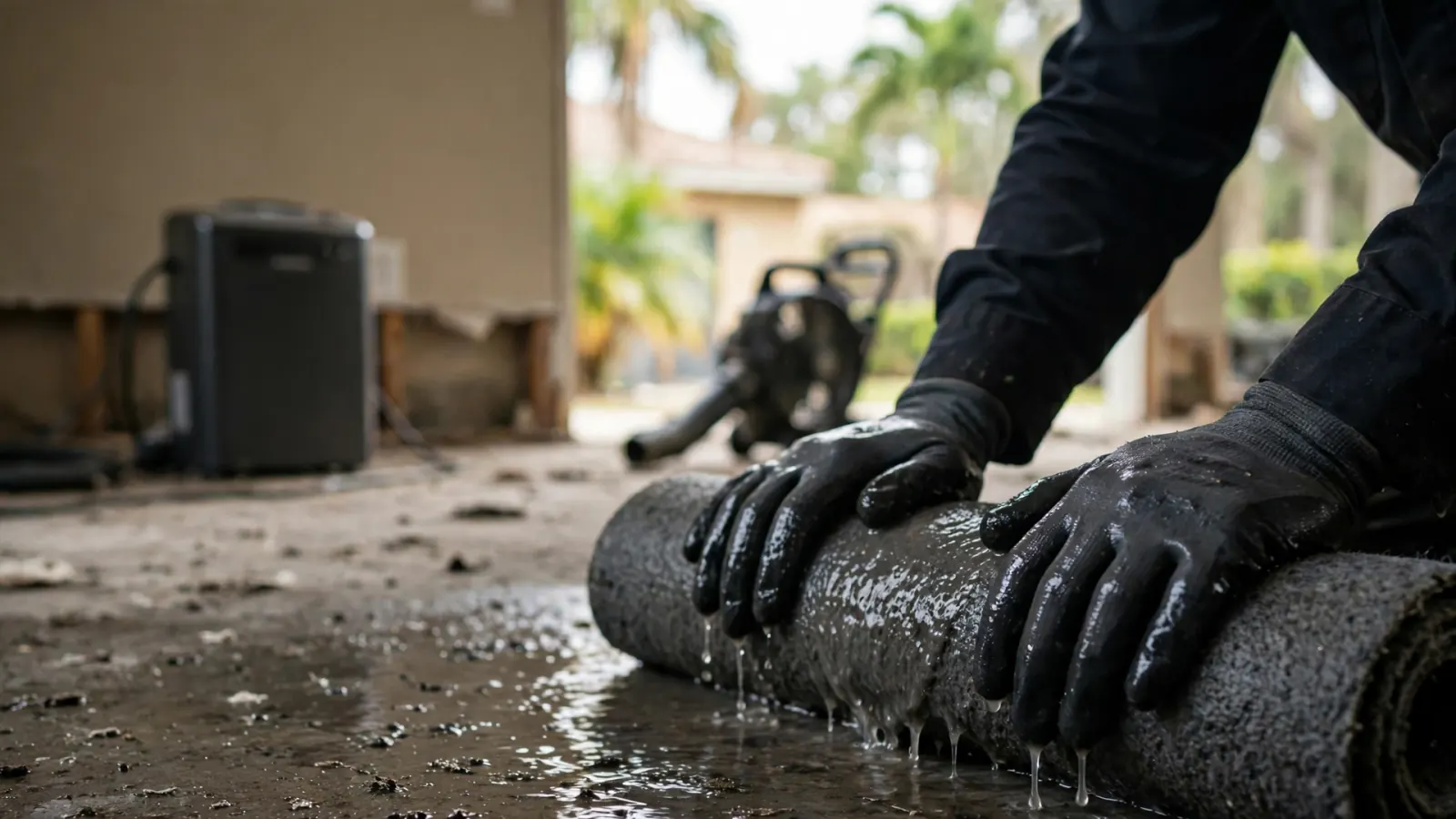
Is water mitigation the same as water removal?
+
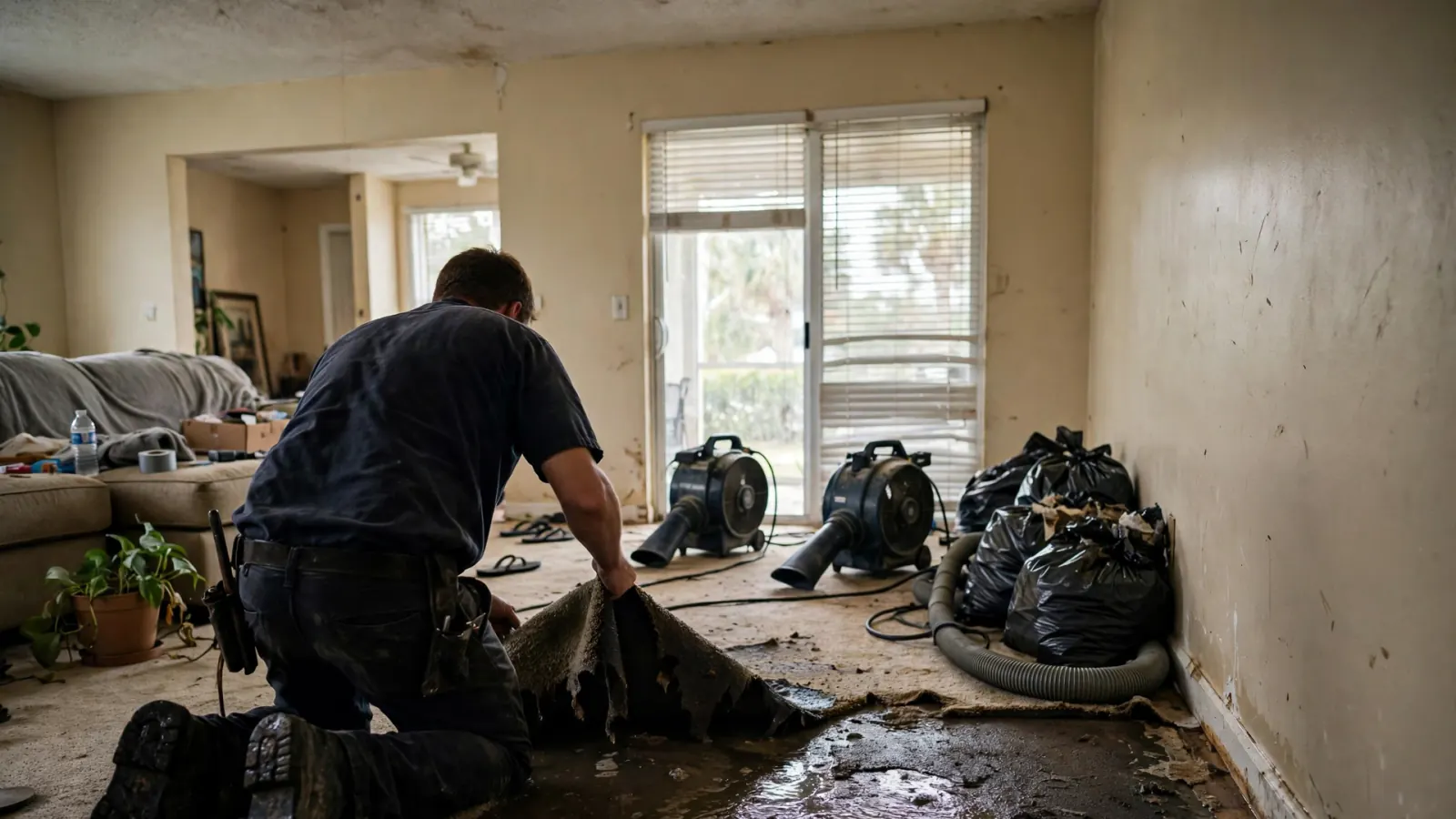
Water removal (extraction) is one step of mitigation. Mitigation also includes removing damaged materials, drying the structure and documenting moisture levels until the building is dry.
Can I do water mitigation myself?
+
Small clean-water spills on hard floors can be handled with towels and a wet vac. Water that reached carpet pad, drywall, cabinets or subfloors usually needs extraction equipment, dehumidifiers and moisture meters to dry fully.
Why did the crew remove drywall that looked fine?
+
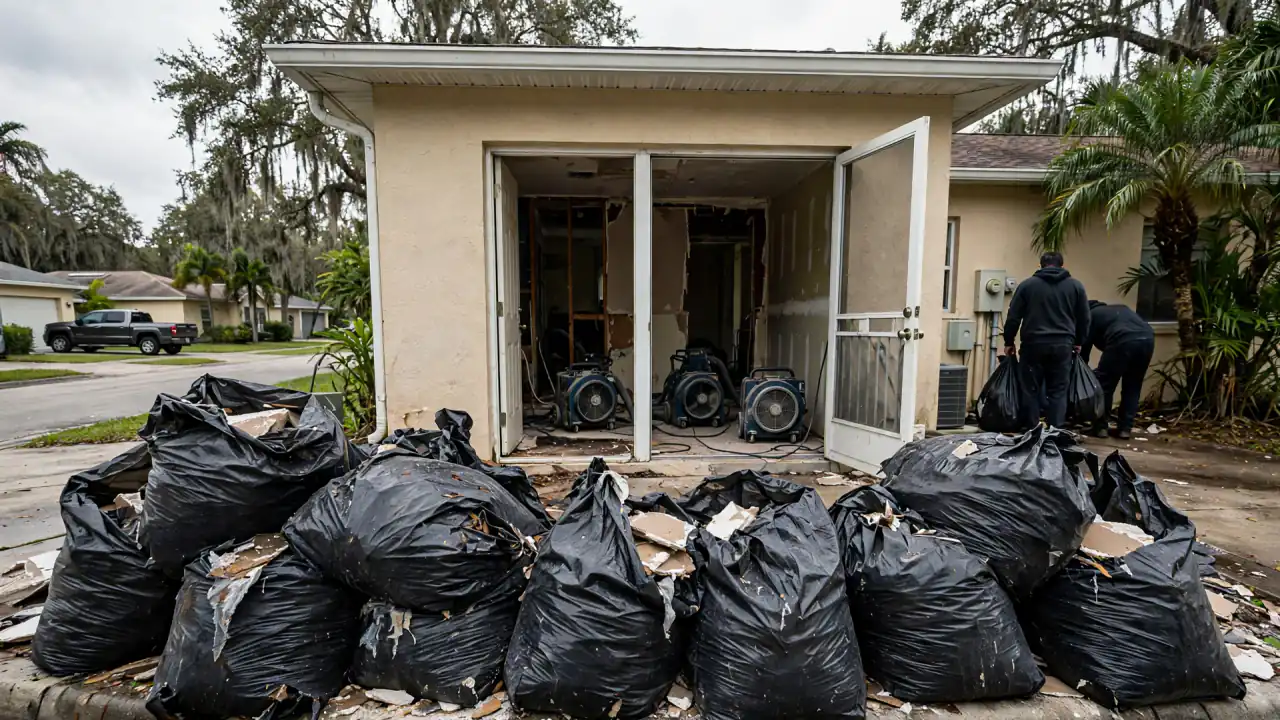
Drywall can be wet inside while the surface looks dry, and contaminated water makes porous materials unsalvageable. Moisture readings and the water category usually explain the decision; ask to see them.
Do I need mitigation if the leak was small?
+
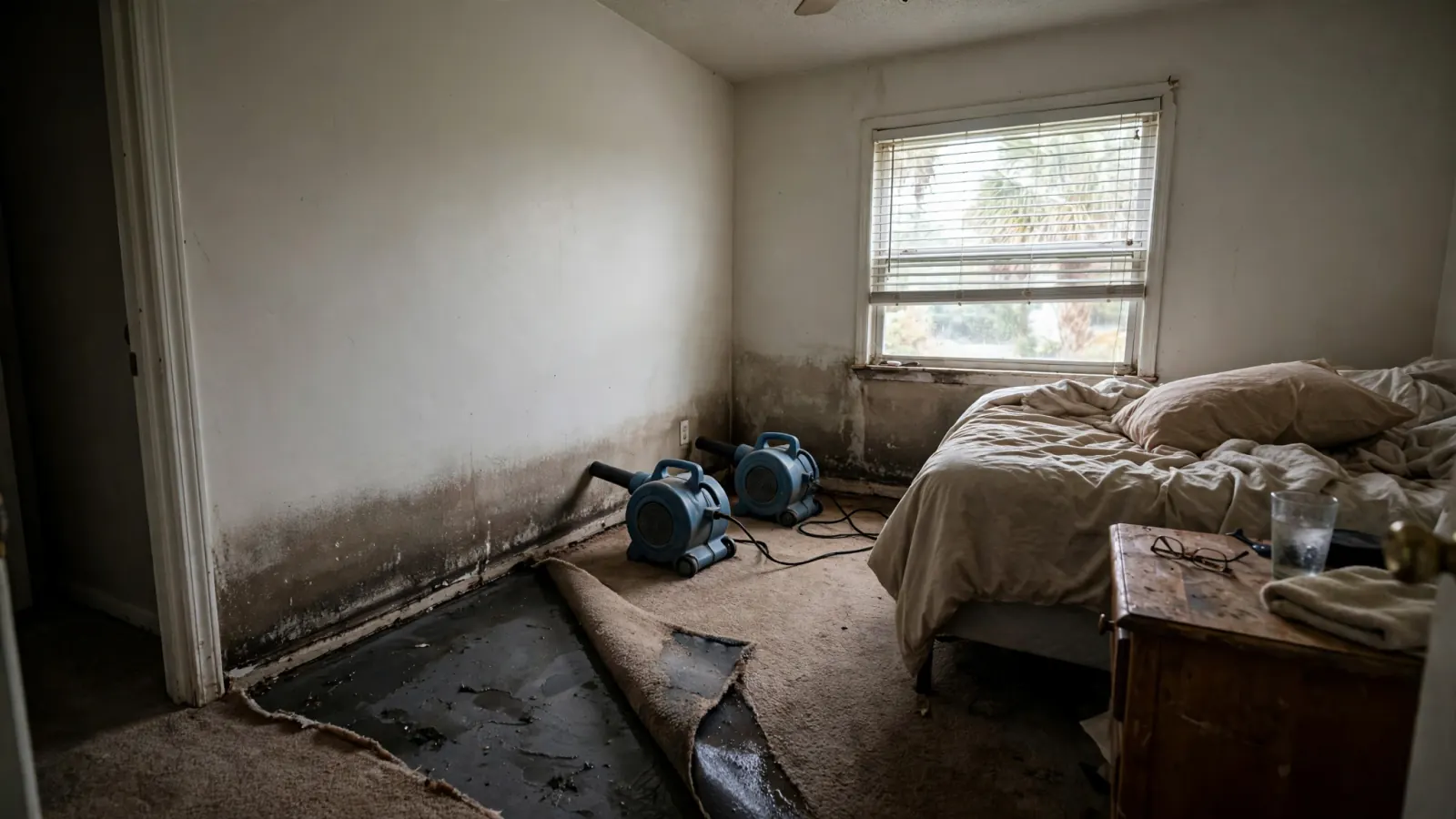
If water reached porous materials or stayed for more than a few hours, a moisture check is worthwhile. Small hidden leaks are a common cause of later mold.
What documents should I keep from mitigation?
+
Keep the photos, moisture map, daily drying logs, equipment counts and the itemized invoice. Insurers commonly ask for them.
Who does the rebuild after mitigation?
+
Either the same restoration company or a licensed general contractor. Rebuild work may require permits and Chapter 489 contractor licensing in Florida.
Can mitigation start before the adjuster visits?
+
Generally yes. Waiting can make the damage worse. Photograph everything first and keep removed materials or samples if your insurer asks.
Do you perform the mitigation?
+
No. This website is a referral service. The independent restoration company you are connected with performs, prices and documents the work.
What does water mitigation mean on my insurance claim?
+
The emergency work to stop the damage from spreading: extraction, removal of unsalvageable materials and drying.
How much does water mitigation cost?
+
It depends on wet area, water category, materials removed and drying days.
Who do I call for water mitigation in Fort Pierce?
+
A water damage restoration company. Call the number on this page.
Is mitigation required by my insurance policy?
+
Most policies expect you to take reasonable steps to prevent further damage.
How soon should mitigation start?
+
As soon as it's safe, ideally within hours of discovering the water.
What equipment is used in water mitigation?
+
Extractors, pumps, air movers, dehumidifiers and moisture meters.
Does mitigation include mold prevention?
+
Prompt drying and, where appropriate, antimicrobial treatment reduce the chance of mold.