
Water damage guide
Can Wet Carpet Be Saved?
When wet carpet can be dried and kept, when the pad or carpet must go, and how water source and drying speed decide it under EPA guidance.
Short answer
Short answer: Can Wet Carpet Be Saved?
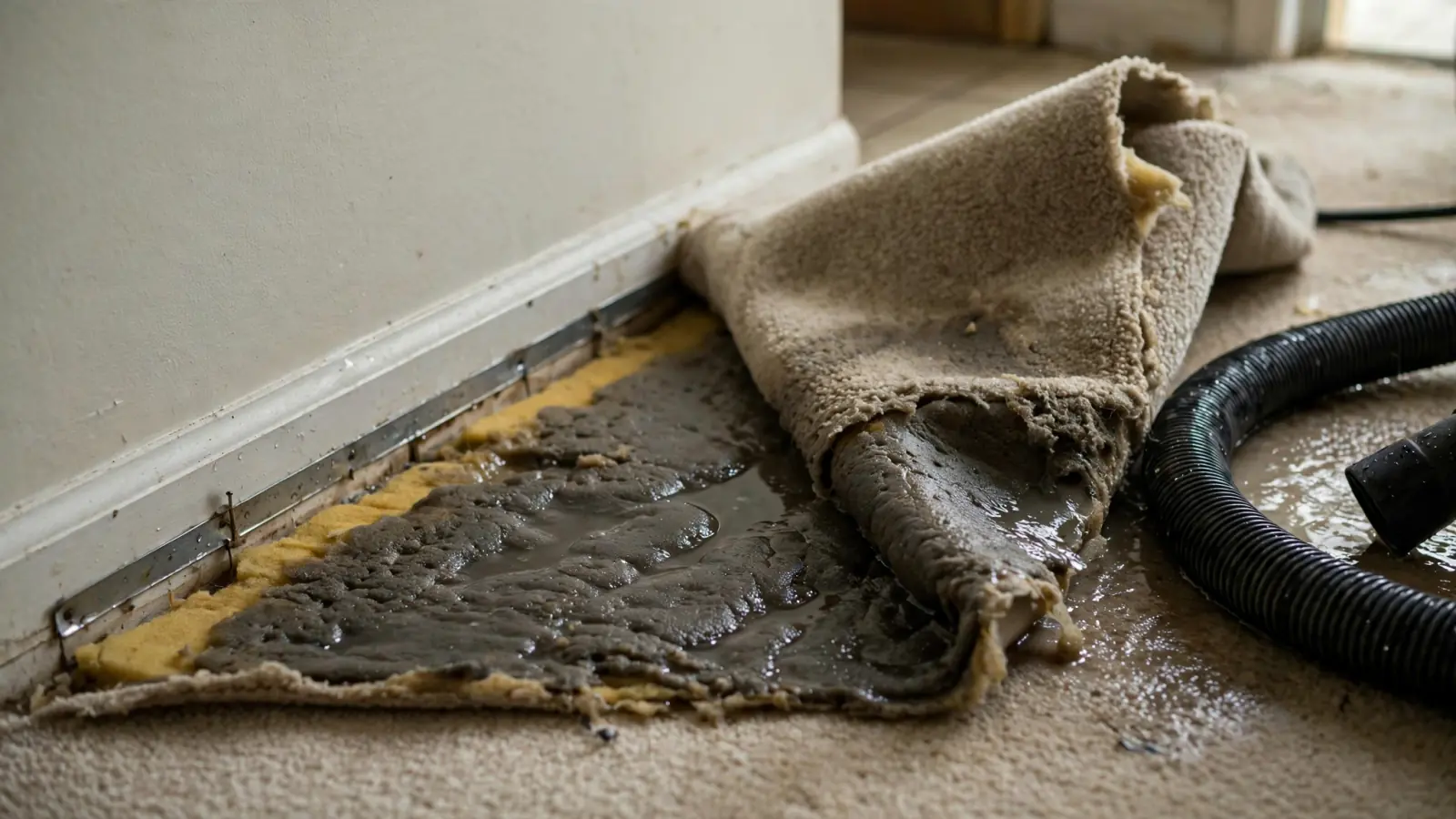
Often yes, if the water was clean and the carpet is dried quickly: the EPA's water damage guidance calls for drying carpet and backing within 24 to 48 hours using extraction, dehumidifiers and fans. The foam pad underneath is frequently replaced because it holds water. Carpet soaked by sewage or outside flood water should generally be thrown away, because it cannot be reliably cleaned and disinfected.
- Call (772) 218-9226
- Water Removal & Extraction
- Structural Drying
- Water Mitigation
In this guide
- 1The two questions that decide it
- 2Why the water category matters
- 3Why the pad is usually replaced
- 4How professionals dry carpet
- 5What you can do right now
- 6Signs the carpet cannot be saved
- 7Insurance and documentation
The two questions that decide it
Whether wet carpet can be saved comes down to what kind of water soaked it and how long it stayed wet. Size of the wet area, the age of the carpet and whether it has delaminated (the backing separating from the face) matter too, but they come second.
| Water source | Carpet | Pad |
|---|---|---|
| Clean water (supply line, rain through a window), dried within 24 to 48 hours | Often saved | Often replaced; sometimes dried |
| Gray water (washing machine, dishwasher, sink overflow) | Sometimes saved after professional cleaning, if addressed quickly | Usually replaced |
| Sewage or outside flood water | Generally discarded | Discarded |
| Any water, wet longer than about 48 hours or showing mold | Usually discarded | Discarded |
Why the water category matters
The IICRC S500 standard sorts water by contamination: Category 1 (clean), Category 2 (significant contamination, such as washer discharge) and Category 3 (grossly contaminated, such as sewage and flood water from outside). Clean water can become Category 2 or 3 the longer it sits and the more materials it passes through.
CDC flood cleanup advice lists carpeting and carpet padding among items to discard when soaked by flood water, because they cannot be washed and disinfected.
Why the pad is usually replaced
Carpet pad is a sponge. It soaks up far more water than the carpet itself, dries slowly and is relatively inexpensive to replace compared with the cost of the time and equipment needed to dry it in place. Many restoration companies remove wet pad and dry the carpet and subfloor, then reinstall the carpet over new pad.
How professionals dry carpet
The EPA's response table for water-damaged carpet and backing describes the same basic steps used by restoration companies.
- Extract water with a truck-mounted or portable extraction unit and a weighted or carpet wand.
- Lift the carpet at a corner ("floating") to dry it from both sides, or remove the pad.
- Run dehumidifiers to pull moisture out of the air.
- Use air movers to push dry air across and under the carpet.
- Check the subfloor, tack strip and baseboards with moisture meters.
- Clean and, where appropriate, apply an antimicrobial before reinstalling.
Dealing with this right now?
Call to be connected with an independent restoration company serving Fort Pierce and St. Lucie County.
What you can do right now
- Stop the water at its source if you can do so safely.
- Remove furniture from the wet carpet, or put foil or plastic under the legs to prevent stains and rust marks.
- Pull up loose rugs and hang them to dry.
- Use a wet vacuum to remove as much water as possible.
- Run the AC or a dehumidifier and keep humid outdoor air out.
- Call a restoration company if the wet area is large, the water was not clean, or it has been more than a day.
Signs the carpet cannot be saved
- A sewage or swampy odor that remains after drying.
- Visible mold or mildew on the face or back of the carpet.
- Delamination: the backing separating so the carpet feels loose or wrinkles.
- Permanent staining or shrinkage after drying.
- Water that came from outside the home during a storm or flood.
Insurance and documentation
Before carpet or pad is thrown away, photograph it, keep a small cut sample if your insurer asks for one, and note the brand and style if you can find it. Restoration companies typically document what was removed and why.
Related services
Services that go with this guide
Emergency Water Removal & Extraction
Emergency water extraction in Fort Pierce: what to do first, how standing water is removed from tile, carpet and slabs, and how drying starts..
Structural Drying & Dehumidification
How structural drying works in Fort Pierce's humid climate: air movers, dehumidifiers, daily moisture readings and drying logs insurers expect..
Water Mitigation
Water mitigation in Fort Pierce stops damage from spreading: extraction, removing what can't be saved and documented drying.
Guides
Keep reading
- How Long Does Water Damage Take to Dry?How long water damage takes to dry by severity, why Florida humidity slows drying, and how moisture readings confirm a home is dry before repairs.
- Water Damage Categories and Classes, ExplainedThe IICRC S500 water damage categories and classes in plain English: clean, gray and black water, and how evaporation classes shape drying plans.
- When to Replace Washing Machine HosesHow often to replace washing machine inlet hoses, warning signs of a failing hose, rubber versus braided hoses, and habits that prevent floods.
FAQ
Questions people ask
Still unsure? Describe the problem on the phone and you will be connected with a restoration company serving your area.
Can wet carpet be saved?
Often, if the water was clean and the carpet is dried within 24 to 48 hours. Carpet soaked by sewage or flood water is generally discarded.
How long can carpet stay wet before mold grows?
The EPA advises drying carpet within 24 to 48 hours to avoid mold growth.
Does carpet pad need to be replaced after water damage?
Often yes. Pad holds a lot of water and is usually replaced rather than dried.
Can carpet be saved after a flood?
Carpet soaked by outside flood water is generally discarded because it cannot be reliably cleaned and disinfected.
Can carpet be saved after a washing machine overflow?
Sometimes, with prompt professional extraction and cleaning. The pad is usually replaced.
How do professionals dry wet carpet?
With extraction, dehumidifiers and air movers, often lifting the carpet to dry both sides.
Can I dry wet carpet myself?
Small clean-water spots, yes, with a wet vacuum and fans. Larger areas usually need professional equipment.
Why does my carpet smell after it dried?
The pad or subfloor may still be wet, or bacteria or mold may be growing. Have it checked.
What is carpet delamination?
When the backing separates from the carpet face, often after water damage. It usually means replacement.
Should I pull up wet carpet?
Lifting a corner can speed drying, but stretching and reinstalling carpet is best left to professionals.
Can a wet carpet damage the subfloor?
Yes. Water passes through to the subfloor and slab, which also need to be dried.
Does insurance pay for wet carpet replacement?
It depends on the cause and the policy. Sudden water damage is commonly covered; flood requires flood insurance.
Is steam cleaning enough after water damage?
Not for a soaked carpet. Water must be extracted and the carpet, pad and subfloor dried.
Can area rugs be saved after water damage?
Many can be cleaned and dried if the water was clean. Rugs soaked by sewage or flood water are usually discarded.
Who dries wet carpet in Fort Pierce?
Call the number on this page to be connected with an independent restoration company serving Fort Pierce.
Talk to a restoration company serving Fort Pierce
Free referral. No obligation to hire.