Skip to content

Fort Pierce, FL restoration help

(772) 218-9226
Water Damage Fort Pierce FL

Fort Pierce, FL

Structural Drying & Dehumidification in Fort Pierce

Structural drying is the controlled removal of moisture from a building's materials, drywall, framing, subfloor, cabinets and concrete, using air movers, commercial dehumidifiers and daily moisture readings until materials return to normal dry levels. Most residential jobs take about three to five days, but dense materials and Florida humidity can extend that.

  • Drywall that reads wet on a moisture meter after a leak or flood
  • A musty odor that develops a day or two after water was cleaned up
  • Swollen baseboards, cabinet bases or door casings
  • Peeling paint or bubbling on lower walls
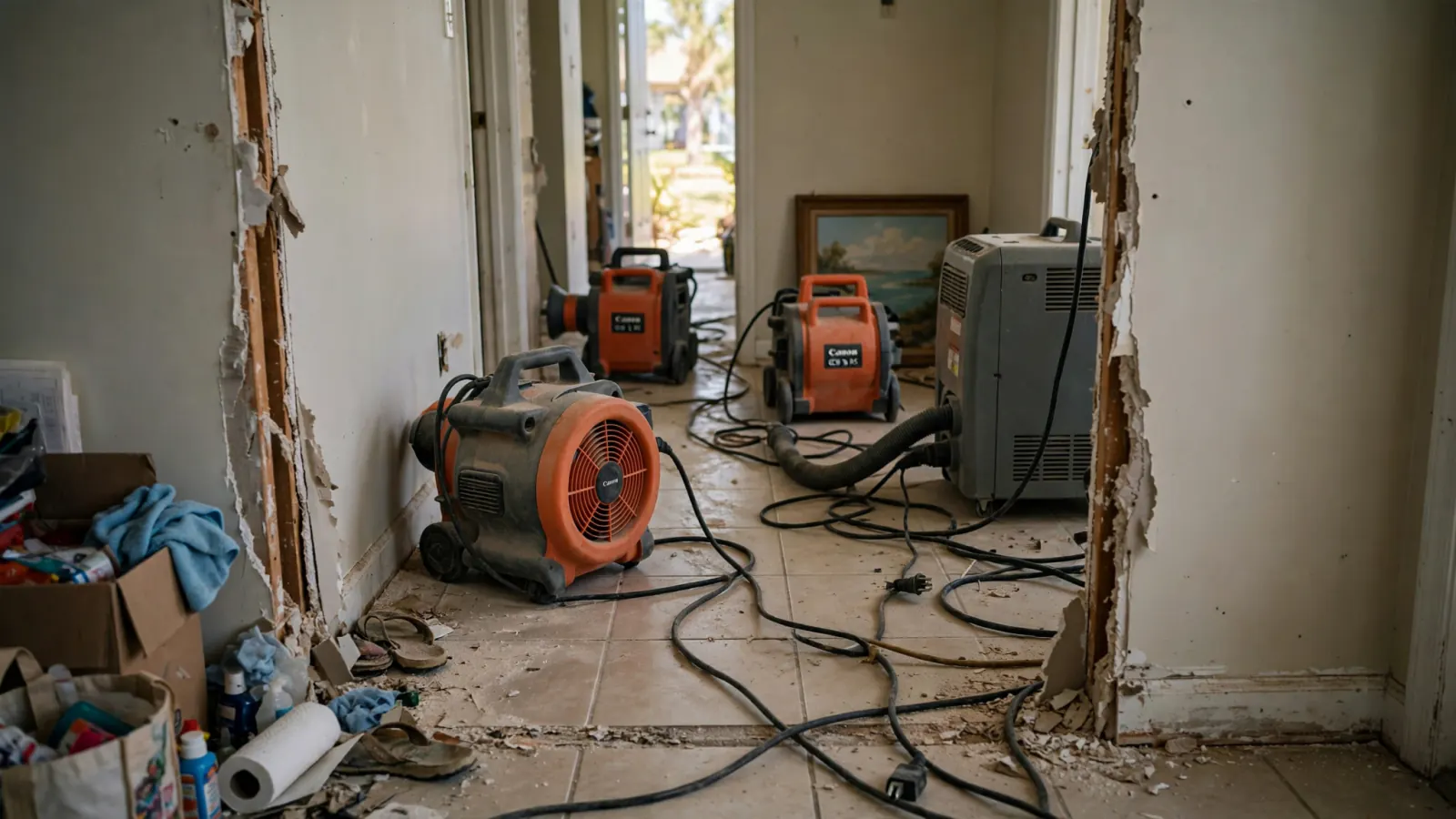
Air movers and dehumidifiers drying a room with the lower drywall cut away
Verify before you signFlorida licenses: myfloridalicense.com

Short answer

What is structural drying?

A room can look and feel dry long before the materials inside it are. Water absorbed by the bottom of drywall, the back of baseboards, cabinet toe-kicks and concrete slabs needs to be evaporated and then removed from the air. That is the job of structural drying.

The process

The structural drying process

Call (772) 218-9226
  1. 01

    Set drying goals

    The technician takes readings of unaffected materials in the home to establish what 'dry' looks like for that drywall, wood and concrete.

  2. 02

    Open up trapped moisture

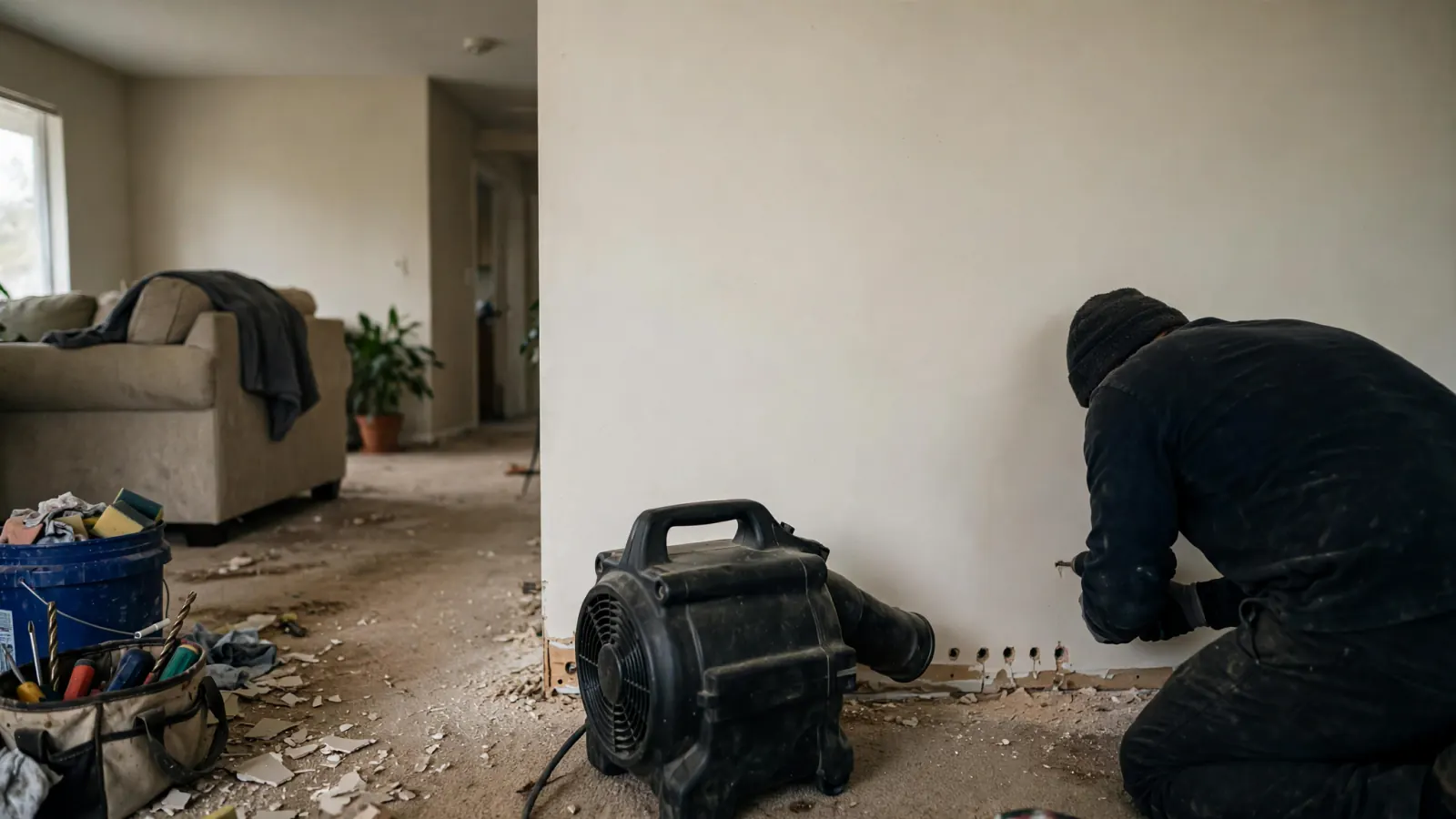
    Baseboards may be pulled and small holes drilled behind them, or toe-kicks removed, so air can reach wet cavities. Heavily saturated or contaminated drywall is cut out instead.

  3. 03

    Place equipment

    Air movers create airflow across wet surfaces; low-grain refrigerant or desiccant dehumidifiers remove the evaporated moisture. Specialty mats or injection systems may be used for hardwood floors and wall cavities.

  4. 04

    Monitor daily

    Readings are recorded each visit, equipment is repositioned, and the drying log becomes part of the insurance documentation.

  5. 05

    Verify and remove equipment

    Equipment comes out only when materials reach the drying goal: not on a fixed day count.

Technician positioning an air mover against a wet wall

Warning signs

When to call

  • Drywall that reads wet on a moisture meter after a leak or flood
  • A musty odor that develops a day or two after water was cleaned up
  • Swollen baseboards, cabinet bases or door casings
  • Peeling paint or bubbling on lower walls
  • Laminate or wood flooring that is cupping or lifting at the seams

Before & after

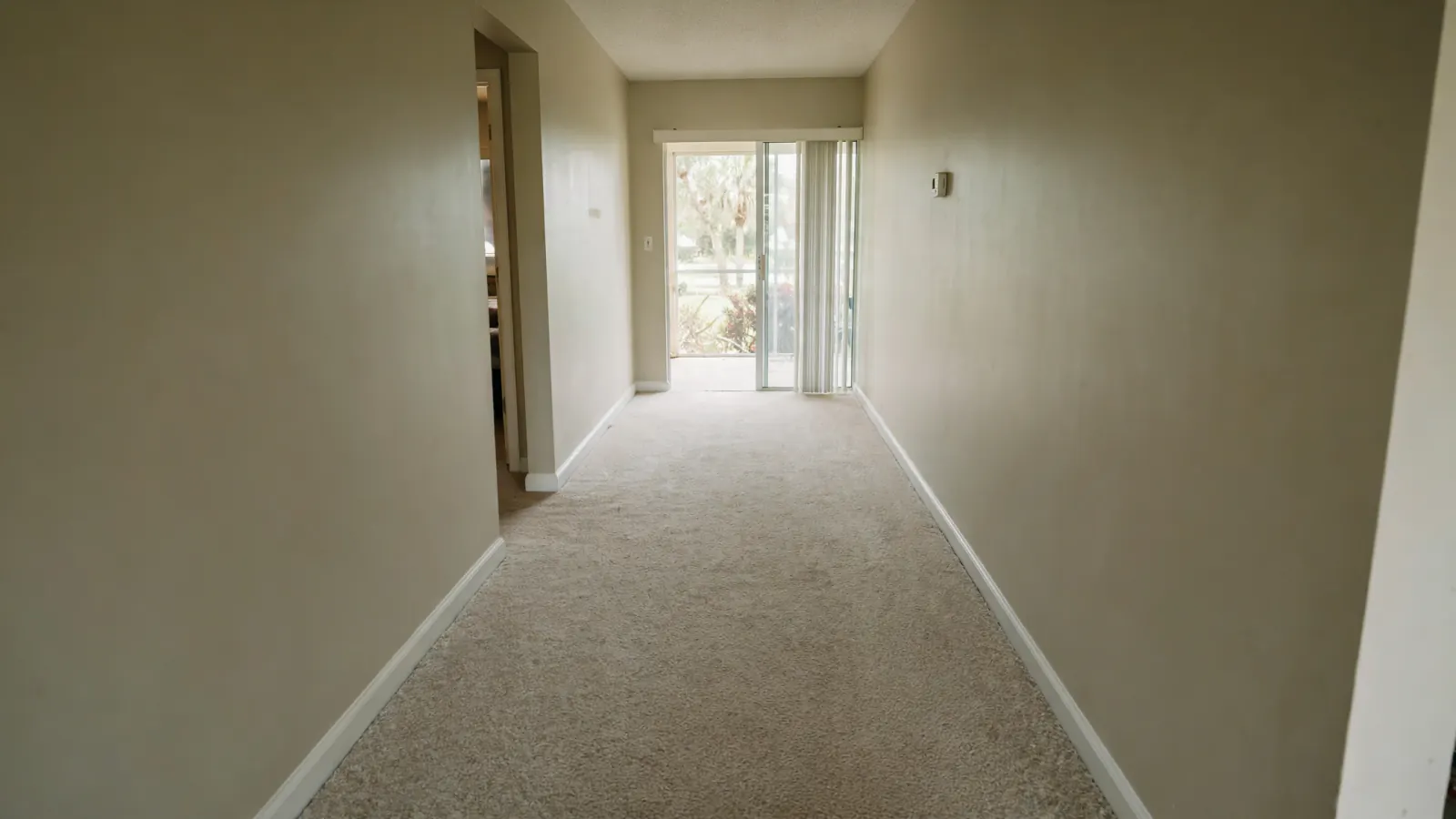
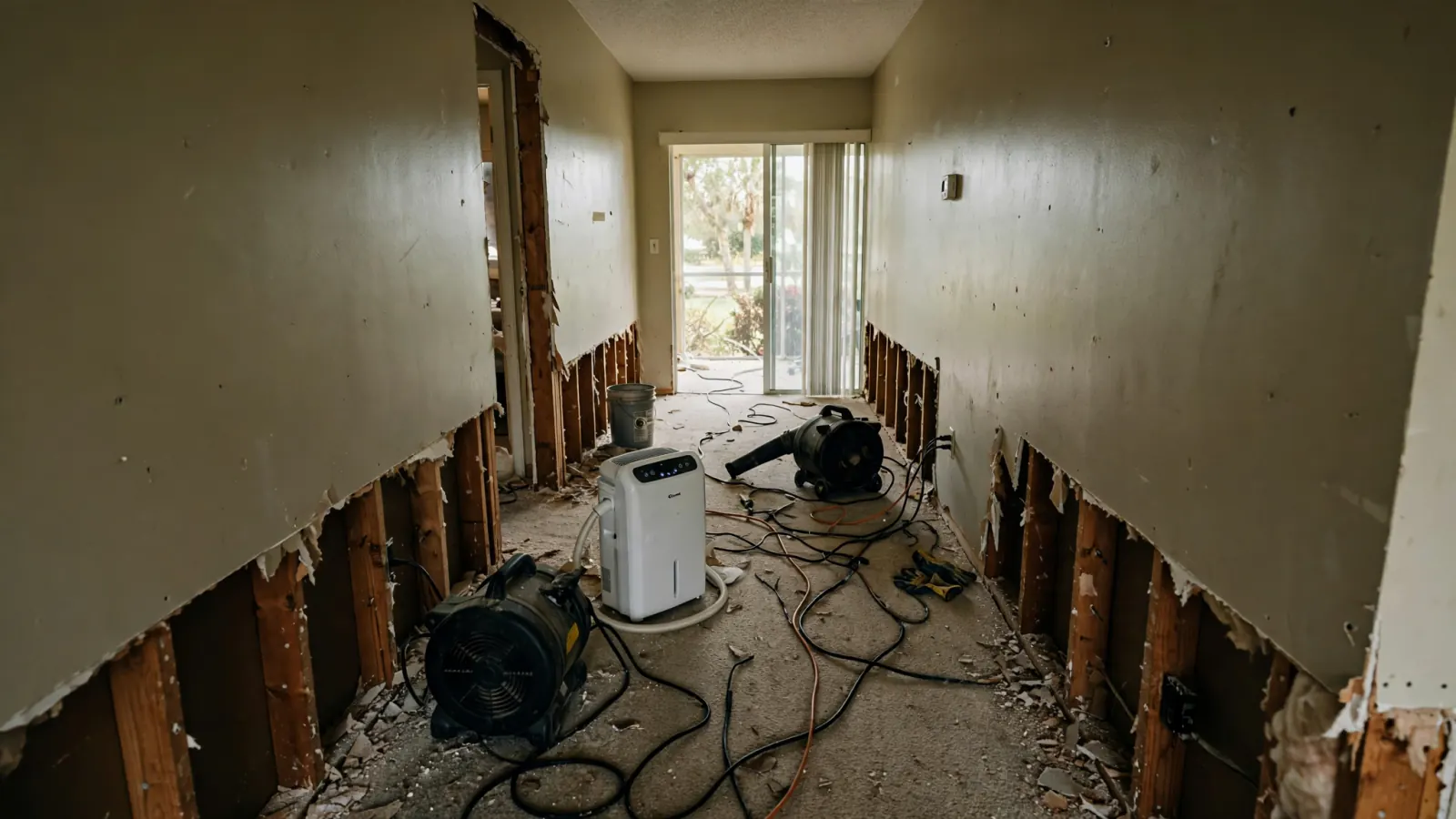
Before and after: structural drying

An example of structural drying work, from the damaged room to the finished repair. The independent company you're connected with will explain its own plan for your property.

Drag the handle to compare

After: The same hallway with walls rebuilt and dry carpet
Before: Hallway with the lower drywall removed and drying equipment running
BeforeAfter
Drag the handle or use the buttons to compare.

Straight answers

Structural Drying: answers for Fort Pierce homeowners

?

How do professionals dry a water-damaged house?

They pair air movers, which push air across wet surfaces to evaporate water, with dehumidifiers, which pull that moisture out of the air. They open wet cavities where needed, keep the house closed and conditioned, and take readings every day until materials reach the dry standard.

?

Why is my house still damp after the water was removed?

Extraction removes liquid water, but drywall, wood, cabinets and concrete still hold absorbed moisture. That water has to evaporate and be removed by dehumidifiers, which takes days. Humid outdoor air and closed-up cavities slow the process.

?

Can water damage cause structural problems?

Persistent moisture can weaken drywall, swell subflooring, rot wood framing and corrode fasteners over time. Prompt, verified drying prevents most of this. Visible sagging, soft floors or cracked framing should be checked by a qualified contractor.

What drives the price

What drives the price

No honest company can price water damage without measuring it. These are the factors that move the number on a Fort Pierce job.

$

Number of drying days

Equipment is generally billed per unit per day, so dense materials and large areas add cost.

$

Equipment count

The number of air movers and dehumidifiers depends on room volume and how much wet material is present.

$

Materials involved

Hardwood, plaster and concrete dry more slowly than drywall and may need specialty systems.

$

Monitoring visits

Daily moisture checks and documentation are part of the charge.

$

Electricity

Drying equipment draws significant power. Some insurers reimburse the added electric cost: keep your bills.

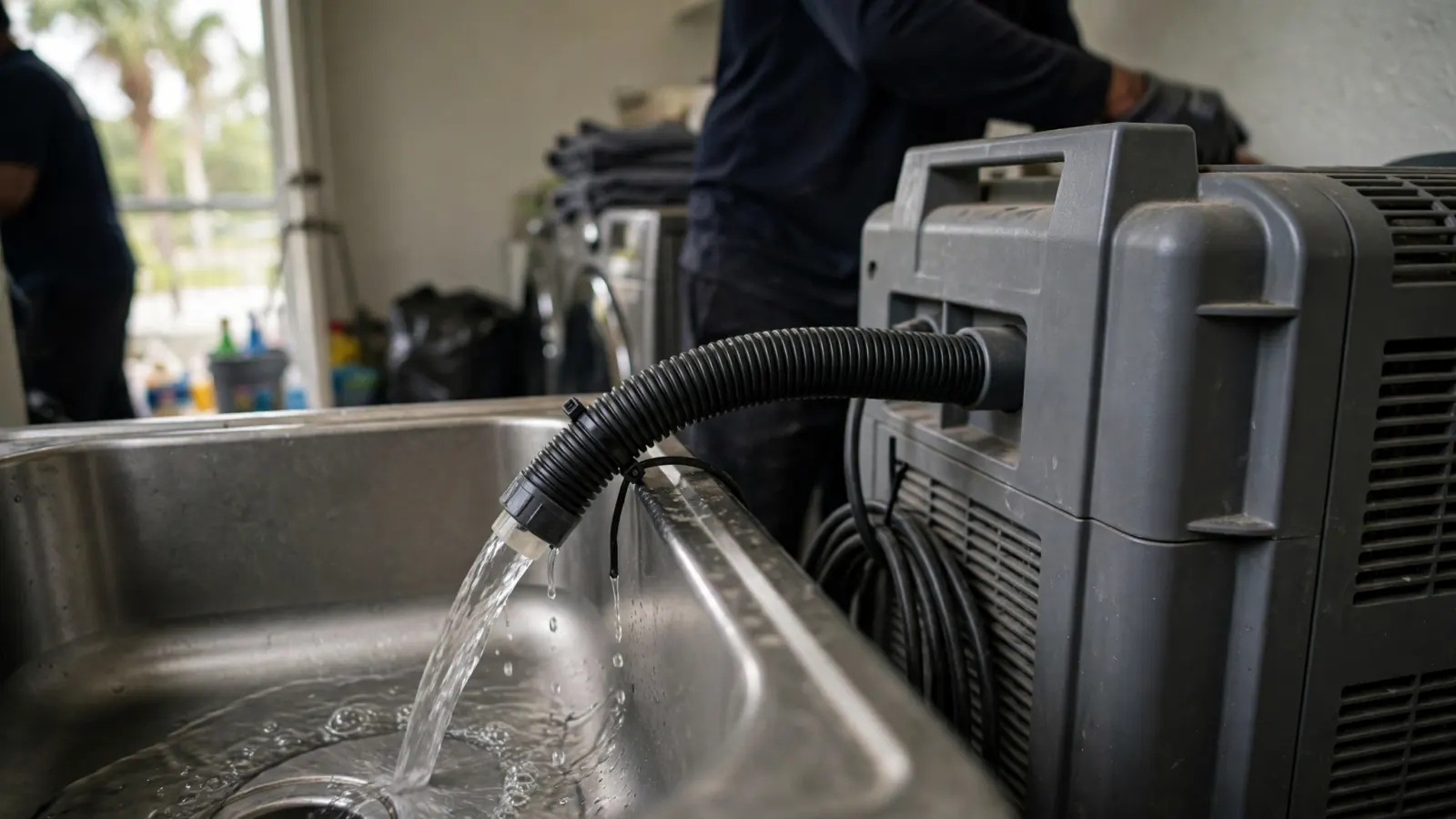
Dehumidifier draining collected water into a sink

Background

More about structural drying

On the Treasure Coast, outdoor humidity is high for much of the year, so opening windows rarely helps and can slow drying. Professional dehumidifiers create a dry indoor environment that pulls moisture out of materials and lets the crew document when each area reaches its drying goal.

Insurance & details

Why drying takes longer in some homes

Concrete block walls, concrete slabs, plaster, hardwood and cabinetry release water more slowly than drywall. Water that reached the slab under tile or laminate can keep flooring and baseboards damp after the walls are dry. Closed spaces, such as cabinets and wall cavities without ventilation, also dry slowly unless they are opened or ventilated.

Outdoor conditions matter too. In Fort Pierce's humid months, opening windows usually adds moisture rather than removing it, which is why professional drying relies on closed-up conditions, running AC and dehumidifiers sized to the space.

What to expect on the drying log

A drying log records the dry standard for each material, the readings at each location on each visit, the equipment in place and the indoor temperature and humidity. It shows when each area reached the goal. Insurers commonly ask for it, and it is your best evidence that the structure was dry before it was closed up.

Have questions about your situation?

Describe what happened and get connected with an independent restoration company serving your area.

Fort Pierce context

Drying in a humid Treasure Coast climate

Fort Pierce sits in a transition zone between Central Florida's humid subtropical climate and South Florida's tropical climate, and it receives roughly 51 inches of rain a year on average (1991–2020 normals). High outdoor humidity means indoor drying depends heavily on dehumidification and on keeping the home closed up and the AC running.

Concrete slab foundations, common in local homes, hold moisture, so tile and laminate installed directly on slab can take longer to verify as dry than the walls around them.

Average rainfall

About 51 in/yr (1991–2020)

Main flood sources (City of Fort Pierce)

Summer downpours and tropical systems

Hurricane season

June 1 – November 30

Check your flood zone

FEMA Flood Map Service Center

Fort Pierce local guide

Where we connect callers

Structural Drying in Florida and St. Lucie County

Referrals cover Fort Pierce and nearby St. Lucie County communities. The state page covers Florida rules; each city and area page explains local conditions and which government handles repair permits.

FAQ

Structural Drying: questions people ask

Still unsure? Describe the problem on the phone and you will be connected with a restoration company serving your area.

How long does structural drying take?

Many residential water losses dry in roughly three to five days with professional equipment, but the real answer depends on the materials, how long they were wet and the conditions inside the home. Drying should end when readings reach the drying goal, not on a set schedule.

Should I turn off the drying equipment at night?

No. Equipment is sized to run continuously. Turning it off slows drying and can let humidity build back up. Ask the crew before moving or switching off any unit.

Should I open my windows to help things dry?

Usually not on the Treasure Coast. Outdoor air is often more humid than indoor air, so opening windows can work against the dehumidifiers. Keep doors and windows closed unless the technician says otherwise.

Can wet drywall be saved?

Drywall wet with clean water and dried promptly can often stay in place. Drywall that has been wet for an extended period, is sagging, or was soaked by contaminated water is normally cut out and replaced.

What is a dehumidifier's job during drying?

Removing the moisture that air movers evaporate from materials. Without dehumidification, the moisture stays in the air and re-enters materials.

Why were holes drilled in my walls?

Small holes behind baseboards let dry air into wet wall cavities without removing the drywall. They are patched during repair.

Should I run my air conditioning during drying?

Usually yes. Running the AC helps control humidity and temperature. Follow the technician's instructions for thermostat settings.

What does 'dry standard' mean?

The normal moisture reading for a material in your home, taken in an unaffected area. Drying is complete when wet areas match it.

How long do dehumidifiers need to run after water damage?

Until moisture readings show the wet materials match dry ones. On many homes that's several days, but dense materials take longer.

What is the best way to dry out a house after a leak?

Professional air movers and dehumidifiers with the house closed and the AC running, plus daily moisture readings to confirm progress.

Can I rent fans to dry my house myself?

Fans alone can dry surfaces while water stays inside walls and floors. Without dehumidification and meters you can't confirm it's dry.

Why is my drywall still wet after three days?

Water can be trapped behind baseboards, in cavities or against block walls. Small vent holes or removal may be needed to dry it.

Do drying fans use a lot of electricity?

Yes. Keep electric bills from the drying period; some insurers reimburse the added cost.

What humidity should my house be after water damage?

Technicians target indoor conditions that pull moisture out of materials. Follow their thermostat and door instructions.

Can wet concrete floors be dried?

Yes, but slabs release moisture slowly. They are tested before new flooring goes down.

Other main services

Water, fire, mold and biohazard restoration

Fire Damage Restoration

Fire damage restoration across St.

Mold Remediation

Mold remediation across St.

Biohazard Cleanup

Biohazard cleanup across St.

Guides

Guides worth reading first

Talk to a restoration company about structural drying

Free referral to an independent company serving Fort Pierce and St. Lucie County. No obligation to hire.

Call (772) 218-9226