
Florida · St. Lucie County
Mold Remediation in Florida: Rules and Realities
Florida is one of the few states that licenses mold work. Under Chapter 468, Part XVI of the Florida Statutes, anyone performing mold assessment or mold remediation for compensation generally needs a DBPR license, with an exemption for jobs under 10 square feet, and a mold assessor may not remediate a property they assessed within the previous 12 months. Florida's heat and humidity make fixing the moisture source as important as removing the mold.
Florida
Mold Remediation in Florida
Mold grows wherever moisture persists, and in Florida that can be a slow plumbing leak, a clogged AC drain line, a roof leak after a storm or simply high indoor humidity. Remediation removes the growth; fixing the moisture is what keeps it from returning.
Florida's licensing law separates assessment from remediation so that the company that tells you how big the problem is does not profit from fixing it.
This page covers Florida's rules and how they apply in St. Lucie County. The Fort Pierce and Port St. Lucie pages cover local conditions.
- Licensing law
- Chapter 468, Part XVI, F.S.
- License threshold
- Generally over 10 sq ft of mold
- Assessor rule
- No remediation of a property they assessed within 12 months
- Verify licenses
- myfloridalicense.com
Florida rules
Who needs a mold license in Florida
Chapter 468, Part XVI requires a license from the Department of Business and Professional Regulation for mold assessment and for mold remediation performed for compensation. The law generally exempts work on areas of less than 10 square feet, and homeowners working on their own property.
Why the assessor and remediator are separate
A licensed mold assessor may not perform mold remediation on a structure they assessed within the previous 12 months. That keeps testing and protocols independent of the company that profits from the removal.
Humidity, AC and Florida homes
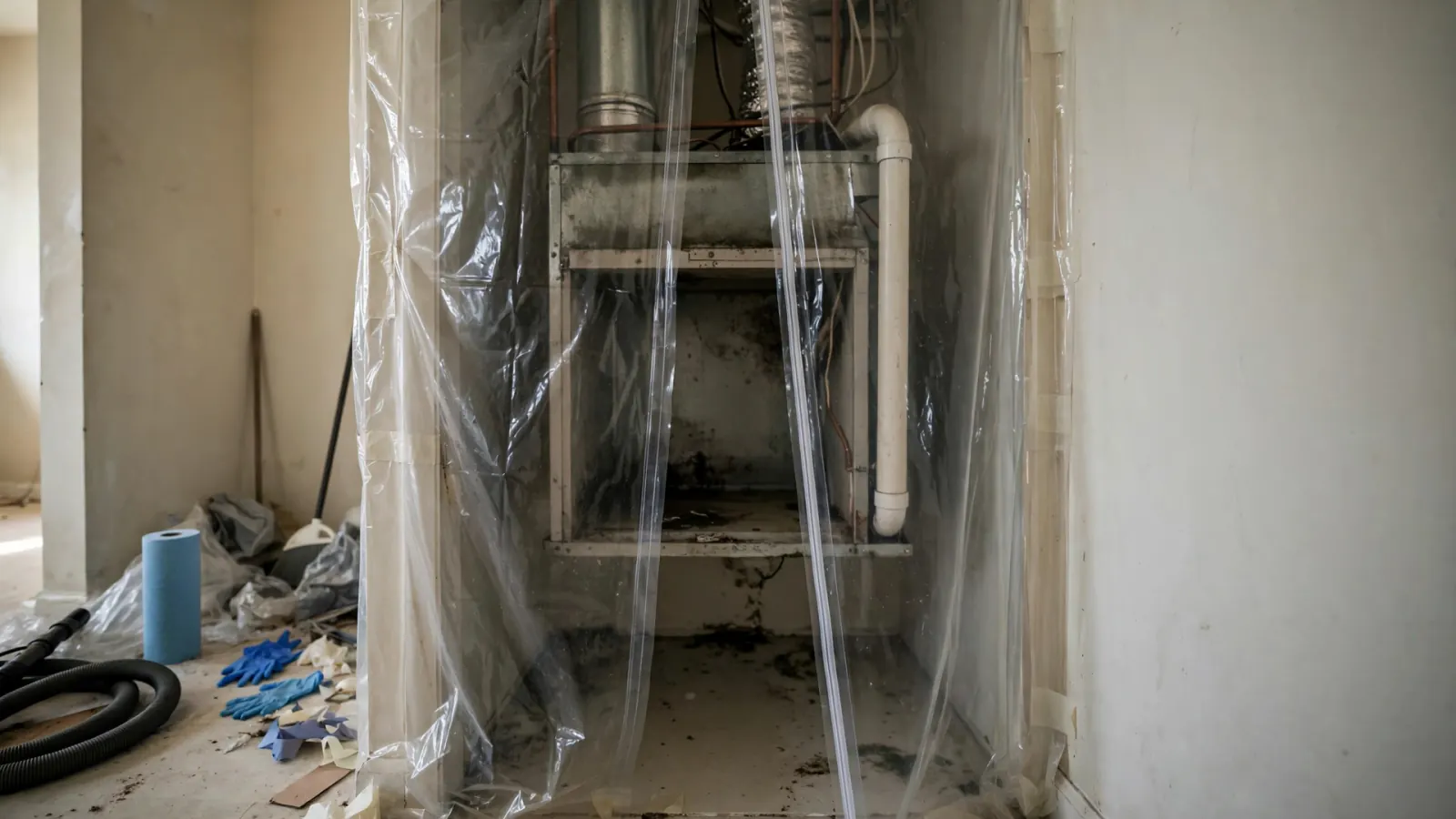
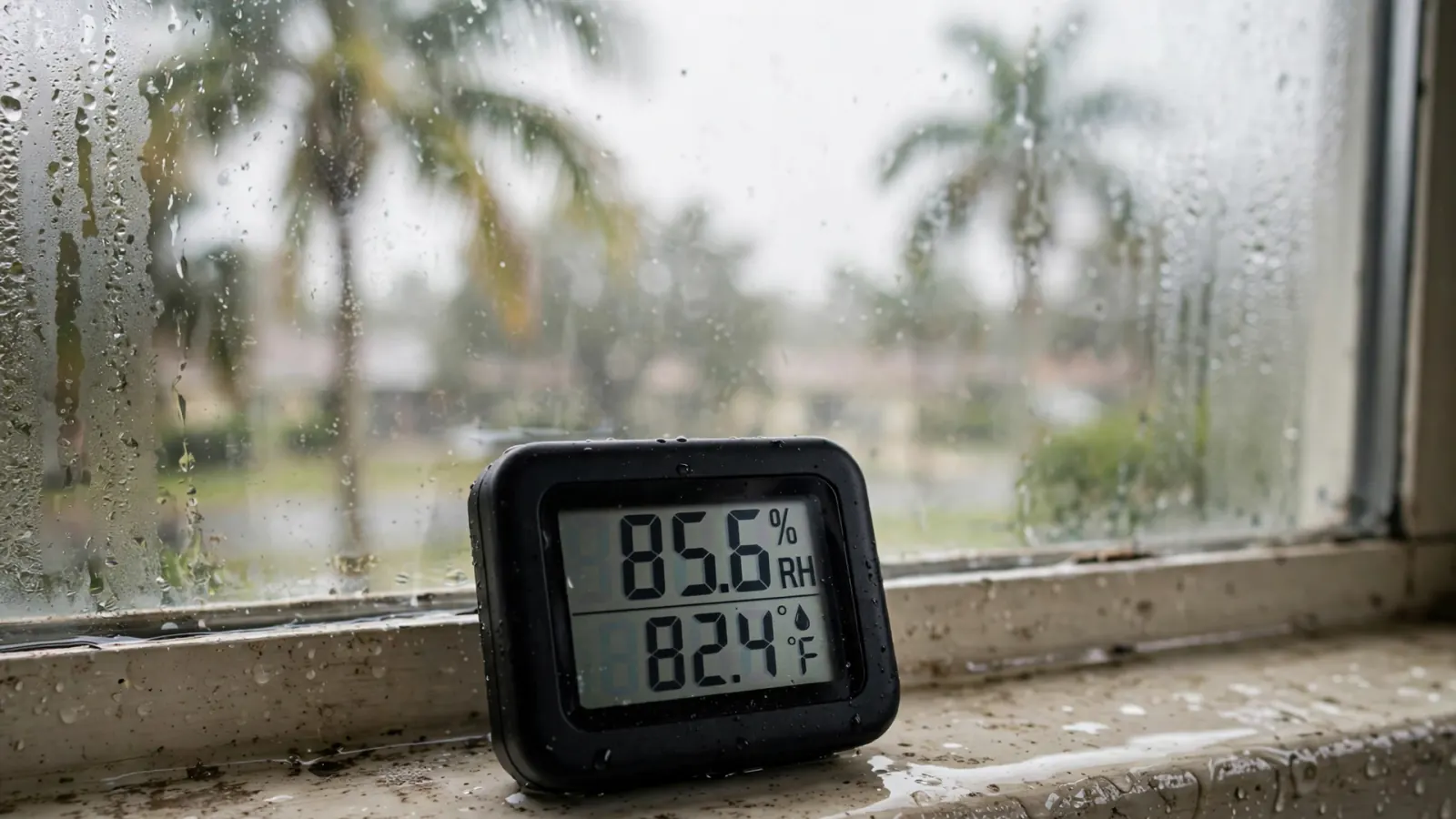
Florida's warm, humid climate and near-constant air conditioning create mold risks in AC closets, around air handlers and ducts, and wherever cool surfaces collect condensation. The EPA recommends keeping indoor relative humidity below 60 percent, ideally between 30 and 50 percent.
Step by step
How mold remediation works in Florida
What an independent restoration crew typically does, from the first call to a verified dry structure.
- 1
Find the moisture
Leaks, AC drainage, humidity or condensation are identified.
- 2
Assess
A licensed assessor may document extent and write a protocol.
- 3
Contain and remove
A licensed remediator removes growth under containment.
- 4
Clean and dry
Surfaces are cleaned, HEPA-vacuumed and dried.
- 5
Verify and rebuild
Clearance if required, then repairs.
Short answer
Mold Remediation in Florida: the short answer
Mold grows wherever moisture persists, and in Florida that can be a slow plumbing leak, a clogged AC drain line, a roof leak after a storm or simply high indoor humidity. Remediation removes the growth; fixing the moisture is what keeps it from returning.
- Call (772) 218-9226
- Mold Inspection & Testing
- Black Mold Removal
Need mold remediation in Florida?
Call to be connected with an independent restoration company that serves the area. Free referral, no obligation.
Services
Mold Remediation services available in Florida
Mold Inspection and Testing
What a Fort Pierce mold inspection or assessment includes, when testing helps, Florida's mold assessor license and why assessor and remediator differ..
Black Mold Removal
What black mold really is, why color doesn't decide the risk, when Florida requires a licensed remediator and how black mold is removed from homes..
- 1Ask for the DBPR license number and verify it
- 2Use a separate licensed assessor if testing is needed
- 3Ask how the moisture source will be fixed
- 4Ask about containment and HEPA filtration
- 5Ask whether clearance testing is included or separate
What to know
Mold and insurance in Florida
Many Florida homeowners policies limit mold coverage, often with a dollar sublimit, and may cover it only when it results from a covered water loss. Mold from long-term leaks or humidity is frequently excluded. Read your policy's mold provisions.
After hurricanes and flooding
Flood water is contaminated and soaks drywall and insulation quickly. After storms, materials that cannot be dried promptly are removed to prevent mold. Demand for remediation rises across the region after a major storm.
Mold remediation across St. Lucie County
We connect callers in Fort Pierce, Port St. Lucie, St. Lucie Village and the county's unincorporated communities with independent companies. Always ask for and verify the remediator's DBPR license number.
Other services
Other restoration services in Florida
Water Damage Restoration in Florida
Every water damage restoration service explained: extraction, mitigation, drying, leaks, flood, sewage, condo, commercial and repair in St.
Fire Damage Restoration in Florida
Fire damage restoration across St.
Biohazard Cleanup in Florida
Biohazard cleanup across St.
Where we connect callers
Mold Remediation by city in St. Lucie County
Each page covers local conditions, agencies and permits.
- Fort PierceCity
- Port St. LucieCity
FAQ
Mold Remediation in Florida: questions people ask
Still unsure? Describe the problem on the phone and you will be connected with a restoration company serving your area.
Do you need a license to remove mold in Florida?
Generally yes, for mold remediation performed for compensation on areas over 10 square feet, under Chapter 468, Part XVI.
Can a mold inspector also do the mold removal in Florida?
A licensed mold assessor may not remediate a property they assessed within the previous 12 months.
How do I check a mold company's license in Florida?
Search the company or individual at myfloridalicense.com.
Does Florida homeowners insurance cover mold?
Coverage varies. Many policies limit mold coverage or cover it only when caused by a covered water loss. Check your policy.
Why is mold so common in Florida?
Heat, humidity, frequent rain and constant AC use create conditions where mold grows on any material that stays damp.
What indoor humidity prevents mold?
The EPA recommends keeping indoor relative humidity below 60 percent, ideally between 30 and 50 percent.
Is there a legal limit for mold in Florida homes?
There are no federal or Florida numeric standards for acceptable indoor mold levels.
Do landlords in Florida have to fix mold?
Florida landlord-tenant law requires landlords to maintain certain conditions in rental units. Ask a legal professional about mold in your specific situation.
Should I test for mold after a hurricane?
Visible mold usually needs no test to decide on removal. Testing can help with hidden growth or documentation.
How much does mold remediation cost in Florida?
It depends on the size and location of the growth, access and the materials that must be replaced. Get a written scope.
Can I remove small amounts of mold myself?
The EPA suggests homeowners may handle areas under about 10 square feet with precautions, provided the moisture source is fixed.
What is a mold remediation protocol?
A written plan, usually from the assessor, describing containment, removal and how success will be judged.
Which areas do you cover for mold remediation?
St. Lucie County, including Fort Pierce, Port St. Lucie, St. Lucie Village and unincorporated communities.
Does bleach kill mold?
Bleach is not recommended for mold in porous materials like drywall, which are generally removed.
Is there a fee to call?
No. Calling is free and you are under no obligation to hire the company you are connected with.
Talk to a mold remediation company serving Florida
Free referral. No obligation to hire. Verify Florida licenses before you sign.