
Florida · St. Lucie County
Biohazard Cleanup in Florida: Safety and Waste Rules
Biohazard cleanup in Florida is governed mainly by worker-safety and waste rules: OSHA's Bloodborne Pathogens Standard protects workers exposed to blood and other potentially infectious materials, and the Florida Department of Health regulates biomedical waste under Chapter 64E-16 of the Florida Administrative Code. Crime victims may be able to seek help with certain costs through the Florida Attorney General's Crime Victim Compensation program. We connect callers across St. Lucie County with independent cleanup companies.
restoration company
- Worker safety
- OSHA 29 CFR 1910.1030
- Waste rules
- Florida DOH, Ch. 64E-16 F.A.C.
- Victim help
- Florida AG Crime Victim Compensation
- Coverage
- St. Lucie County, Florida
Short answer
Biohazard Cleanup in Florida: the short answer
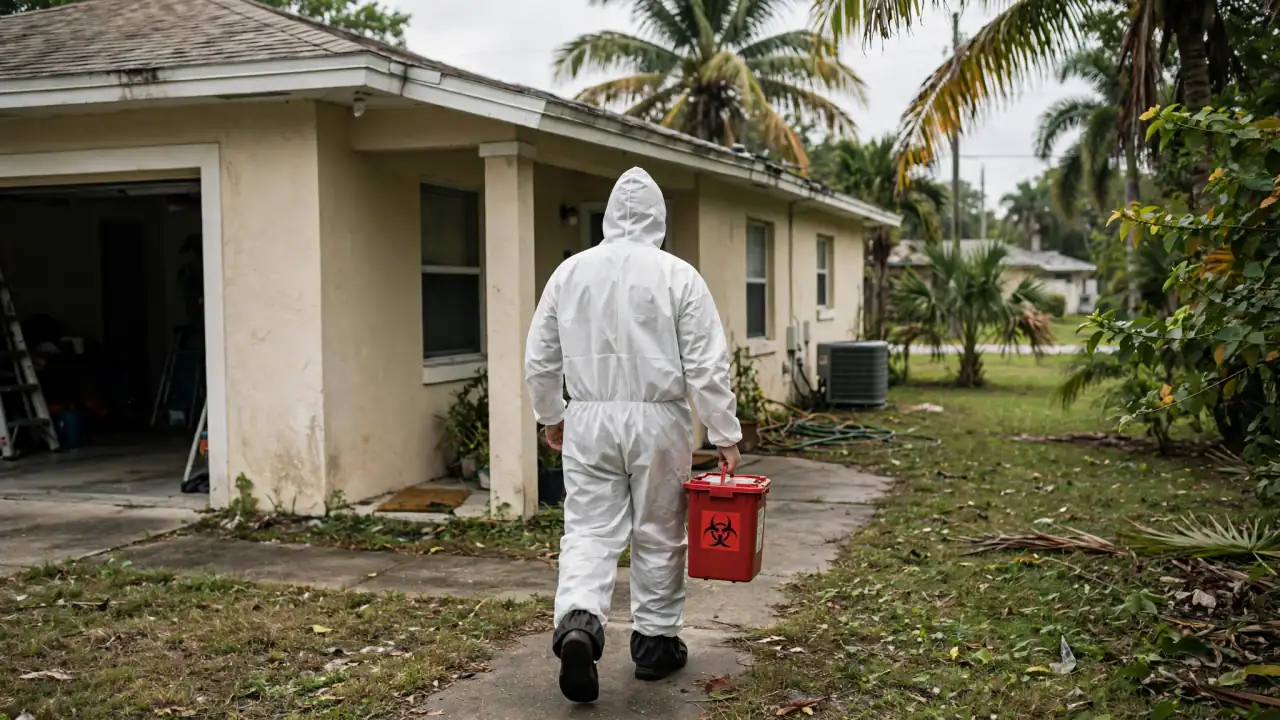
Biohazard cleanup covers blood and bodily fluids after deaths, injuries and crimes, as well as hoarding, sewage and animal contamination. The common thread is material that may carry pathogens and must be removed and disposed of correctly.
- Call (772) 218-9226
- Trauma & Crime Scene Cleanup
- Hoarding Cleanup
Florida
Biohazard Cleanup in Florida
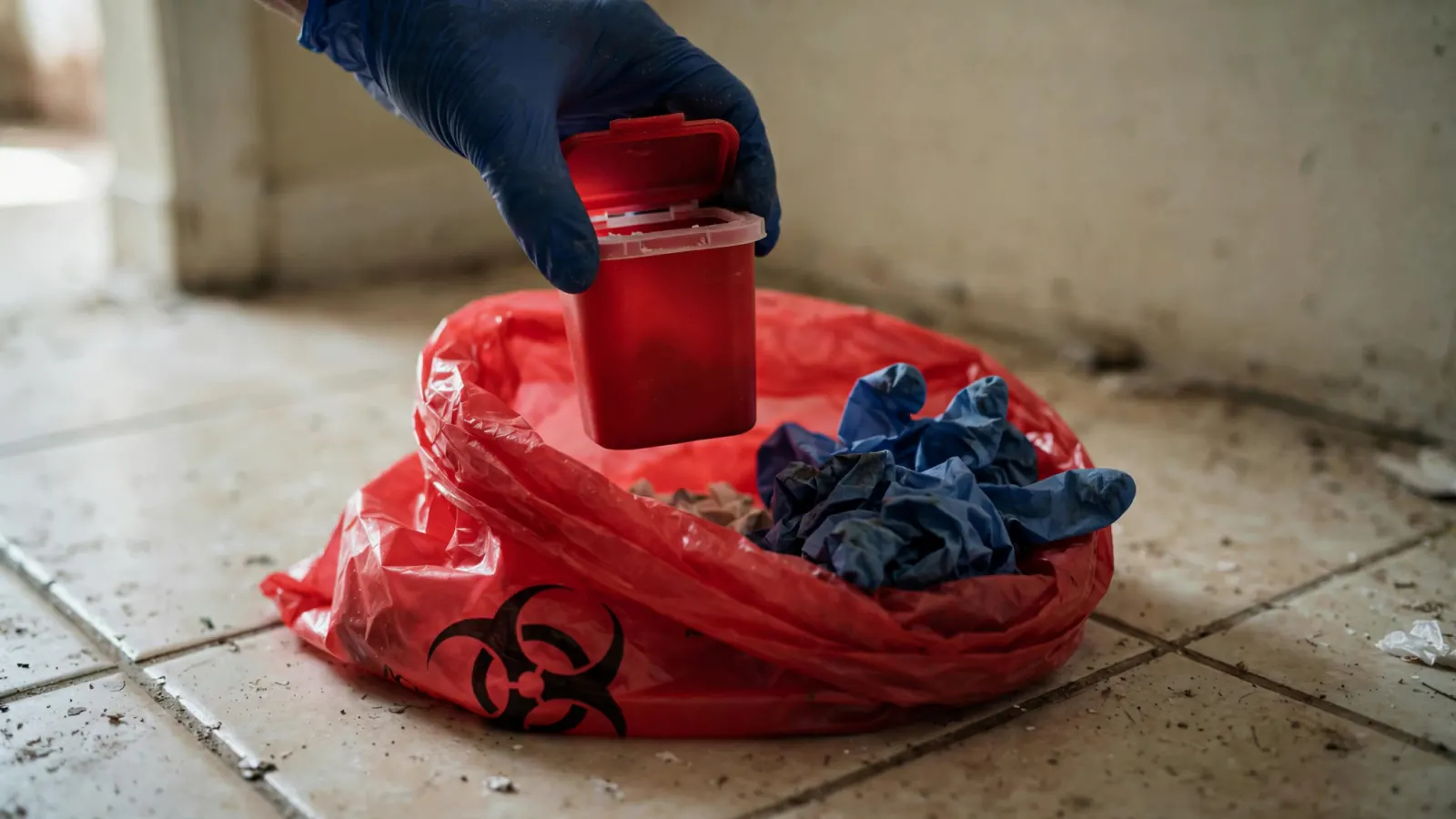
Biohazard cleanup covers blood and bodily fluids after deaths, injuries and crimes, as well as hoarding, sewage and animal contamination. The common thread is material that may carry pathogens and must be removed and disposed of correctly.
In Florida, the main legal touchpoints are how workers are protected and how waste is handled. Asking a company about both is the quickest way to tell a professional operation from a general cleaner.
This page explains the statewide rules. The Fort Pierce and Port St. Lucie pages cover local agencies and situations.
Florida rules
Worker protection under OSHA
OSHA's Bloodborne Pathogens Standard requires employers whose workers may be exposed to blood or other potentially infectious materials to have an exposure control plan, training, protective equipment and hepatitis B vaccination availability. Ask any cleanup company how it meets these requirements.
Biomedical waste in Florida
The Florida Department of Health regulates biomedical waste, including how it is packaged, labeled, stored and transported, under Chapter 64E-16, Florida Administrative Code. Regulated waste from a cleanup should go to a permitted transporter and facility, not household trash.
Help for crime victims
The Florida Attorney General's Office administers crime victim compensation. Eligible victims may be able to receive help with certain crime-related expenses. Contact the program to ask which costs it covers and how to apply.
Need biohazard cleanup in Florida?
Call to be connected with an independent restoration company that serves the area. Free referral, no obligation.
Step by step
How biohazard cleanup works in Florida
What an independent restoration crew typically does, from the first call to a verified dry structure.
- 1
Scene release
Law enforcement or the medical examiner releases the scene if involved.
- 2
Assessment
Hazards and scope are identified and explained.
- 3
Removal
Contaminated materials are removed and packaged.
- 4
Disinfection
Surfaces are cleaned and disinfected; odor treated.
- 5
Waste disposal
Regulated waste goes to a permitted transporter and facility.
Services
Biohazard Cleanup services available in Florida
Trauma and Crime Scene Cleanup
Discreet cleanup after a death, suicide, injury or crime in Fort Pierce: when it can start, what is removed, how waste is handled and who may pay..
Hoarding Cleanup
Hoarding cleanup in Fort Pierce: planning with the family, sorting, removing biohazards like waste and pests, finding hidden water damage and repairs..
What to know
Insurance
Some homeowners and landlord policies cover biohazard cleanup after certain events. Coverage varies by cause and policy, so call your insurer and ask specifically before work begins if you can.
Heat, humidity and time
Florida's heat and humidity speed decomposition, odor and mold growth, so once a scene is released, prompt professional cleanup limits damage to flooring, subfloor and walls.
Biohazard cleanup across St. Lucie County
We connect callers in Fort Pierce, Port St. Lucie, St. Lucie Village and unincorporated St. Lucie County. Cleanup after a death or crime begins only after the responsible agency has released the scene.
- 1How are your workers trained under OSHA's bloodborne pathogens rule?
- 2Which permitted transporter handles your biomedical waste?
- 3What will be removed, and what can be saved?
- 4How will you treat odor at the source?
- 5Do you work with insurance or victim compensation?
Where we connect callers
Biohazard Cleanup by city in St. Lucie County
Each page covers local conditions, agencies and permits.
- Fort PierceCity
- Port St. LucieCity
Other services
Other restoration services in Florida
Water Damage Restoration in Florida
Every water damage restoration service explained: extraction, mitigation, drying, leaks, flood, sewage, condo, commercial and repair in St.
Fire Damage Restoration in Florida
Fire damage restoration across St.
Mold Remediation in Florida
Mold remediation across St.
FAQ
Biohazard Cleanup in Florida: questions people ask
Still unsure? Describe the problem on the phone and you will be connected with a restoration company serving your area.
Who regulates biohazard cleanup in Florida?
Worker safety falls under OSHA's Bloodborne Pathogens Standard, and biomedical waste is regulated by the Florida Department of Health.
What is biomedical waste in Florida?
Waste that may transmit disease, such as blood-soaked materials and sharps, as defined in Chapter 64E-16, Florida Administrative Code.
Can biohazard waste go in regular trash in Florida?
Regulated biomedical waste must be packaged, labeled and handled by permitted transporters and facilities, not household trash.
Does Florida help pay for crime scene cleanup?
Crime victims may apply to the Florida Attorney General's Crime Victim Compensation program. Ask the program which expenses are eligible.
Does homeowners insurance cover biohazard cleanup in Florida?
Sometimes. Coverage depends on the cause and the policy. Call your insurer.
Who cleans up after a death in Florida?
Usually a professional biohazard cleanup company arranged by the family, owner or landlord, after the scene is released.
Is sewage considered a biohazard?
Yes. Sewage is Category 3 water and carries pathogens.
Do biohazard cleanup workers need vaccinations?
OSHA requires employers to make hepatitis B vaccination available to workers with occupational exposure to blood.
How long after a death can cleanup start in Florida?
Once the scene is released by law enforcement or the medical examiner, if they were involved.
Which areas of Florida do you cover?
St. Lucie County, including Fort Pierce, Port St. Lucie, St. Lucie Village and unincorporated communities.
Is hoarding cleanup a biohazard job?
Often, when there is human or animal waste, spoiled food, pests or sharps.
Can I clean up blood myself in Florida?
It is not recommended without training and protection. Blood can carry pathogens and often soaks deeper than it appears.
Does heat make biohazard situations worse?
Yes. Florida's heat and humidity speed decomposition, odor and mold growth.
Do cleanup companies work with landlords?
Many do, for units after a tenant death, hoarding or contamination.
Is there a fee to call?
No. Calling is free and you are under no obligation to hire the company you are connected with.
Talk to a biohazard cleanup company serving Florida
Free referral. No obligation to hire. Verify Florida licenses before you sign.