Skip to content

Fort Pierce, FL restoration help

(772) 218-9226
Water Damage Fort Pierce FL

Urgent · St. Lucie County, FL

Water Damage Restoration Services, Explained Step by Step

Water damage restoration is the full sequence of work after a leak or flood: stopping the source, extracting standing water, removing materials that cannot be saved, drying the structure to measured targets, and then repairing it. In Fort Pierce the right mix of services depends on where the water came from, how dirty it is and how long materials stayed wet.

  • Standing water on floors, or carpet that squishes underfoot
  • Ceiling stains, sagging drywall or bubbling paint
  • Swollen baseboards, cupping wood or lifting laminate
  • A musty smell that appears after a leak or storm
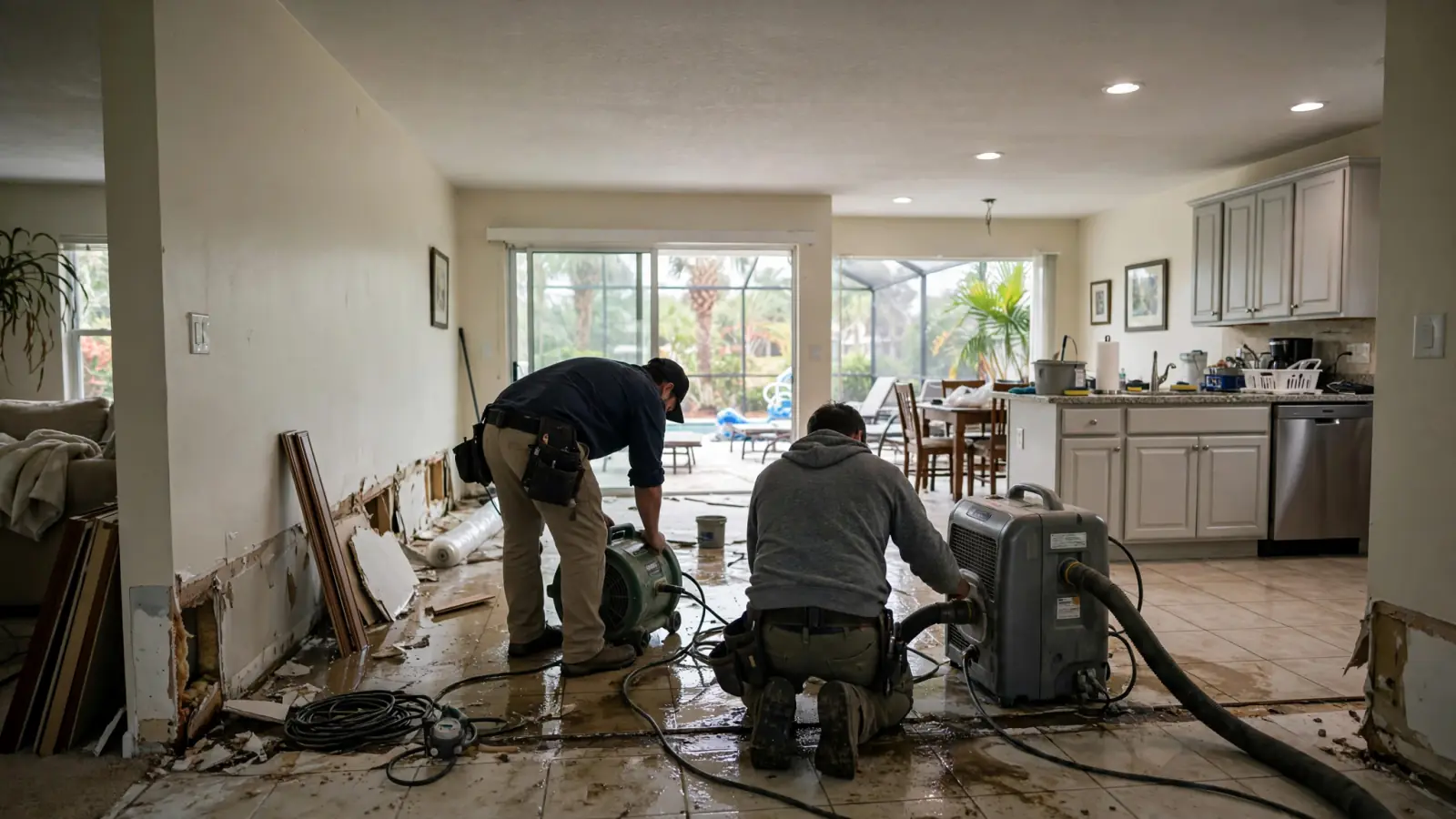
Technicians setting up drying equipment in a water-damaged open-plan home
Verify before you signFlorida licenses: myfloridalicense.com

Short answer

What is water damage restoration?

Restoration companies split the job into two phases. Mitigation (also called water mitigation) is the emergency phase: extraction, tear-out of unsalvageable materials and structural drying, documented with moisture readings. Repair or reconstruction is the second phase: drywall, flooring, cabinets, trim and paint once everything reads dry.

Water Damage Restoration services

Types of water damage restoration work

Emergency Water Removal & Extraction

Emergency water extraction in Fort Pierce: what to do first, how standing water is removed from tile, carpet and slabs, and how drying starts..

Structural Drying & Dehumidification

How structural drying works in Fort Pierce's humid climate: air movers, dehumidifiers, daily moisture readings and drying logs insurers expect..

Flood & Storm Water Damage Cleanup

Flood and storm cleanup in Fort Pierce: hurricane and king-tide flooding, Category 3 water, what must be removed, flood insurance and drying..

Burst Pipe & Plumbing Leak Water Damage

Burst supply lines, slab leaks and hidden plumbing leaks in Fort Pierce: what to do first, how cleanup and drying work and what insurance often covers..

Roof Leak & Ceiling Water Damage

Water stains, sagging ceilings and wet attic insulation after a Fort Pierce roof leak or storm: what to do first, drying, repairs and insurance..

AC & Air Handler Leak Water Damage

Clogged condensate lines and overflowing air handler pans are a common Fort Pierce leak source.

Water Heater & Appliance Leak Water Damage

Leaking water heaters, washers, dishwashers and ice makers in Fort Pierce: shut-off steps, hidden damage under cabinets, drying and insurance..

Sewage Backup & Toilet Overflow Cleanup

Sewage backups and toilet overflows are Category 3 water.

Condo Water Damage Restoration

Water from the unit above, a failed AC drain or a common-element leak: how condo water damage is handled in Fort Pierce, who pays and what to document..

Commercial Water Damage Restoration

Water damage in Fort Pierce offices, retail, restaurants, warehouses and rentals: minimizing downtime, documentation and drying commercial buildings..

Water Damage Repair & Reconstruction

After drying comes rebuilding: drywall, flooring, cabinets, paint and permits in Fort Pierce and St.

Water Mitigation

Water mitigation in Fort Pierce stops damage from spreading: extraction, removing what can't be saved and documented drying.

Moisture Detection & Hidden Water Damage Assessment

Finding water you can't see in Fort Pierce homes: moisture meters, thermal imaging and moisture maps that show where water went and when it is dry..

Drywall & Wall Water Damage

Wet drywall after a Fort Pierce leak or flood: when it can be dried in place, when it must be cut out, and how flood cuts are repaired..

Hardwood & Laminate Floor Water Damage

Cupping, crowning and swelling floors after a leak in Fort Pierce: what can be dried, what must be replaced, and how floor drying works..

The process

The water damage restoration process

Call (772) 218-9226
  1. 01

    Stop the source and assess

    The water is shut off or the leak stopped, the category is identified and moisture is mapped with meters and often thermal imaging.

  2. 02

    Extract

    Standing water is removed with pumps and extraction units; carpet may be extracted in place or pulled.

  3. 03

    Remove what cannot be saved

    Wet pad, swollen particleboard and drywall that wicked water or contacted gray or black water are cut out.

  4. 04

    Dry and monitor

    Air movers and dehumidifiers run until readings reach dry targets, usually checked daily and logged.

  5. 05

    Repair

    Drywall, flooring, cabinets and paint are replaced once the structure is verified dry.

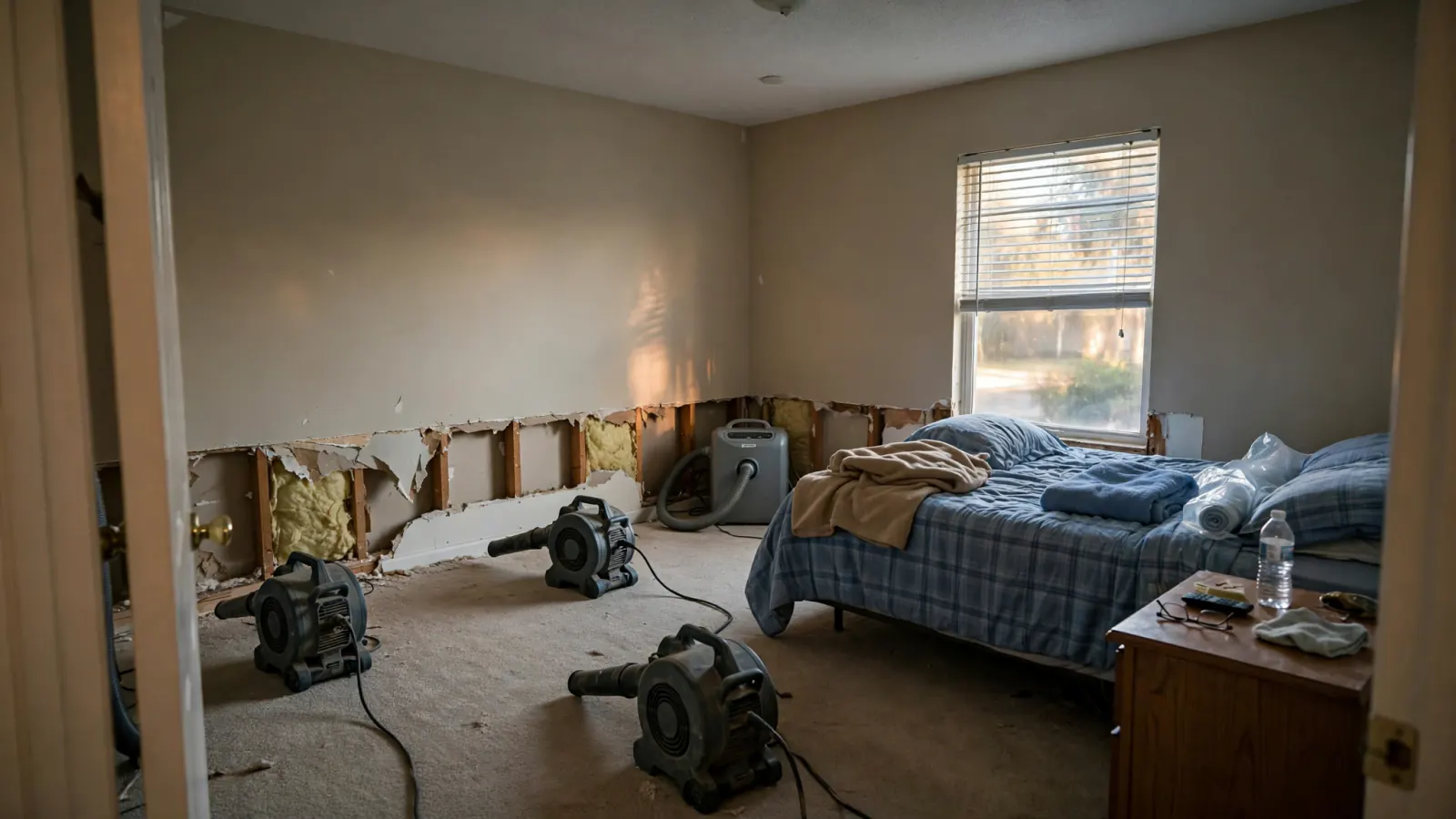
Air movers and a dehumidifier drying a bedroom with the drywall cut away

Warning signs

When to call

  • Standing water on floors, or carpet that squishes underfoot
  • Ceiling stains, sagging drywall or bubbling paint
  • Swollen baseboards, cupping wood or lifting laminate
  • A musty smell that appears after a leak or storm
  • Water around a water heater, AC air handler, toilet or washer
  • Rising water from a storm, king tide or drainage backup

Before & after

Before and after: water damage restoration

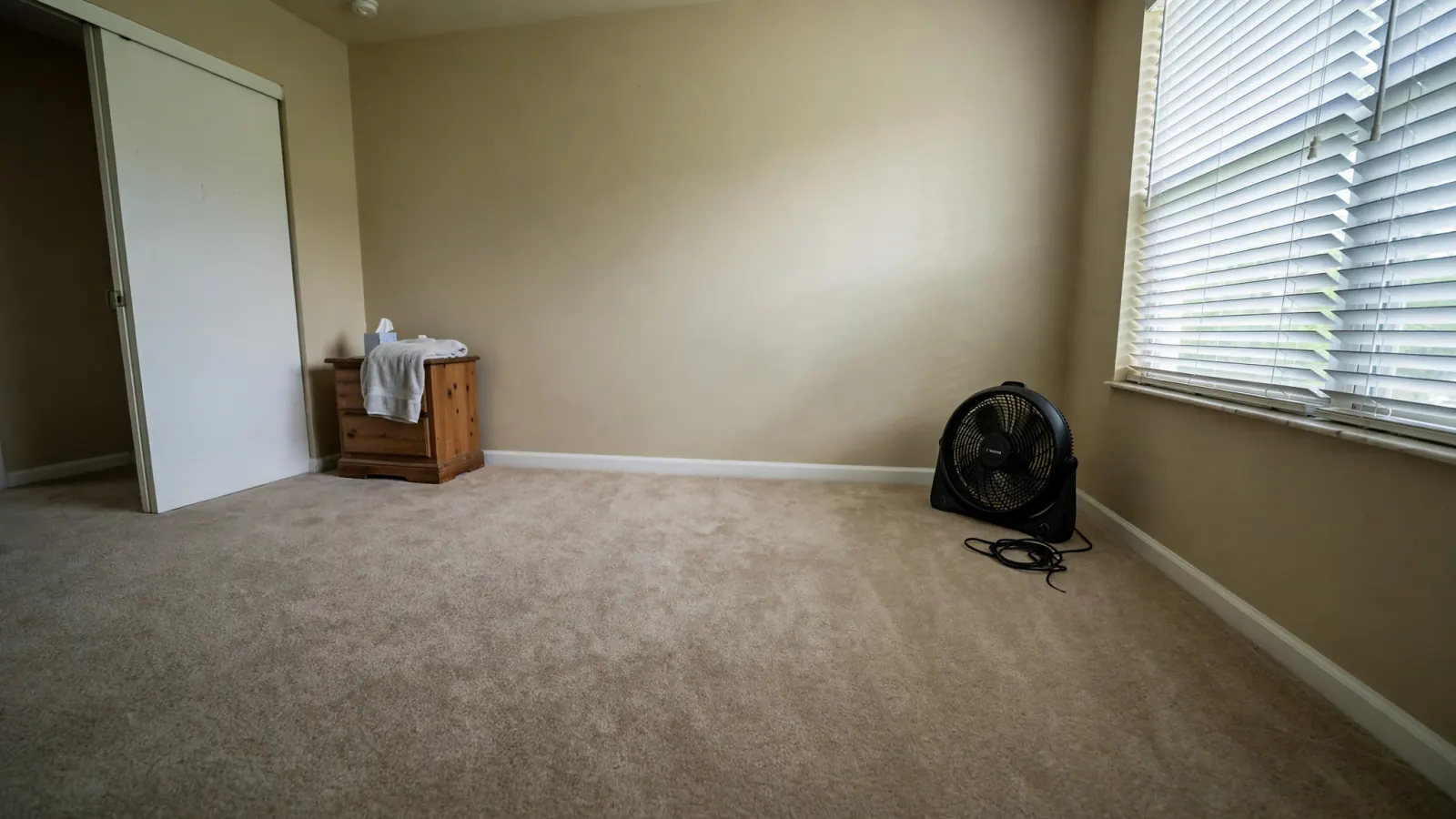
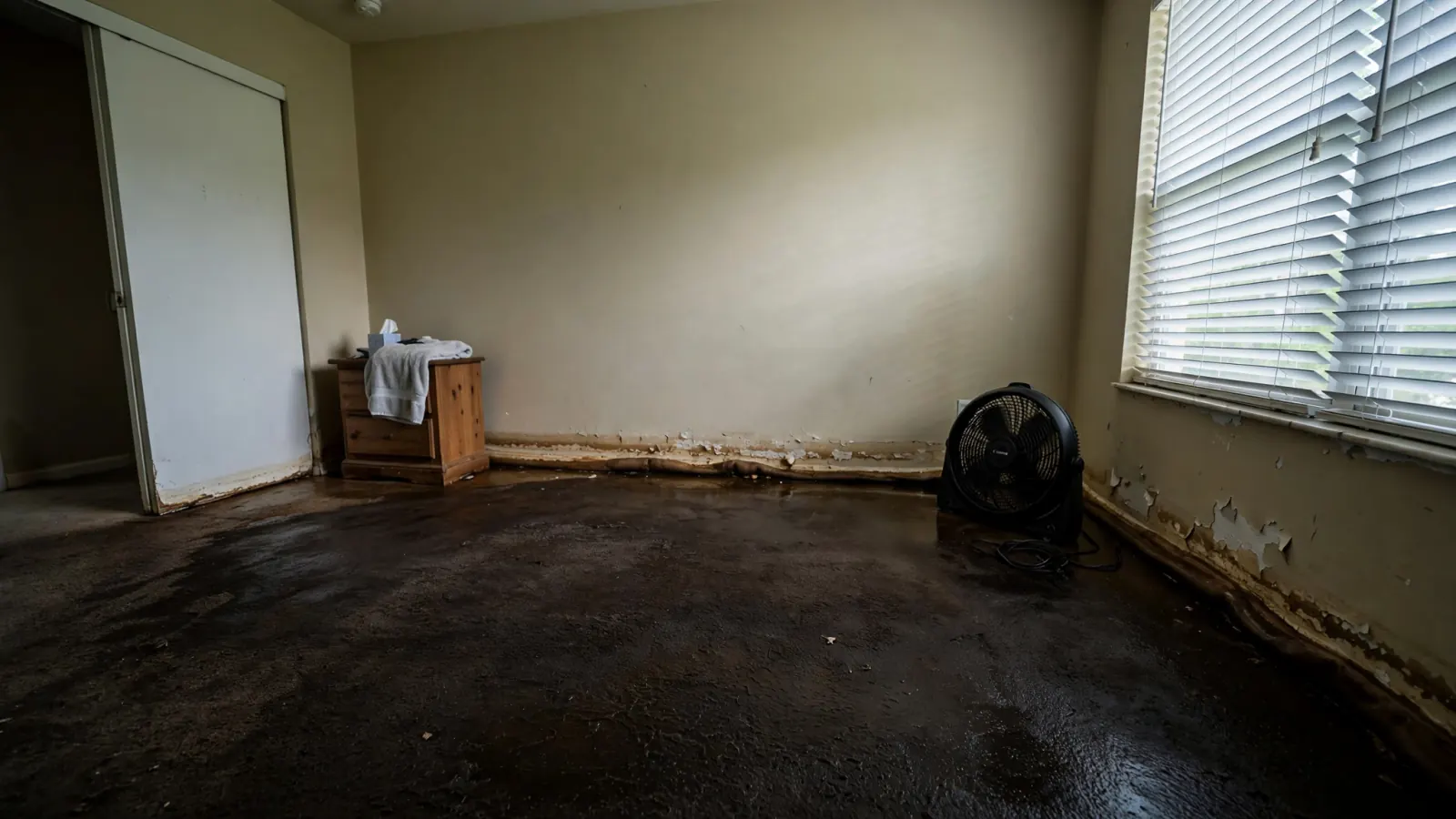
An example of water damage restoration work, from the damaged room to the finished repair. The independent company you're connected with will explain its own plan for your property.

Drag the handle to compare

After: The same bedroom with new carpet, paint and baseboards
Before: Soaked carpet and a water line along bedroom walls
BeforeAfter
Drag the handle or use the buttons to compare.

Straight answers

Water Damage Restoration: answers for Fort Pierce homeowners

?

What is the difference between water mitigation and water damage restoration?

Mitigation is the first phase: stopping further damage through extraction, removal and drying. Restoration usually means the whole job, including the repair phase that follows once materials are dry.

?

How do I know which water damage service I need?

Start with the source. A burst pipe, an AC leak, a roof leak, a sewage backup and storm flooding each have their own page below explaining the work involved, and a restoration company will confirm on site.

?

What are water damage categories?

Category 1 is clean water from a supply line, Category 2 is gray water such as washing machine discharge, and Category 3 is grossly contaminated water such as sewage or flood water. Water can worsen in category the longer it sits.

?

How long does the whole process take?

Drying often runs several days and is confirmed with moisture readings. Repairs follow and depend on materials, permits and insurance approvals.

What drives the price

What drives the price

No honest company can price water damage without measuring it. These are the factors that move the number on a Fort Pierce job.

$

Water category

Clean water from a supply line costs less to handle than gray or black water, which requires more removal and sanitizing.

$

Affected area

Square footage, number of rooms and whether water reached walls, cabinets or the ceiling below.

$

Materials

Tile and concrete dry differently from carpet, laminate, hardwood or plaster.

$

Time before drying starts

Longer delays mean more wicking, more tear-out and a higher chance of mold.

$

Repair scope

Rebuild work is often priced separately from mitigation.

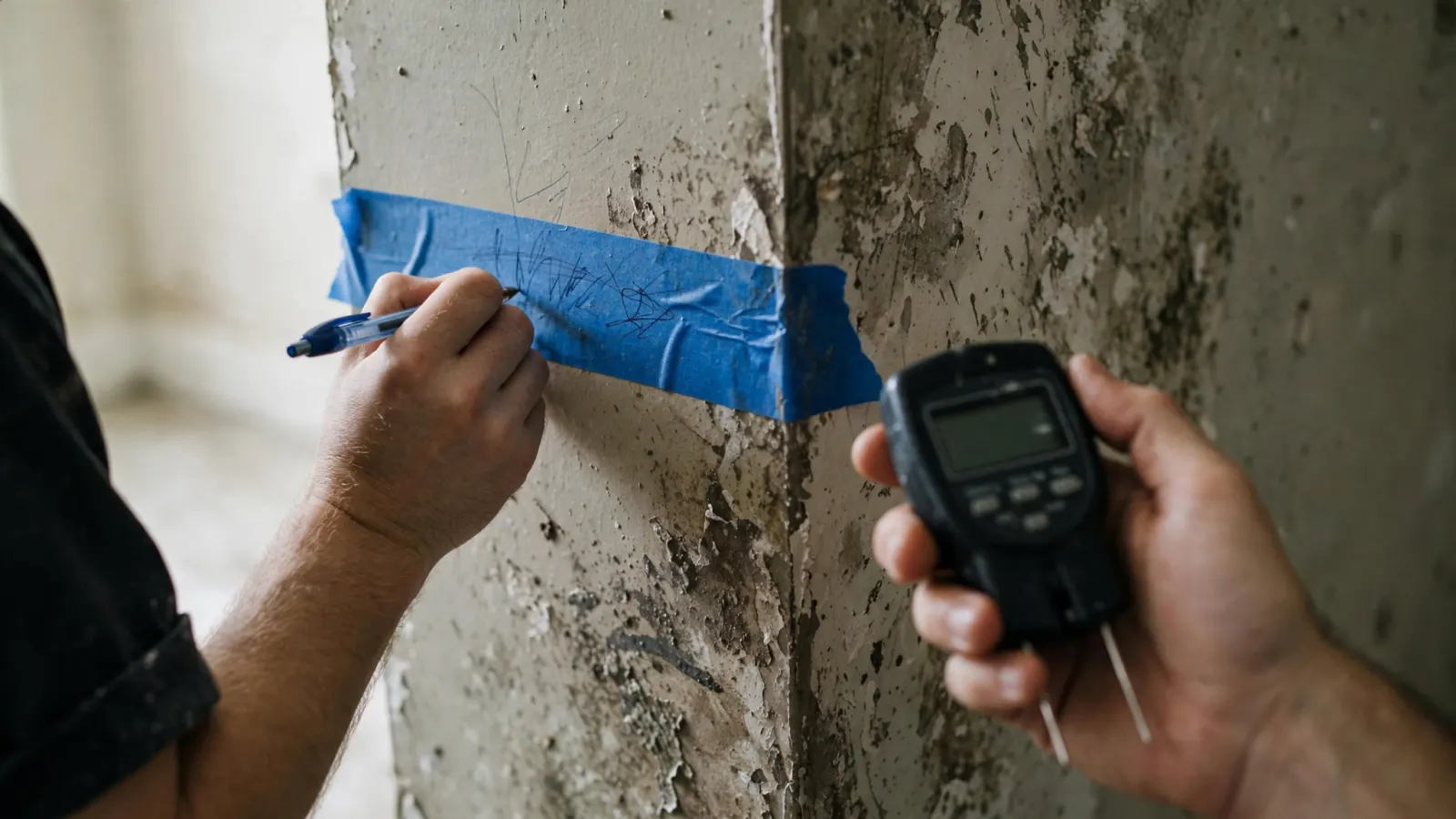
Technician writing moisture readings on tape on a damp wall

Background

More about water damage restoration

The industry reference for this work is the IICRC S500 Standard for Professional Water Damage Restoration. It sorts water into three categories by contamination (clean, gray and black) and four classes by how much evaporation is needed. Those two labels decide what can be dried in place and what has to go.

This page links every water damage service we cover, from a single burst supply line to storm flooding, so you can jump straight to the one that matches what you are seeing.

Safety first

If water is near outlets, cords or the electrical panel, do not walk through it. Turn off power at the breaker only if you can reach it while standing somewhere dry, otherwise wait for the utility or an electrician. Treat flood and sewage water as contaminated.

Call (772) 218-9226

Water still coming in? Close the main valve, then call.

The first hours decide how much has to be torn out. A local restoration company can extract and start drying.

Fort Pierce context

Water damage in Fort Pierce: what is different here

Fort Pierce averages about 51 inches of rain a year, and its humidity means wet materials grow mold faster than in drier climates. Older homes near downtown and the lagoon, slab-on-grade construction and widespread interior AC closets all shape how water damage shows up.

If you are inside Fort Pierce city limits, repair permits come from the City of Fort Pierce; in unincorporated areas such as Lakewood Park or Fort Pierce North they come from St. Lucie County.

Average rainfall

About 51 in/yr (1991–2020)

Main flood sources (City of Fort Pierce)

Summer downpours and tropical systems

Hurricane season

June 1 – November 30

Check your flood zone

FEMA Flood Map Service Center

Fort Pierce local guide

Where we connect callers

Water Damage Restoration in Florida and St. Lucie County

Referrals cover Fort Pierce and nearby St. Lucie County communities. The state page covers Florida rules; each city and area page explains local conditions and which government handles repair permits.

FAQ

Water Damage Restoration: questions people ask

Still unsure? Describe the problem on the phone and you will be connected with a restoration company serving your area.

Who can I call for water damage restoration in Fort Pierce?

Call the number on this page to be connected with an independent restoration company that serves Fort Pierce and St. Lucie County.

What should I do first when I find water damage?

Stop the water at the main shut-off valve if it is still running, stay away from water near electricity, photograph everything and then call for help.

Is water damage restoration covered by homeowners insurance in Florida?

Sudden and accidental water damage, such as a burst pipe, is commonly covered. Flooding from rising water usually needs a separate flood policy, and long-term leaks may be excluded. Check your own policy.

How fast does mold grow after water damage?

Wet materials can begin to support mold growth within about 24 to 48 hours, which is why prompt drying matters in a humid climate like Fort Pierce.

Can wet drywall be saved?

Sometimes, if it was wet with clean water and is dried quickly. Drywall that contacted gray or black water, or has swollen or crumbled, is usually cut out.

Can wet carpet be saved?

Carpet wet with clean water can often be extracted and dried. Pad is frequently replaced, and carpet soaked by sewage or flood water is generally discarded.

What is structural drying?

Using air movers and dehumidifiers to dry floors, walls and framing to measured targets, then confirming dryness with moisture readings before repairs.

Do I need to move out during water damage restoration?

Not always. It depends on how much of the home is affected, whether the water was contaminated and whether utilities are safe.

How much does water damage restoration cost in Fort Pierce?

It depends on the water category, the size of the affected area, the materials and the repair scope. A company should measure before giving a price.

Will the restoration company work with my insurance?

Many restoration companies document the job with photos, moisture maps and drying logs that insurers expect. You remain in control of your claim.

Can a contractor take over my insurance claim in Florida?

For residential and commercial property policies issued on or after January 1, 2023, Florida law prohibits assignment of post-loss benefits to contractors.

What is Category 3 water?

Grossly contaminated water such as sewage, flood water from outside, or water that has sat long enough to become contaminated. It requires removal of porous materials and sanitizing.

Is it safe to stay in a house with water damage?

Small clean-water leaks usually are. Sewage, flood water, electrical hazards, sagging ceilings or visible mold growth are reasons to stay out of the affected area.

Does the same company handle repairs after drying?

Some do both phases; others focus on mitigation and refer repairs to a licensed contractor. Ask at the start.

Is there a fee to call this number?

No. Calling is free and you are under no obligation to hire the company you are connected with.

Other main services

Water, fire, mold and biohazard restoration

Fire Damage Restoration

Fire damage restoration across St.

Mold Remediation

Mold remediation across St.

Biohazard Cleanup

Biohazard cleanup across St.

Guides

Guides worth reading first

Talk to a restoration company about water damage restoration

Free referral to an independent company serving Fort Pierce and St. Lucie County. No obligation to hire.

Call (772) 218-9226