
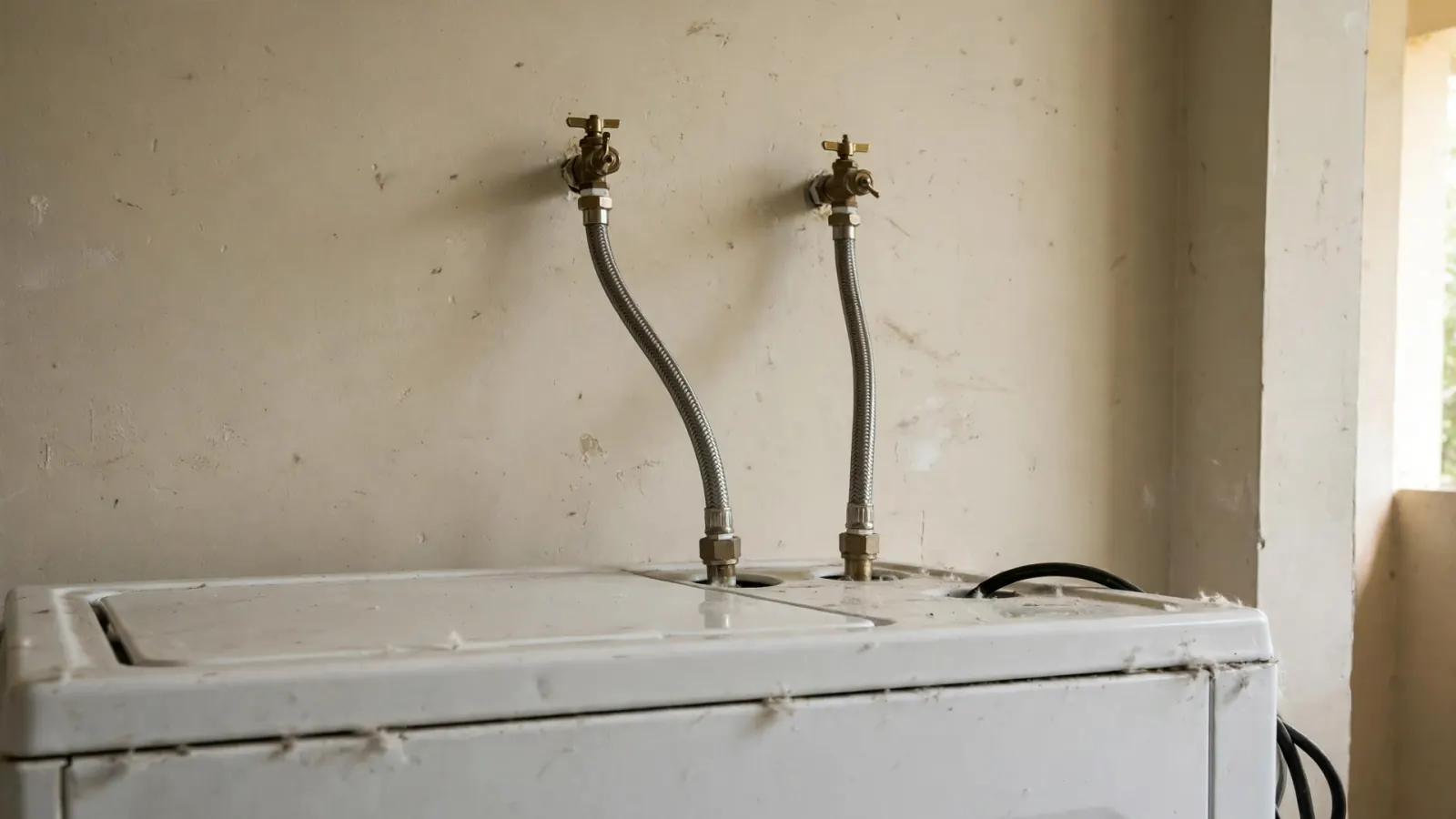
Leak prevention guide
When to Replace Washing Machine Hoses
How often to replace washing machine inlet hoses, warning signs of a failing hose, rubber versus braided hoses, and habits that prevent floods.
Short answer
Short answer: When to Replace Washing Machine Hoses
Whirlpool's product guidance recommends replacing washer inlet hoses after five years of use, and sooner if they show bulges, kinks, cuts, wear or leaks. A burst fill hose can release water continuously until the supply is shut off, so check hoses regularly, write the install date on them, and turn off the supply valves when you leave home for an extended period.
- Call (772) 218-9226
- Water Heater & Appliance Leaks
- Water Removal & Extraction
- Structural Drying
In this guide
- 1How often to replace them
- 2Warning signs of a failing hose
- 3Rubber versus braided hoses
- 4How to replace washer hoses
- 5Habits that prevent laundry room floods
- 6If a hose already burst
How often to replace them
Washer fill hoses are under water pressure all the time, even when the machine is off. Whirlpool's support guidance says to replace inlet hoses after five years of use to reduce the risk of hose failure and to inspect them periodically. Other manufacturers have similar advice, so check your own owner's manual. Writing the installation date on the hose with a permanent marker makes the next replacement easy to track.
Warning signs of a failing hose
- Bulges or blisters anywhere along the hose.
- Cracks, cuts or worn spots, especially near the fittings.
- Kinks where the hose bends sharply behind the machine.
- Rust or corrosion on the metal fittings.
- Moisture or drips at the connections.
- Rubber that feels brittle or sticky.
Rubber versus braided hoses
Plain rubber hoses are the most basic type. Braided stainless steel hoses have a rubber or plastic inner tube wrapped in a metal braid that resists bulging and punctures. Braided hoses are widely recommended as an upgrade, but the inner tube still ages, so they still need periodic inspection and replacement. Hoses with built-in flood-stop features shut off flow if a sudden surge is detected.
Dealing with this right now?
Call to be connected with an independent restoration company serving Fort Pierce and St. Lucie County.
How to replace washer hoses
This is usually a simple job, but follow the instructions that come with the new hoses.
- Turn off both hot and cold supply valves.
- Unplug the washer and pull it out carefully.
- Place a bucket and towels under the connections and unscrew the old hoses.
- Make sure the old rubber washers are not stuck inside the valves or inlets.
- Attach new hoses with new washers and hand-tighten, then snug gently; overtightening can damage fittings.
- Turn the water back on slowly and check every connection for drips.
- Leave a few inches of space behind the machine so hoses do not kink.
Habits that prevent laundry room floods
- Turn off the supply valves when leaving home for an extended trip or evacuating for a storm.
- Do not run the washer when nobody is home.
- Place a leak sensor or a drain pan under the machine, especially on a second floor or in a condo.
- Check that the drain hose is secured in the standpipe so it cannot pop out.
- Clean the lint filter or drain pump filter if your model has one.
If a hose already burst
Shut off the supply valves or the main water valve, unplug the washer from a dry spot, and remove standing water. Washer leaks are considered gray water (Category 2 under the IICRC S500 standard) if the water passed through the drum or drain, which means carpet pad and other porous materials it soaks are often replaced. Clean supply-hose water is easier to dry if caught quickly.
Related services
Services that go with this guide
Water Heater & Appliance Leak Water Damage
Leaking water heaters, washers, dishwashers and ice makers in Fort Pierce: shut-off steps, hidden damage under cabinets, drying and insurance..
Emergency Water Removal & Extraction
Emergency water extraction in Fort Pierce: what to do first, how standing water is removed from tile, carpet and slabs, and how drying starts..
Structural Drying & Dehumidification
How structural drying works in Fort Pierce's humid climate: air movers, dehumidifiers, daily moisture readings and drying logs insurers expect..
Guides
Keep reading
- Are Water Leak Detectors Worth It?Water leak sensors, smart alarms and automatic shut-off valves compared, where to place them in a Florida home, and who benefits most.
- Can Wet Carpet Be Saved?When wet carpet can be dried and kept, when the pad or carpet must go, and how water source and drying speed decide it under EPA guidance.
FAQ
Questions people ask
Still unsure? Describe the problem on the phone and you will be connected with a restoration company serving your area.
How often should washing machine hoses be replaced?
Whirlpool recommends replacing inlet hoses after five years of use, and sooner if they show damage. Check your owner's manual.
What are signs a washer hose is about to burst?
Bulges, cracks, kinks, rusted fittings, brittle rubber and drips at the connections.
Are braided washer hoses better?
They resist bulging and punctures better than plain rubber, but they still need to be inspected and replaced.
Should I turn off my washer water when I leave?
Turning off the supply valves for extended trips or storm evacuations reduces the risk of a burst hose flooding the home.
Can I replace washer hoses myself?
Usually yes. Turn off the water, swap the hoses with new washers and check for leaks.
How tight should washer hoses be?
Hand-tight plus a gentle snug. Overtightening can damage the fittings and washers.
What is a flood-stop washer hose?
A hose with a built-in valve that shuts off flow if a sudden surge suggests a burst.
How much water can a burst washer hose release?
It keeps releasing water until the supply is shut off, which is why burst hoses can cause major damage.
Is washing machine water clean or dirty?
Water that passed through the drum or drain is considered gray water and may carry contaminants.
Does insurance cover a burst washer hose?
Sudden water damage is commonly covered, but the hose itself and long-term leaks may not be. Check your policy.
Should I put a pan under my washing machine?
It is a good idea, especially on upper floors and in condos, ideally with a drain or a leak sensor.
Why is water leaking behind my washer?
Common causes are a loose or worn inlet hose, a cracked fitting or the drain hose slipping from the standpipe.
Do I need to replace both washer hoses?
Yes. Hot and cold hoses age at the same rate, so replace them together.
Can a washer leak cause mold?
Yes, if flooring, walls or cabinets stay wet for more than a day or two.
Who dries washer leak damage in Fort Pierce?
Call the number on this page to be connected with an independent restoration company serving Fort Pierce.
Talk to a restoration company serving Fort Pierce
Free referral. No obligation to hire.