
Port St. Lucie, FL
Emergency Water Removal in Port St. Lucie
For standing water in a Port St. Lucie home, shut off the main water valve, cut power to wet rooms if the panel is safe to reach, move valuables off the floor, and call for extraction. A restoration crew removes the water with extractors and pumps, then sets up drying equipment. Our referral line connects you with an independent company that serves Port St. Lucie.
restoration company
Short answer
Water Removal & Extraction in Port St. Lucie: the essentials
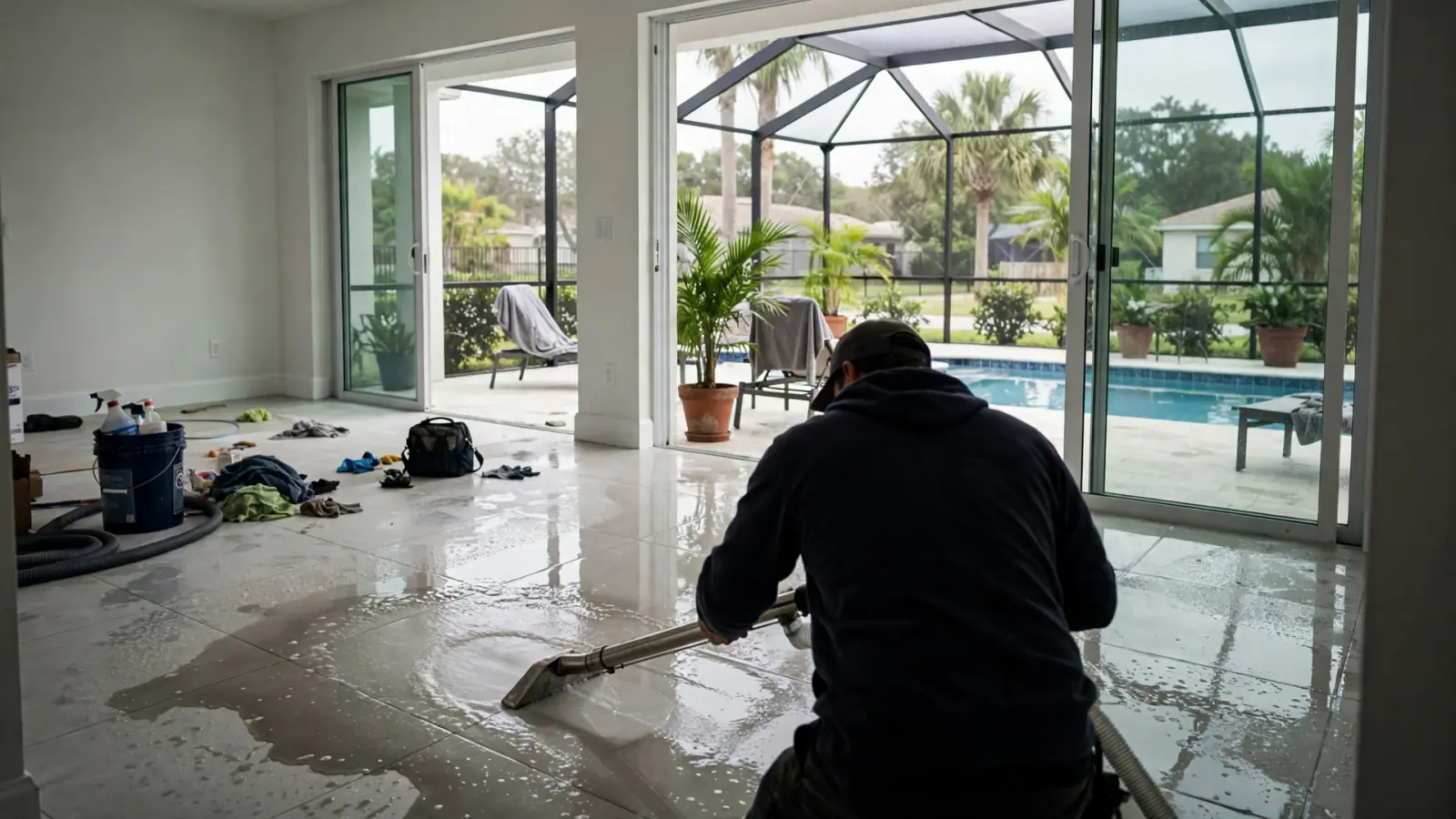
Emergency water removal is the first stage of water damage restoration: a crew uses truck-mounted or portable extraction units, submersible pumps and weighted extraction tools to pull standing and absorbed water out of floors, carpet and pad before drying equipment goes in. The faster extraction starts, the less water wicks into drywall, cabinets and subfloors.
- Call (772) 218-9226
- Water Removal & Extraction
- Port St. Lucie
Port St. Lucie
Why speed matters in Port St. Lucie homes
Most Port St. Lucie homes are single-story on concrete slabs with tile, laminate or carpet. With no basement to collect water, it spreads across rooms and reaches drywall quickly. Laminate in newer homes traps water underneath, and carpet pad holds it against the slab.
Port St. Lucie is the county's largest city, with more than 200,000 residents. During regional storm events, restoration companies are stretched across the whole Treasure Coast, so getting on a provider's schedule early helps.
Local detail
Older sections vs. newer communities
Homes built in the decades after the city's 1961 incorporation are more likely to have aging water heaters and original plumbing. Newer homes in communities such as St. Lucie West and Tradition more often involve failed PEX fittings, supply lines and appliance connections. Either way, the extraction process is the same; the follow-up repairs differ.
- 1Close the main water shut-off (often near the meter at the front of the property)
- 2Switch off breakers for wet rooms if you can reach the panel without standing in water
- 3Lift furniture onto blocks or foil; move rugs, electronics and documents
- 4Photograph the water and the source before cleanup
- 5Call your insurer to open a claim and note the claim number
The process
How water removal & extraction works
- 01
Stop the source
Shut off the main water valve or the fixture valve, and switch off power to wet areas if it is safe to reach the breaker panel. If water is coming from outside, the crew will focus on removal once the storm source has eased.
- 02
Inspection & moisture mapping
The technician walks the affected rooms with moisture meters and often a thermal camera to find where water has travelled: under cabinets, behind baseboards and into adjoining rooms.
- 03
Extraction
Truck-mounted or portable extractors remove water from carpet and pad; submersible pumps handle deep water. Weighted or ride-on extraction tools pull far more water from carpet than surface wands.
- 04
Remove what cannot be saved
Saturated carpet pad, swollen particleboard and contaminated materials are usually removed and documented with photos for the insurance file.
- 05
Set up drying
Once bulk water is gone, the crew places air movers and dehumidifiers and starts daily moisture readings: see structural drying.
Water Removal & Extraction in Port St. Lucie? Call now.
Free referral to an independent restoration company serving the area.
Worth knowing
What extraction equipment does
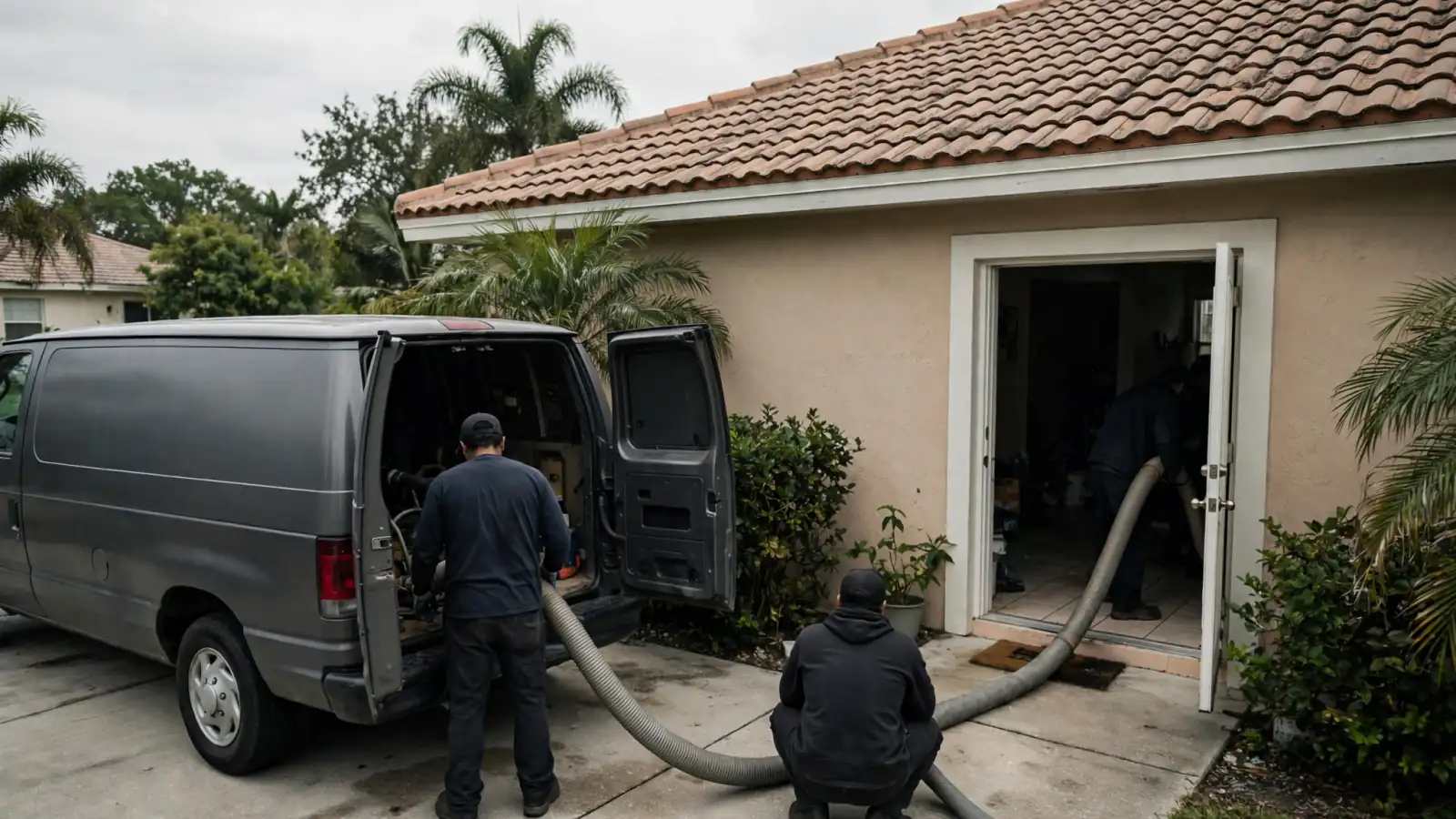
Truck-mounted units pull water through long hoses from a vehicle outside, which suits large single-story Port St. Lucie homes. Portable extractors handle condos and tight spaces. Submersible pumps move deep water, and weighted extraction tools press water out of carpet and pad far more effectively than a wet vac.
After extraction
Once standing water is out, air movers and dehumidifiers take over. Expect equipment to stay several days, with daily readings, until floors, baseboards and lower walls reach the dry standard. Removing equipment early because a room 'feels dry' is a common cause of later odor and mold.
Warning signs
Signs it's time to call
- 01
Water pooled on tile, laminate or wood floors
- 02
Carpet that squishes underfoot or a pad that stays wet after the surface looks dry
- 03
Water running from under a vanity, dishwasher, washing machine or water heater
- 04
Wet baseboards or drywall that is darkening from the floor up
- 05
Water entering through a sliding door, garage or threshold during a storm
Cost factors
Cost factors
What moves the price on a water removal & extraction job in Port St. Lucie. Ask for an itemized estimate after an inspection.
Read the Fort Pierce cost guideSquare footage affected
Extraction and equipment are priced largely by area and by how many rooms the water reached.
Water category
Clean supply-line water (Category 1) costs less to handle than gray (Category 2) or sewage/flood water (Category 3), which requires removal of porous materials and more protective equipment.
Flooring type
Carpet and pad can sometimes be dried in place; laminate and engineered wood often trap water underneath and are usually removed.
After-hours response
Nights, weekends and holidays can carry emergency-service rates. Ask before work begins.
Time since the leak
Water that has sat for a day or more has usually wicked into walls and cabinets, which increases demolition and drying time.
Rules & resources
Who handles what in Port St. Lucie
After the water is out and the structure is dry, rebuilding may need permits. Which office issues them depends on whether the property is inside a city or town or in unincorporated St. Lucie County.
- Building permits for repairs
- City of Port St. Lucie
- Flood zone lookup
- FEMA Flood Map Service Center (msc.fema.gov)
- Contractor & mold licenses
- Florida DBPR: myfloridalicense.com
- Beach construction line
- Not applicable inland
Keep reading
More for Port St. Lucie
Burst Pipe & Plumbing Leak Damage in Port St. Lucie
Burst supply lines, slab leaks and hidden plumbing leaks in Fort Pierce: what to do first, how cleanup and drying work and what insurance often covers..
AC & Air Handler Leak Water Damage in Port St. Lucie
Clogged condensate lines and overflowing air handler pans are a common Fort Pierce leak source: what to do first, drying and preventing repeats..
Flood & Storm Water Cleanup in Port St. Lucie
Flood and storm cleanup in Fort Pierce: hurricane and king-tide flooding, Category 3 water, what must be removed, flood insurance and drying..
Emergency Water Removal & Extraction: full guide
Process, safety, cost factors and FAQs for this service.
Port St. Lucie area page
Local conditions, permits and nearby communities.
FAQ
Water Removal & Extraction in Port St. Lucie: FAQs
Still unsure? Describe the problem on the phone and you will be connected with a restoration company serving your area.
Is emergency water removal available at night in Port St. Lucie?
Many restoration companies offer after-hours response. Availability depends on the provider and on regional demand; ask when you call.
Who permits repairs after water damage in Port St. Lucie?
Properties within city limits are permitted through the City of Port St. Lucie. Unincorporated areas nearby, such as River Park, go through St. Lucie County.
Is this site a Port St. Lucie restoration company?
No. It is a referral service. The independent company you are connected with performs and quotes the work.
Who removes water from a flooded house in Port St. Lucie?
Water damage restoration companies. Call the number on this page to be connected with an independent company serving Port St. Lucie.
How fast can someone come for water removal in Port St. Lucie?
It depends on the provider's schedule and regional demand. During storms, active water is prioritized.
Should I shut off my water main in Port St. Lucie?
Yes, if water is coming from plumbing. The main is often near the meter at the front of the property.
Is my carpet ruined after a leak?
Not always. Carpet soaked by clean water and extracted quickly can often be dried; the pad is usually replaced.
Can water get under tile floors?
Through grout lines and edges, yes. Moisture readings show whether the slab and setting materials are wet.
How do I keep furniture from staining wet carpet?
Put aluminum foil or wood blocks under the legs and move rugs off wet carpet.
Do I need to call my insurance before water removal?
Report the claim promptly, but don't wait for an adjuster to start extraction. Photograph everything first.
Does water extraction include drying?
Extraction removes bulk water; drying with air movers and dehumidifiers is the next step and usually part of the same job.
What if the water came from outside?
Outside water is treated as contaminated. Porous materials it touched are usually removed.
Can I use my shop vac while I wait?
For small amounts of clean water on hard floors, yes, with power off in the room. It won't dry carpet pad or walls.
Is emergency water removal more expensive on weekends?
It can be. Ask about after-hours rates when you call.
Can you help in Tradition or St. Lucie West?
Yes. Referrals cover all of Port St. Lucie.
Talk to a restoration company in Port St. Lucie
No obligation to hire. Verify Florida licenses before you sign.