
Fire and smoke guide
What to Do After a House Fire
What to do after a house fire in St. Lucie County: safe reentry, the fire report, insurance, securing the home, discarding food and smoke cleanup.
Short answer
Short answer: What to Do After a House Fire
Do not go back in until the fire department says it is safe. Then call your insurer, ask the fire department for the fire report, and secure the home against weather and theft with board-up and tarping. Photograph the damage before cleanup, throw away food, medicine and cosmetics exposed to heat, smoke or soot, and keep every receipt. Smoke, soot and the water used to put out the fire all cause damage that gets worse with time, so arrange cleanup promptly.
- Call (772) 218-9226
- Fire Damage Restoration
- Smoke & Soot Cleanup
- Smoke Odor Removal
In this guide
- 1The first day
- 2Secure the property
- 3Document everything
- 4Food, medicine and valuables
- 5Why smoke and soot damage spreads
- 6Do not try this yourself
- 7Working with your insurer
The first day
- Do not reenter until the fire department says it is safe; structures, wiring and gas lines may be damaged.
- Contact family and let them know you are safe.
- If you need emergency housing, food or medicine, contact the American Red Cross or local emergency services.
- Call your insurance company and ask what they need from you right now.
- Ask the fire department for the incident or fire report number; insurers usually need it.
- Find out whether utilities were shut off; do not reconnect them yourself.
Secure the property
Broken windows, open doors and roof holes let in rain and intruders. Most policies expect you to take reasonable steps to prevent further damage. Restoration companies typically provide emergency board-up of windows and doors and tarping of the roof. Keep receipts, since these costs are commonly part of the claim.
Document everything
- Photograph and video each room, damaged belongings and the outside of the house before cleanup begins.
- Make a list of damaged items, with approximate age and value where you know it.
- Keep receipts for lodging, meals, clothing and other additional living expenses.
- Write down every conversation with your insurer and the adjuster.
- Do not throw away damaged items until your insurer says you can, unless they are a health hazard.
Food, medicine and valuables
The Red Cross and U.S. Fire Administration advise throwing away food, beverages and medicine exposed to heat, smoke, soot or fire-fighting water, including items in the refrigerator if power was out. Look for valuables, important documents, cash and jewelry once it is safe, and contact your bank about any damaged cards. Replace identification documents through the issuing agencies.
Dealing with this right now?
Call to be connected with an independent restoration company serving Fort Pierce and St. Lucie County.
Why smoke and soot damage spreads
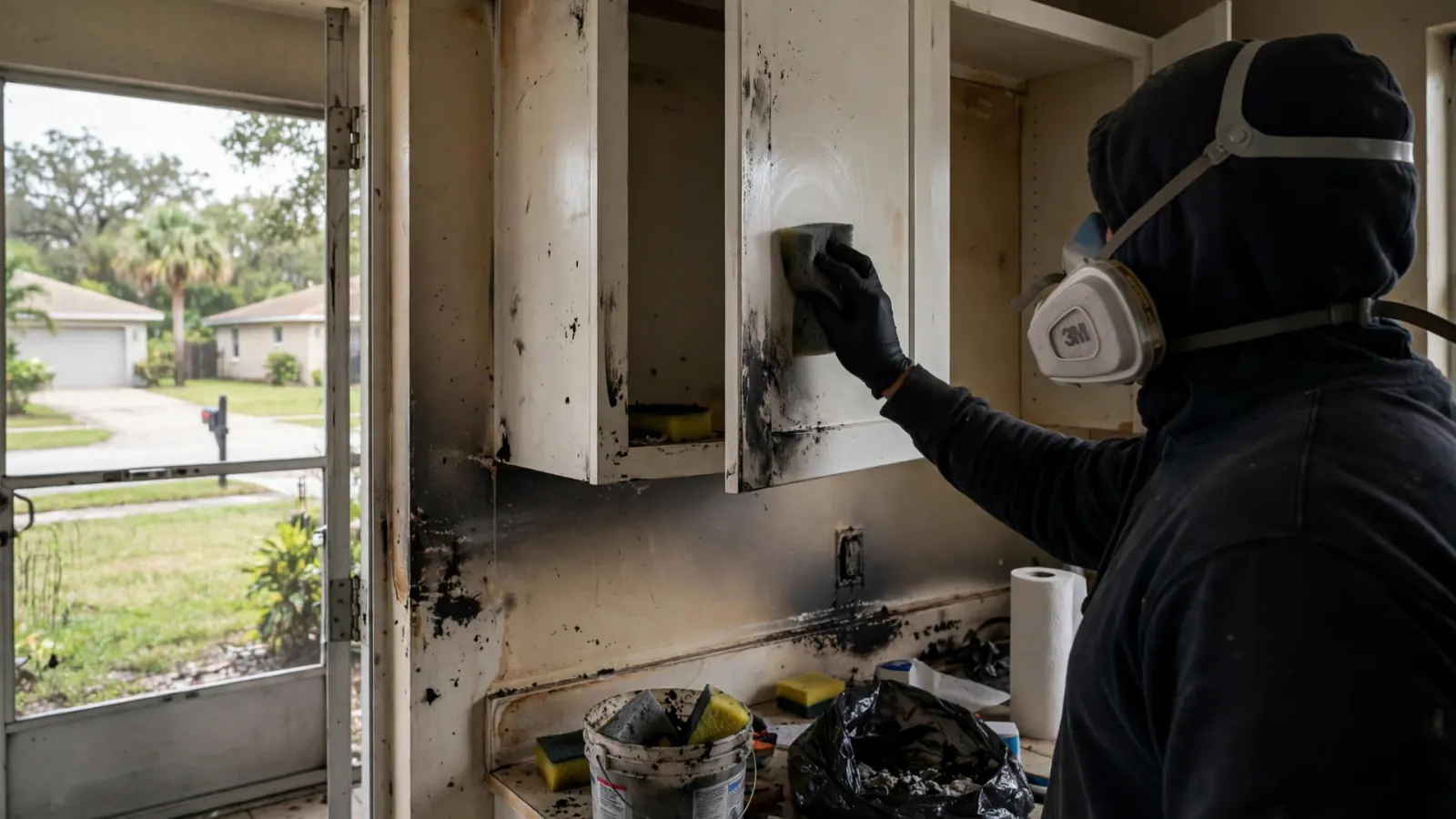
Soot is acidic and can discolor and etch surfaces such as plastics, metal fixtures, grout and glass, and the damage worsens the longer it sits. Smoke odor gets into drywall, insulation, fabrics and the HVAC system. Water from fire hoses soaks floors and walls and can lead to mold if not dried. That is why fire restoration usually includes soot cleaning, odor removal, water removal and drying together.
| Damage | Typical response |
|---|---|
| Soot on walls, ceilings and contents | Dry cleaning sponges, then appropriate wet cleaning by surface type |
| Smoke odor | Cleaning sources, removing badly affected materials, then deodorization methods such as thermal fogging or hydroxyl or ozone treatment in unoccupied spaces |
| Fire-fighting water | Extraction, drying and moisture monitoring |
| Burned materials | Demolition and rebuilding, often with permits |
| HVAC contamination | Inspection and duct cleaning before running the system |
Do not try this yourself
- Do not turn on the HVAC system before it is inspected; it can spread soot.
- Do not wipe soot with wet cloths before dry cleaning; it can smear and set stains.
- Do not use electrical appliances that were exposed to heat or water until checked.
- Do not eat food that was in the home during the fire.
- Do not sign contracts under pressure; take time to verify any contractor's license and insurance.
Working with your insurer
Read your policy, including coverage for the structure, contents and additional living expenses. The insurer will assign an adjuster. Florida homeowners can also hire a licensed public adjuster at their own expense, but are not required to. Get written estimates, and keep copies of everything you submit.
Related services
Services that go with this guide
Fire Damage Restoration
Fire damage restoration across St.
Smoke and Soot Cleanup
How smoke and soot are cleaned after a Fort Pierce fire: dry vs.
Smoke Odor Removal
How smoke smell is removed after a Fort Pierce fire: source removal, cleaning, sealing, HVAC, thermal fogging and hydroxyl or ozone, with safety limits..
Guides
Keep reading
- How to Put Out a Grease Fire SafelyHow to put out a small grease fire: cover the pan, turn off the burner, never use water, handle oven fires safely, and know when to leave.
- Water Damage Insurance Claims in Florida: What Changed and What to DoHow Florida's insurance reforms affect water damage claims in Fort Pierce: the assignment-of-benefits ban, flood vs. homeowners coverage and records.
- What to Do When Someone Dies at Home in FloridaWhen someone dies at home in Florida: who to call for expected and unexpected deaths, the medical examiner's role, funeral steps and home cleanup.
FAQ
Questions people ask
Still unsure? Describe the problem on the phone and you will be connected with a restoration company serving your area.
What should I do first after a house fire?
Stay out until the fire department says it is safe, contact your insurer, get the fire report number and secure the home.
When can I go back into my house after a fire?
Only when the fire department says it is safe to enter.
How do I get a fire report in St. Lucie County?
Ask the responding fire department; most fires in the county are handled by the St. Lucie County Fire District.
Should I throw away food after a house fire?
Yes. Discard food, drinks and medicine exposed to heat, smoke, soot or fire-fighting water.
Who boards up a house after a fire?
Restoration companies commonly provide emergency board-up and roof tarping.
Does insurance pay for a hotel after a house fire?
Many policies include additional living expenses when the home is uninhabitable. Check your policy.
Can I clean soot myself?
Light soot on a few hard surfaces, perhaps. Wiping soot with wet cloths can smear it. Larger jobs need professional cleaning.
How long does smoke smell last after a fire?
It can persist for a long time if sources are not cleaned or removed. Professional deodorization targets the source.
Should I run my AC after a fire?
Not until the HVAC system has been inspected and cleaned, since it can spread soot.
Do I need a public adjuster?
It is optional. Florida homeowners can hire a licensed public adjuster at their own expense.
What documents should I keep after a fire?
The fire report number, photos, inventory of damaged items, receipts and records of conversations with your insurer.
Can fire damage cause mold?
Yes. Water used to fight the fire can soak materials, which may grow mold if not dried.
Can my clothes be saved after a fire?
Many clothes and fabrics can be professionally cleaned of smoke and soot. Badly burned items cannot.
How soon should fire cleanup start?
Promptly. Soot and water damage both get worse the longer they sit.
Who handles fire damage cleanup in Fort Pierce?
Call the number on this page to be connected with an independent restoration company serving Fort Pierce.
Talk to a restoration company serving Fort Pierce
Free referral. No obligation to hire.