
Hutchinson Island South, FL
Storm & Flood Cleanup on Hutchinson Island South
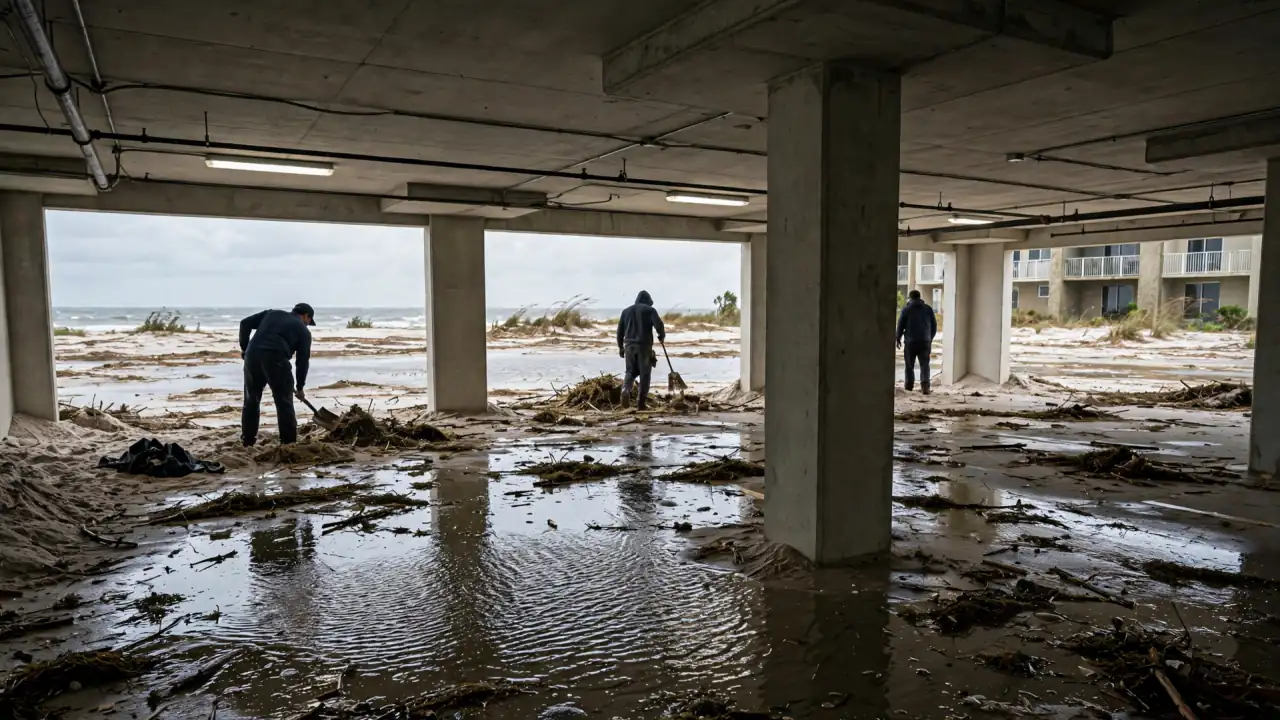
Hutchinson Island South sits on a barrier island between the Atlantic and the Indian River Lagoon, so tropical systems can bring storm surge, wind-driven rain and flooding. Surge and rising water are flood-policy matters; rain entering through damaged windows, doors or roofs is usually handled under the homeowners or condo policy, subject to hurricane deductibles. Cleanup should begin as soon as authorities allow residents back on the island.
- Water entered at floor level from outside: under doors, through the garage, or up through drains
- A visible water line on walls, furniture or cabinets
- Mud, silt or debris left behind on floors
- Wet insulation or soft, crumbling drywall at the bottom of walls
Short answer
Flood & Storm Cleanup in Hutchinson Island South: the essentials
Flood cleanup deals with water that entered from outside: storm surge, rising water, or heavy rain flowing in at ground level. Because it carries soil, bacteria and chemicals, it is treated as Category 3 (contaminated) water: porous materials it touched, such as carpet, pad, insulation and the lower portion of drywall, are typically removed rather than dried, and surfaces are cleaned and treated before drying begins.
- Call (772) 218-9226
- Flood & Storm Cleanup
- Hutchinson Island South
Hutchinson Island South
Lessons from 2004
Hurricanes Frances and Jeanne made landfall near the southern end of Hutchinson Island within three weeks of each other in September 2004. The National Hurricane Center's report on Jeanne records a 127 mph gust at the Fort Pierce Inlet and storm surge of about four feet. Back-to-back storms are a reminder that temporary repairs and drying need to happen quickly between events.
Local detail
Returning after a storm
Re-entry to the island may be restricted after a major storm. When you can return, photograph damage before moving anything, note water lines, and get drying started: barrier-island humidity accelerates mold on wet materials.
Step by step
How flood & storm cleanup works
What an independent restoration crew typically does, from the first call to a verified dry structure.
- 1
Safety check
Confirm power to flooded areas is off and the structure is safe to enter. Flood water can hide electrical hazards, sharp debris and displaced wildlife.
- 2
Document everything
Photograph the water line, every damaged item and the outside conditions before anything is moved. Flood insurance and homeowners claims are handled differently, and both rely on documentation.
- 3
Remove water and debris
Pumps and extractors remove water and silt. Contents are moved out and inventoried.
- 4
Flood cut and remove porous materials
Drywall is typically cut a set distance above the water line, and wet insulation, carpet and pad are removed and disposed of.
- 5
Clean, treat, dry
Remaining surfaces are cleaned and treated with appropriate antimicrobial products, then structural drying begins and is verified with moisture readings.
Flood & Storm Cleanup in Hutchinson Island South? Call now.
Free referral to an independent restoration company serving the area.
Worth knowing
Surge, rain and salt
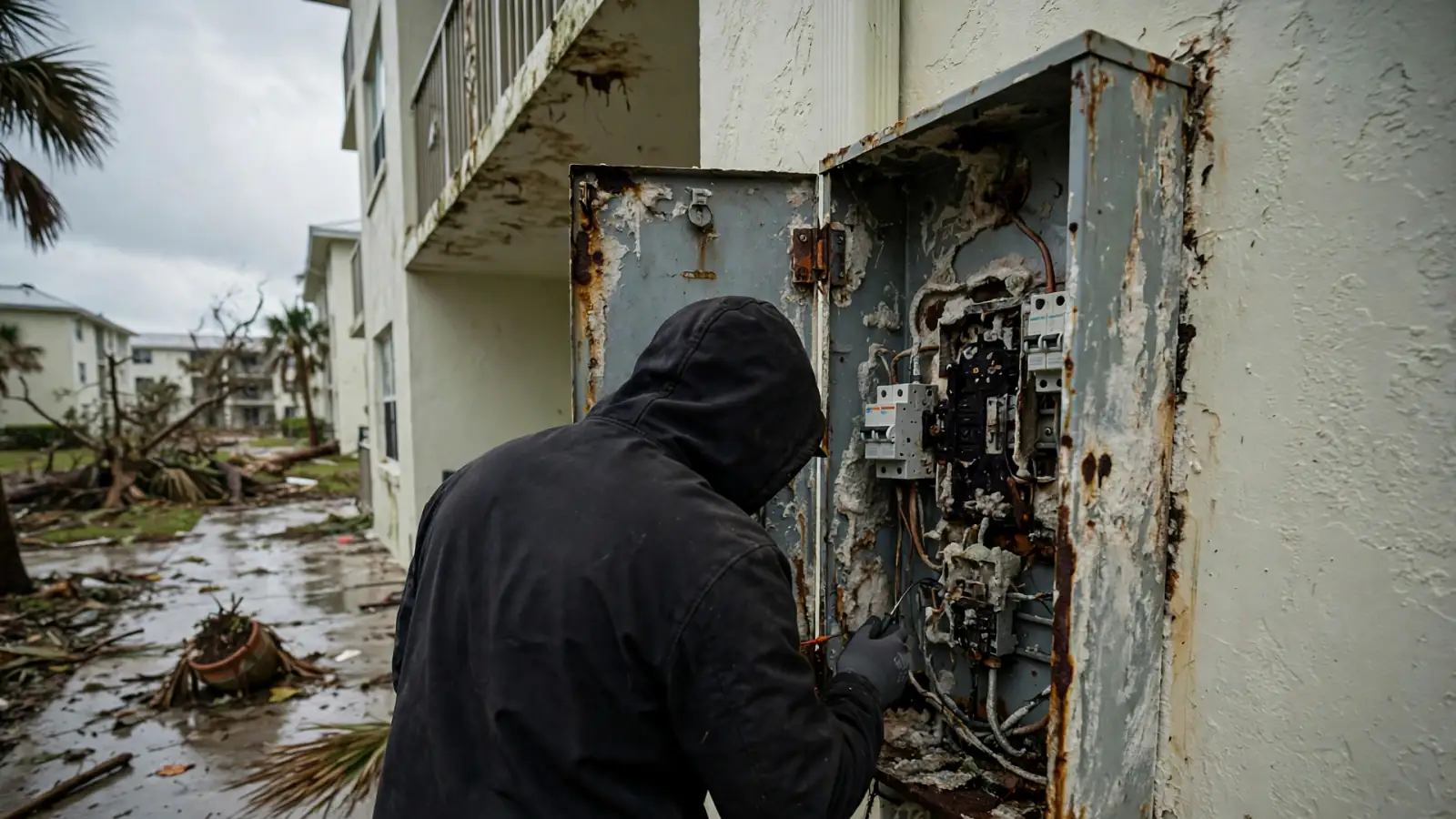
On the barrier island, storm water arrives three ways: surge from the ocean or lagoon, wind-driven rain through openings, and rainfall that can't drain fast enough. Salt water adds corrosion risk to electrical components and metal, so wiring and equipment exposed to surge should be inspected by licensed professionals before use.
Building-wide recovery
After a major storm, condominium associations often coordinate recovery for common areas while owners handle their units. Ask management for the plan and timeline, and arrange drying of your unit as soon as access allows.
Warning signs
Signs it's time to call
- 01
Water entered at floor level from outside: under doors, through the garage, or up through drains
- 02
A visible water line on walls, furniture or cabinets
- 03
Mud, silt or debris left behind on floors
- 04
Wet insulation or soft, crumbling drywall at the bottom of walls
- 05
A sewage or fuel odor after the water recedes
What drives the price
Cost factors
What moves the price on a flood & storm cleanup job in Hutchinson Island South. Ask for an itemized estimate after an inspection.
Height of the water line
Determines how much drywall, insulation and cabinetry has to be removed.
Contamination level
Flood water requires protective equipment, antimicrobial treatment and disposal of porous materials.
Contents
Moving, cleaning, inventorying or disposing of furniture and belongings adds labor.
Regional demand
After a hurricane, every restoration company in the region is busy; scheduling and pricing can be affected.
Debris disposal
Dumpster and disposal fees depend on how much material is removed.
Rules & resources
Who handles what in Hutchinson Island South
After the water is out and the structure is dry, rebuilding may need permits. Which office issues them depends on whether the property is inside a city or town or in unincorporated St. Lucie County.
- Building permits for repairs
- St. Lucie County (unincorporated)
- Flood zone lookup
- FEMA Flood Map Service Center (msc.fema.gov)
- Contractor & mold licenses
- Florida DBPR: myfloridalicense.com
- Beach construction line
- Florida DEP MapDirect (CCCL)
Keep reading
More for Hutchinson Island South
Condo Water Damage on Hutchinson Island South
Water from the unit above, a failed AC drain or a common-element leak: how condo water damage is handled in Fort Pierce and what to document..
Flood & Storm Water Damage Cleanup: full guide
Process, safety, cost factors and FAQs for this service.
Hutchinson Island South area page
Local conditions, permits and nearby communities.
FAQ
Flood & Storm Cleanup in Hutchinson Island South: FAQs
Still unsure? Describe the problem on the phone and you will be connected with a restoration company serving your area.
Is storm surge covered by condo or homeowners insurance?
Generally no: storm surge is treated as flood and is covered by a flood policy. Wind and wind-driven rain are usually covered by the property policy, subject to the hurricane deductible.
How soon after a hurricane can cleanup start?
As soon as authorities allow access and the building is safe. Restoration demand is very high across the region after a major storm.
Who cleans up storm damage on Hutchinson Island South?
Water damage restoration companies. Call the number on this page to be connected.
Is salt water damage worse than fresh water?
Salt water is corrosive to metal and electrical components, which should be inspected before use.
Can I go back to my condo right after a hurricane?
Only when officials reopen access to the island and the building is declared safe.
What is covered by flood insurance after a hurricane?
Damage from rising water and surge, within policy limits. Wind damage is usually under the property policy.
Does my HO-6 cover hurricane damage?
It may cover wind damage to interior items, subject to the hurricane deductible; check your policy.
How do I document hurricane damage?
Photograph water lines, every room and item, and the building exterior before cleanup.
Should I throw away items touched by surge water?
Porous items soaked by surge water are generally discarded.
Who repairs the building's common areas?
The condominium association, usually through its own contractors and master policy.
When did hurricanes last hit Hutchinson Island?
Frances and Jeanne both made landfall near the southern end of Hutchinson Island in 2004.
Can my car be damaged by storm surge in the garage?
Yes; that is typically a comprehensive auto claim.
How fast does mold grow after a hurricane?
In island humidity, wet materials can support mold within a day or two.
What is a hurricane deductible?
A separate deductible for named-storm damage, often a percentage of coverage.
Where can I check flood risk for my building?
FEMA's Flood Map Service Center and Florida DEP's MapDirect for the coastal construction line.
Talk to a restoration company in Hutchinson Island South
No obligation to hire. Verify Florida licenses before you sign.