
Biohazard guide
How to Clean Up Mouse and Rat Droppings Safely
The CDC method for cleaning mouse and rat droppings: ventilate, wear gloves, soak with disinfectant, never sweep or vacuum, and when to call a pro.
Short answer
Short answer: How to Clean Up Mouse and Rat Droppings Safely
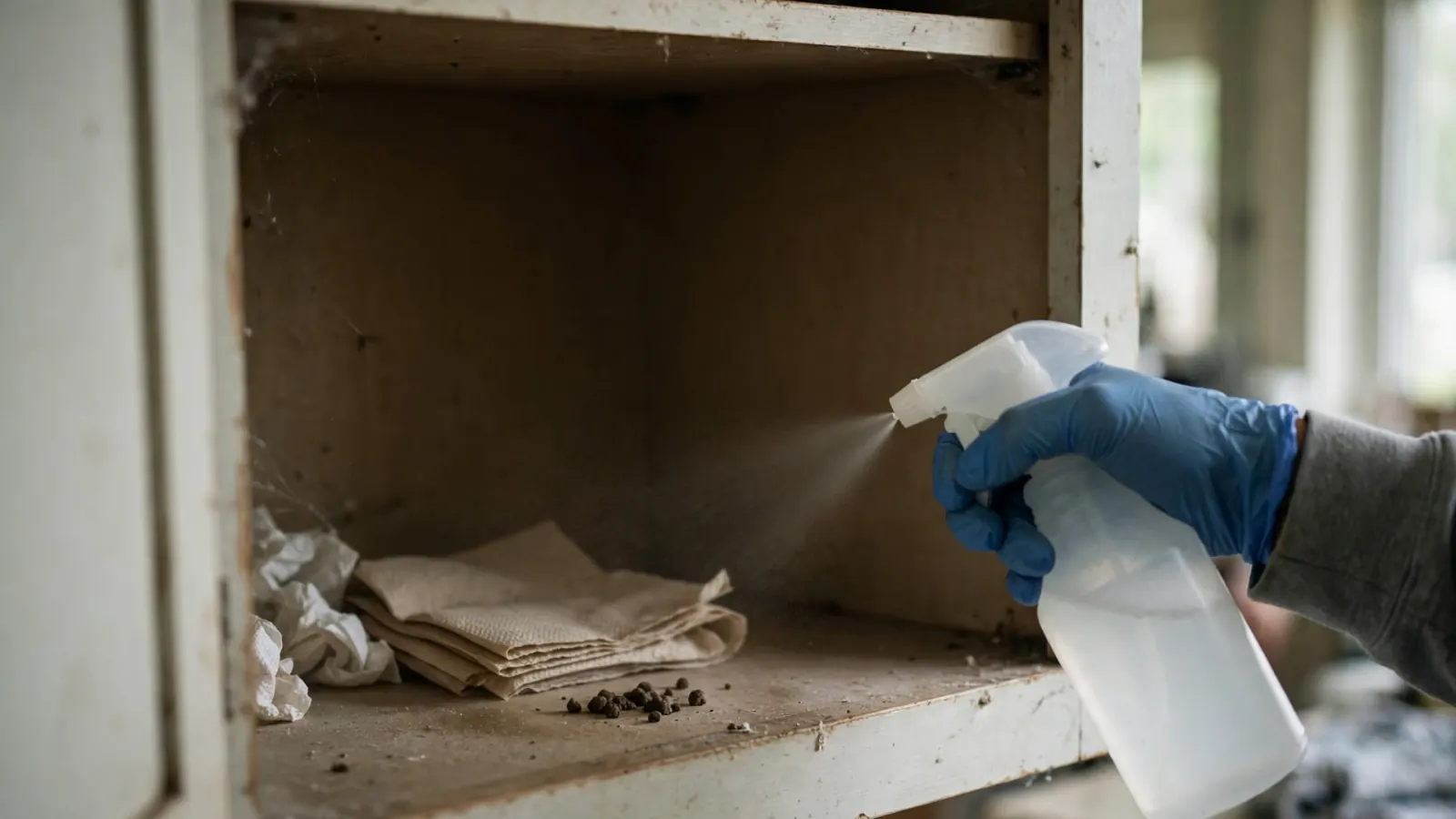
Air out the area for 30 minutes, put on rubber or plastic gloves, and spray the droppings and urine with an EPA-registered disinfectant or a fresh bleach solution (the CDC says 1½ cups of household bleach per gallon of water) until very wet. Let it soak for 5 minutes, wipe it up with paper towels, throw them away in a covered trash can, then disinfect the surfaces. Never sweep or vacuum droppings, because that can put virus particles into the air.
- Call (772) 218-9226
- Biohazard Cleanup
- Hoarding Cleanup
- Trauma & Crime Scene Cleanup
In this guide
- 1Why droppings need careful cleanup
- 2Step by step (CDC method)
- 3What not to do
- 4Dead rodents and nests
- 5Contaminated items
- 6Heavy infestations and enclosed spaces
- 7Keep rodents out
Why droppings need careful cleanup
Rodent urine, droppings and nesting materials can carry germs, including hantaviruses in some rodents. According to the CDC, the virus can get into the air when fresh urine, droppings or nesting materials are stirred up, and people can breathe it in. That is why the CDC's method focuses on wetting everything down first and never sweeping or vacuuming.
Step by step (CDC method)
- Open doors and windows and leave the area for 30 minutes before cleaning.
- Put on rubber or plastic gloves.
- Mix fresh disinfectant: an EPA-registered disinfectant, or 1½ cups of household bleach in 1 gallon of water.
- Spray urine and droppings until very wet and let them soak for 5 minutes, or as the product label directs.
- Wipe up with paper towels and put them in a covered trash can.
- Mop or sponge floors, counters, cabinets and drawers with disinfectant.
- Wash gloved hands, remove gloves, then wash bare hands with soap and warm water.
What not to do
- Do not sweep or vacuum droppings or nests.
- Do not touch droppings or dead rodents with bare hands.
- Do not mix bleach with ammonia or other cleaners.
- Do not start cleaning a closed-up space without airing it out first.
Dead rodents and nests
Spray dead rodents and nesting material with disinfectant and let them soak, then place them in a plastic bag, seal it, and place that bag in a second bag before throwing it in a covered trash can. Disinfect the area underneath. Afterward, remove gloves and wash hands thoroughly.
Dealing with this right now?
Call to be connected with an independent restoration company serving Fort Pierce and St. Lucie County.
Contaminated items
Hard surfaces can be disinfected. Bedding and clothing with droppings or urine can be washed in hot water with laundry detergent. Upholstered furniture, mattresses, carpet and insulation with heavy contamination are harder to clean; heavily soiled porous items are often discarded or professionally cleaned. Attic insulation with heavy rodent contamination is often removed.
Heavy infestations and enclosed spaces
The CDC calls for extra precautions in buildings with heavy rodent infestations, vacant homes with many rodents and places where rodent-borne disease is confirmed. That includes disposable coveralls, boots or shoe covers, gloves, goggles and a respirator, such as a half-mask respirator with HEPA filters. Heavy infestations in attics, crawl spaces, sheds and long-closed homes are a common reason to hire a biohazard cleanup company along with a pest control company.
| Situation | Usually |
|---|---|
| A few droppings in a cabinet or garage | DIY with the CDC method |
| Droppings throughout a closed-up seasonal home | Professional cleanup |
| Nests and urine in attic insulation | Professional cleanup and insulation removal |
| Ongoing activity | Pest control to find and seal entry points, then cleanup |
Keep rodents out
- Seal gaps and holes around pipes, vents and the roofline.
- Store food, including pet food, in sealed containers.
- Keep garbage in covered bins.
- Trim vegetation away from the house and roof.
- Remove clutter where rodents can nest.
Related services
Services that go with this guide
Biohazard Cleanup
Biohazard cleanup across St.
Hoarding Cleanup
Hoarding cleanup in Fort Pierce: planning with the family, sorting, removing biohazards like waste and pests, finding hidden water damage and repairs..
Trauma and Crime Scene Cleanup
Discreet cleanup after a death, suicide, injury or crime in Fort Pierce: when it can start, what is removed, how waste is handled and who may pay..
Guides
Keep reading
- What to Do When Someone Dies at Home in FloridaWhen someone dies at home in Florida: who to call for expected and unexpected deaths, the medical examiner's role, funeral steps and home cleanup.
- Is It Safe to Stay in a House With Water Damage?When it is safe to stay home after water damage and when to leave: electrical hazards, sewage, flood water, sagging ceilings, mold and drying gear.
FAQ
Questions people ask
Still unsure? Describe the problem on the phone and you will be connected with a restoration company serving your area.
How do I clean up mouse droppings safely?
Ventilate, wear gloves, soak with disinfectant for 5 minutes, wipe up with paper towels and disinfect the area. Never sweep or vacuum.
Why shouldn't I vacuum mouse droppings?
Vacuuming or sweeping can put virus particles into the air, where they can be breathed in.
What bleach ratio does the CDC recommend for rodent droppings?
1½ cups of household bleach per gallon of water, mixed fresh.
How long should disinfectant soak on droppings?
5 minutes, or the time on the product label.
Do I need a mask to clean mouse droppings?
For routine cleanup the CDC emphasizes gloves and wetting. For heavy infestations it recommends a respirator with HEPA filters.
Can mouse droppings make you sick?
Rodent droppings and urine can carry germs, including hantaviruses in some rodents.
How do I dispose of a dead mouse?
Spray it with disinfectant, let it soak, double-bag it and put it in a covered trash can.
Should I air out a room before cleaning droppings?
Yes. The CDC says to open doors and windows for 30 minutes first.
Can I wash clothes with mouse droppings on them?
Yes, in hot water with laundry detergent, wearing gloves to handle them.
Do I need to replace attic insulation after rodents?
Heavily contaminated insulation is often removed and replaced.
When should I hire a professional for rodent cleanup?
For heavy infestations, attics, crawl spaces or closed-up homes with widespread droppings.
Is rat droppings cleanup different from mouse droppings?
The same CDC cleanup method applies to both.
Can I use vinegar to clean mouse droppings?
The CDC recommends an EPA-registered disinfectant or a bleach solution.
How do I keep mice out of my house?
Seal entry points, store food in sealed containers and keep garbage covered.
Who cleans up heavy rodent contamination in Fort Pierce?
Call the number on this page to be connected with an independent biohazard cleanup company serving Fort Pierce.
Talk to a restoration company serving Fort Pierce
Free referral. No obligation to hire.