
Flood and storm guide
Returning Home After a Flood: Safety First, Then Cleanup
How to return home safely after a flood in St. Lucie County: structural, electrical, gas and generator hazards, what to discard and what to document.
Short answer
Short answer: Returning Home After a Flood: Safety First, Then Cleanup
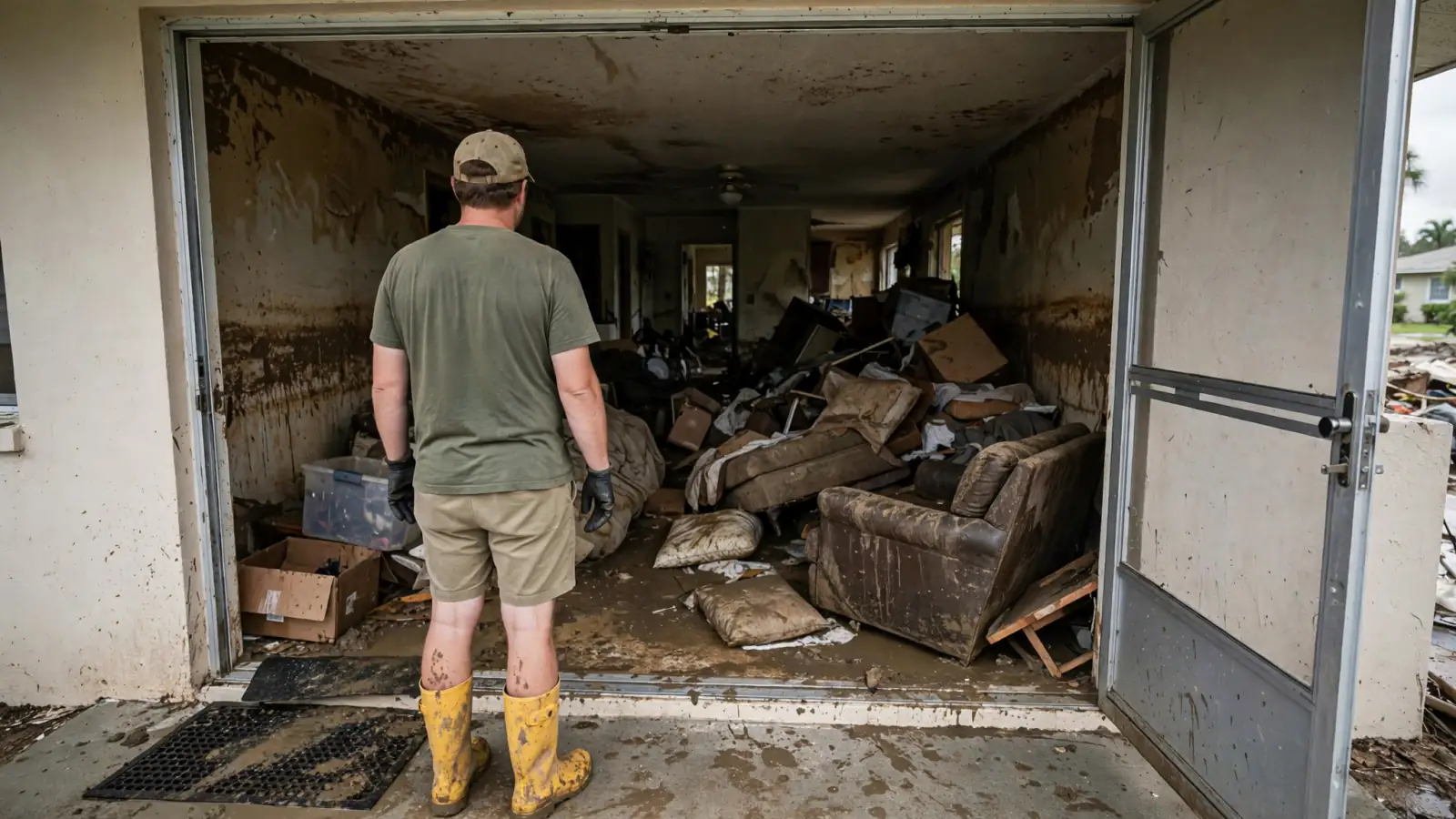
Return only when officials say it is safe, and do not enter a damaged home until it has been checked by a building inspector. Never turn power on or off while standing in water, leave immediately if you smell gas, and keep generators and other gas engines at least 20 feet from doors, windows and vents. Wear boots and gloves, photograph everything before cleanup, and remove soaked porous materials quickly to limit mold.
- Call (772) 218-9226
- Flood & Storm Cleanup
- Sewage & Toilet Overflow Cleanup
- Mold Remediation
In this guide
- 1Before you go in
- 2Electrical and gas safety
- 3Generators and carbon monoxide
- 4Document before you clean
- 5What to keep and what to throw away
- 6Drying out and preventing mold
- 7Protect your health
Before you go in
- Wait for local officials to say it is safe to return.
- Look for structural damage from outside: shifted walls, sagging roofs, foundation cracks. If in doubt, stay out until a building inspector checks it.
- If you smell gas or hear hissing, do not enter. Leave and call the gas company or fire department.
- Bring a flashlight, not candles or lighters.
- Wear rubber boots, waterproof gloves and eye protection.
Electrical and gas safety
The CDC advises never turning power on or off, or using an electrical tool or appliance, while standing in water, and having an electrician check the electrical system before the power is restored. Electrical equipment must be completely dry before use. If you smell gas, turn off the main gas valve only if you can do so safely, open windows, leave immediately and call the gas company or fire department. Do not use anything that could make a spark.
Generators and carbon monoxide
Carbon monoxide poisoning is a leading cause of illness after storms. The CDC says never to run a generator, pump, pressure washer or other gas engine inside a home, garage or other enclosed or partly enclosed space, and to keep it at least 20 feet from any door, window or vent. Use battery-powered CO alarms. Do not connect a generator to home wiring without an approved transfer switch or interrupt device.
Document before you clean
- Photograph and video every room, the waterline on walls and damaged belongings.
- Keep samples of carpet or flooring if your insurer asks for them.
- Contact your flood insurer and homeowners insurer promptly; they are usually separate policies.
- Keep receipts for supplies, emergency repairs and lodging.
- Write down conversations with adjusters, including names and dates.
Dealing with this right now?
Call to be connected with an independent restoration company serving Fort Pierce and St. Lucie County.
What to keep and what to throw away
Flood water is considered grossly contaminated (Category 3 under the IICRC S500 standard) because it can carry sewage, chemicals and bacteria. CDC cleanup guidance says to throw away items that cannot be cleaned and dried completely.
| Usually discarded | Often cleanable |
|---|---|
| Carpet and padding soaked by flood water | Hard furniture of metal, glass or solid wood |
| Mattresses, pillows and upholstered furniture | Dishes, glass and metal cookware after washing and sanitizing |
| Wet drywall and insulation below the waterline | Tile, concrete and other hard surfaces |
| Food, medicine and cosmetics that touched flood water | Clothing and linens that can be washed in hot water |
| Stuffed toys, books and paper goods | Important photos and documents (sometimes salvageable by freezing and specialist drying) |
Drying out and preventing mold
The CDC advises opening the home to air out for at least 30 minutes before staying inside, and assuming there is mold if the home was flooded and closed up for several days. Remove standing water, then use fans and dehumidifiers. Wet drywall is commonly cut 2 to 4 feet above the waterline (a "flood cut") so the wall cavity can be cleaned and dried. Have the HVAC system inspected before turning it on if it was flooded.
The EPA advises drying water-damaged materials within 24 to 48 hours to prevent mold growth, which is difficult after a large flood without professional equipment.
Protect your health
- Wash hands with clean water and soap after cleanup work.
- Keep children and pets out of flooded areas.
- Clean and cover any cuts; seek medical care for wounds exposed to flood water.
- Follow local boil-water notices if your water supply was affected.
- Take breaks; cleanup in Florida heat can cause heat illness.
Related services
Services that go with this guide
Flood & Storm Water Damage Cleanup
Flood and storm cleanup in Fort Pierce: hurricane and king-tide flooding, Category 3 water, what must be removed, flood insurance and drying..
Sewage Backup & Toilet Overflow Cleanup
Sewage backups and toilet overflows are Category 3 water.
Mold Remediation
Mold remediation across St.
Guides
Keep reading
- How to Find Your Flood Zone in St. Lucie CountyLook up your FEMA flood zone in St. Lucie County, learn what AE, VE and X zones mean, and why a low-risk zone can still flood.
- Is It Safe to Stay in a House With Water Damage?When it is safe to stay home after water damage and when to leave: electrical hazards, sewage, flood water, sagging ceilings, mold and drying gear.
FAQ
Questions people ask
Still unsure? Describe the problem on the phone and you will be connected with a restoration company serving your area.
When is it safe to return home after a flood?
When local officials say so, and once the home has been checked for structural, electrical and gas hazards.
Can I turn the power back on after a flood?
Not while standing in water. Have an electrician check the system before power is restored.
What do I do if I smell gas after a flood?
Leave immediately and call the gas company or fire department from outside. Do not create sparks.
How far should a generator be from my house?
The CDC says at least 20 feet from any door, window or vent, and never inside a home or garage.
Is flood water dangerous?
Yes. It can carry sewage, chemicals and bacteria. Wear boots and gloves and avoid skin contact.
What should I throw away after a flood?
Soaked carpet, pad, mattresses, upholstered furniture, wet drywall and insulation, and food that touched flood water.
Can I keep furniture after a flood?
Hard furniture of metal, glass or solid wood can often be cleaned. Upholstered pieces are usually discarded.
What is a flood cut?
Removing drywall a few feet above the waterline so the wall cavity can be cleaned and dried.
How soon does mold grow after a flood?
The EPA advises drying within 24 to 48 hours to prevent mold growth. The CDC says to assume mold if a home was flooded and closed up for days.
Should I run my AC after a flood?
Have a flooded HVAC system inspected and cleaned before turning it on.
Does homeowners insurance cover flood damage?
No. Flood damage is covered by a separate flood policy.
Should I photograph damage before cleanup?
Yes. Photograph and video every room and damaged item before anything is removed.
Can I clean up after a flood myself?
Small areas, possibly, with protective gear. Large floods usually need professional extraction, removal and drying.
What protective gear do I need for flood cleanup?
Rubber boots, waterproof gloves, eye protection and, for moldy areas, an N95 respirator.
Who helps with flood cleanup in Fort Pierce?
Call the number on this page to be connected with an independent restoration company serving Fort Pierce.
Talk to a restoration company serving Fort Pierce
Free referral. No obligation to hire.