
Mold guide
Does Bleach Kill Mold?
When bleach works on mold and when it does not, the CDC's safe mixing limit, why porous materials are removed, and safer cleanup steps.
Short answer
Short answer: Does Bleach Kill Mold?
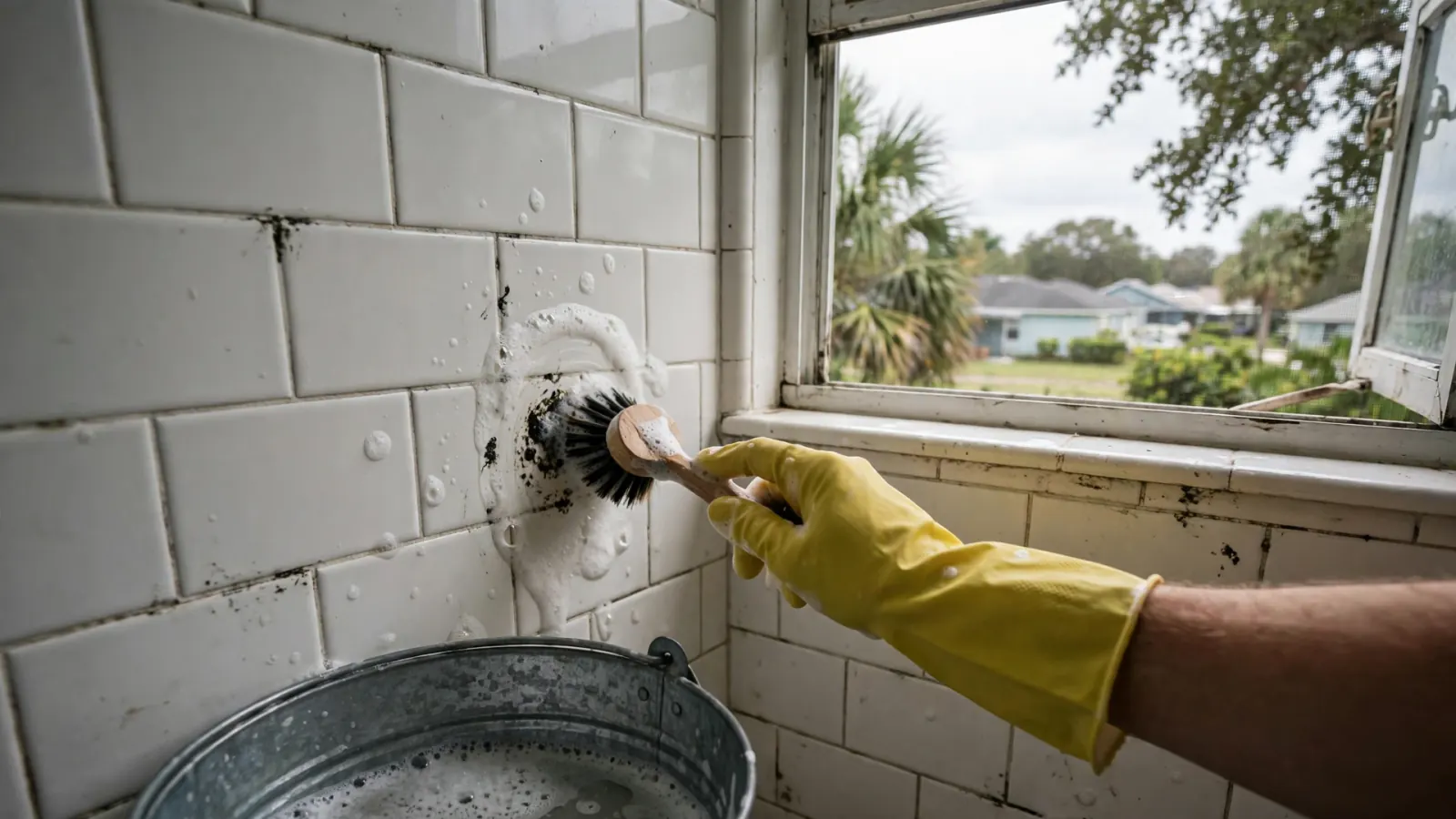
Bleach can kill mold on hard, non-porous surfaces like tile, sealed counters and glass, but it is not the cure-all many people expect. The EPA says killing mold is not enough, because dead mold can still cause reactions, and it does not recommend biocides like bleach as a routine practice in remediation. Clean hard surfaces with detergent and water, remove moldy porous materials, and fix the moisture source. If you use bleach, the CDC says no more than one cup per gallon of water, and never mix it with ammonia.
- Call (772) 218-9226
- Mold Remediation
- Black Mold Removal
- Mold Inspection & Testing
In this guide
- 1What bleach does and does not do
- 2What the guidance says
- 3Safe steps for a small area on a hard surface
- 4Never mix bleach
- 5Porous materials: remove, do not bleach
- 6When to call a professional
What bleach does and does not do
Household bleach can kill surface mold on hard, non-porous materials. It does not soak into porous materials like drywall and wood well enough to reach growth inside them, and it does nothing to stop the moisture that caused the mold. The EPA notes that dead mold can still be allergenic, so the goal is to remove mold, not just kill it.
What the guidance says
| Source | Guidance |
|---|---|
| EPA | Scrub mold off hard surfaces with detergent and water and dry completely; absorbent materials that are moldy may need to be thrown away |
| EPA (remediation guide) | Use of a biocide such as chlorine bleach is not recommended as a routine practice during mold remediation |
| CDC | If using bleach, use no more than 1 cup of household bleach in 1 gallon of water; never mix with ammonia or other cleaners; open windows and wear protective gear |
Safe steps for a small area on a hard surface
- Fix the water problem first.
- Open windows and ventilate the room.
- Wear waterproof gloves, eye protection and an N95 respirator.
- Scrub with detergent and water using a brush.
- If you use bleach, mix no more than 1 cup per gallon of water, apply, then rinse as directed.
- Dry the surface completely and keep watching for regrowth.
Dealing with this right now?
Call to be connected with an independent restoration company serving Fort Pierce and St. Lucie County.
Never mix bleach
Mixing bleach with ammonia or other household cleaners can produce dangerous toxic gases, as the CDC warns. Use one product at a time and rinse between products. Keep children and pets out of the area.
Porous materials: remove, do not bleach
Moldy drywall, ceiling tiles, carpet, pad, insulation and upholstered items usually need to be removed and replaced because mold can grow into them and cannot be fully cleaned out. Wood framing can often be cleaned, sanded and dried by professionals. Spraying bleach on moldy drywall and painting over it usually just hides the problem until it returns.
When to call a professional
The EPA suggests consulting its larger-cleanup guidance when the moldy area is more than about 10 square feet, and professional help is wise when mold followed sewage or flood water, when it is inside walls or the HVAC system, or when someone in the home has health concerns. In Florida, mold remediation is a licensed activity; ask for the remediator's license.
Related services
Services that go with this guide
Mold Remediation
Mold remediation across St.
Black Mold Removal
What black mold really is, why color doesn't decide the risk, when Florida requires a licensed remediator and how black mold is removed from homes..
Mold Inspection and Testing
What a Fort Pierce mold inspection or assessment includes, when testing helps, Florida's mold assessor license and why assessor and remediator differ..
Guides
Keep reading
- Mold vs. Mildew: How to Tell the DifferenceMold vs. mildew: how each looks, where they grow in Florida homes, how to clean surface mildew safely, and when growth signals a moisture problem.
- How Long Does Mold Take to Grow After Water Damage?How quickly mold can start after a leak or flood, why the EPA's 24 to 48 hour drying window matters, and early signs to watch for in Florida.
FAQ
Questions people ask
Still unsure? Describe the problem on the phone and you will be connected with a restoration company serving your area.
Does bleach kill mold?
It can kill surface mold on hard, non-porous surfaces, but it does not fix porous materials or the moisture problem.
What is the right bleach mixture for mold?
The CDC says no more than 1 cup of household bleach per gallon of water.
Can I use bleach on drywall mold?
Bleach does not reach mold growing inside drywall. Moldy drywall is usually removed and replaced.
Is it dangerous to mix bleach with other cleaners?
Yes. Mixing bleach with ammonia or other cleaners can produce toxic gas.
Does the EPA recommend bleach for mold?
The EPA recommends detergent and water on hard surfaces and does not recommend biocides as a routine remediation practice.
Does dead mold still cause problems?
Yes. The EPA notes dead mold can still cause allergic reactions, so it should be removed.
What should I wear when cleaning mold?
Waterproof gloves, eye protection and an N95 respirator.
Is vinegar better than bleach for mold?
Many people use vinegar on hard surfaces. The key steps are removing mold, drying and fixing moisture.
Can I bleach mold on wood?
Surface mold on sealed wood can be cleaned. Mold inside framing may need professional cleaning, sanding and drying.
Will mold come back after bleaching?
If the moisture problem remains, yes.
Can I paint over mold?
No. Remove the mold and fix the moisture first, or it will return under the paint.
How big a mold area can I clean myself?
Small areas, often. The EPA flags areas over about 10 square feet for its larger-cleanup guidance.
Should I use bleach after a flood?
Remove mud and debris first, clean with detergent and water, and if using bleach, follow the CDC's 1 cup per gallon limit.
Is mold remediation licensed in Florida?
Yes. Florida licenses mold remediators and mold assessors.
Who removes mold in Fort Pierce?
Call the number on this page to be connected with an independent licensed company serving Fort Pierce.
Talk to a restoration company serving Fort Pierce
Free referral. No obligation to hire.