
Mold guide
How Long Does Mold Take to Grow After Water Damage?
How quickly mold can start after a leak or flood, why the EPA's 24 to 48 hour drying window matters, and early signs to watch for in Florida.
Short answer
Short answer: How Long Does Mold Take to Grow After Water Damage?
Mold can begin growing on wet materials quickly, which is why the EPA advises drying water-damaged materials and areas within 24 to 48 hours to prevent mold growth. Visible colonies often take longer to appear, but by then growth may already be inside walls or under flooring. Warm, humid conditions like Fort Pierce's speed the process, so drying fast is the most effective prevention.
- Call (772) 218-9226
- Mold Remediation
- Mold Inspection & Testing
- Structural Drying
In this guide
- 1The 24 to 48 hour window
- 2What speeds mold growth
- 3Signs mold has started
- 4Materials and how they respond
- 5How to stop mold before it starts
- 6If mold has already grown
- 7Testing
The 24 to 48 hour window
Mold spores are present almost everywhere, indoors and out. They need moisture and something to feed on, such as the paper on drywall, wood, carpet backing or dust. When a leak or flood soaks those materials, the clock starts. The EPA's guidance is to dry water-damaged areas and items within 24 to 48 hours to prevent mold growth, and its commercial-building guidance notes that even materials dried within 48 hours may sometimes grow mold.
That is a prevention target, not a promise that mold appears at hour 49. How fast growth starts depends on the material, temperature, humidity and how wet things got.
What speeds mold growth
- Warmth: typical Florida indoor and outdoor temperatures suit many common molds.
- High humidity: the EPA recommends keeping indoor humidity below 60 percent, ideally 30 to 50 percent.
- Organic materials: drywall paper, wood, cardboard, carpet backing and ceiling tiles.
- Still air: closets, wall cavities and spaces behind furniture.
- Contaminated water: sewage and flood water add nutrients.
- A closed-up house: the CDC advises assuming mold is present if a home was flooded and closed up for several days.
Signs mold has started
- A musty, earthy odor, often the first clue.
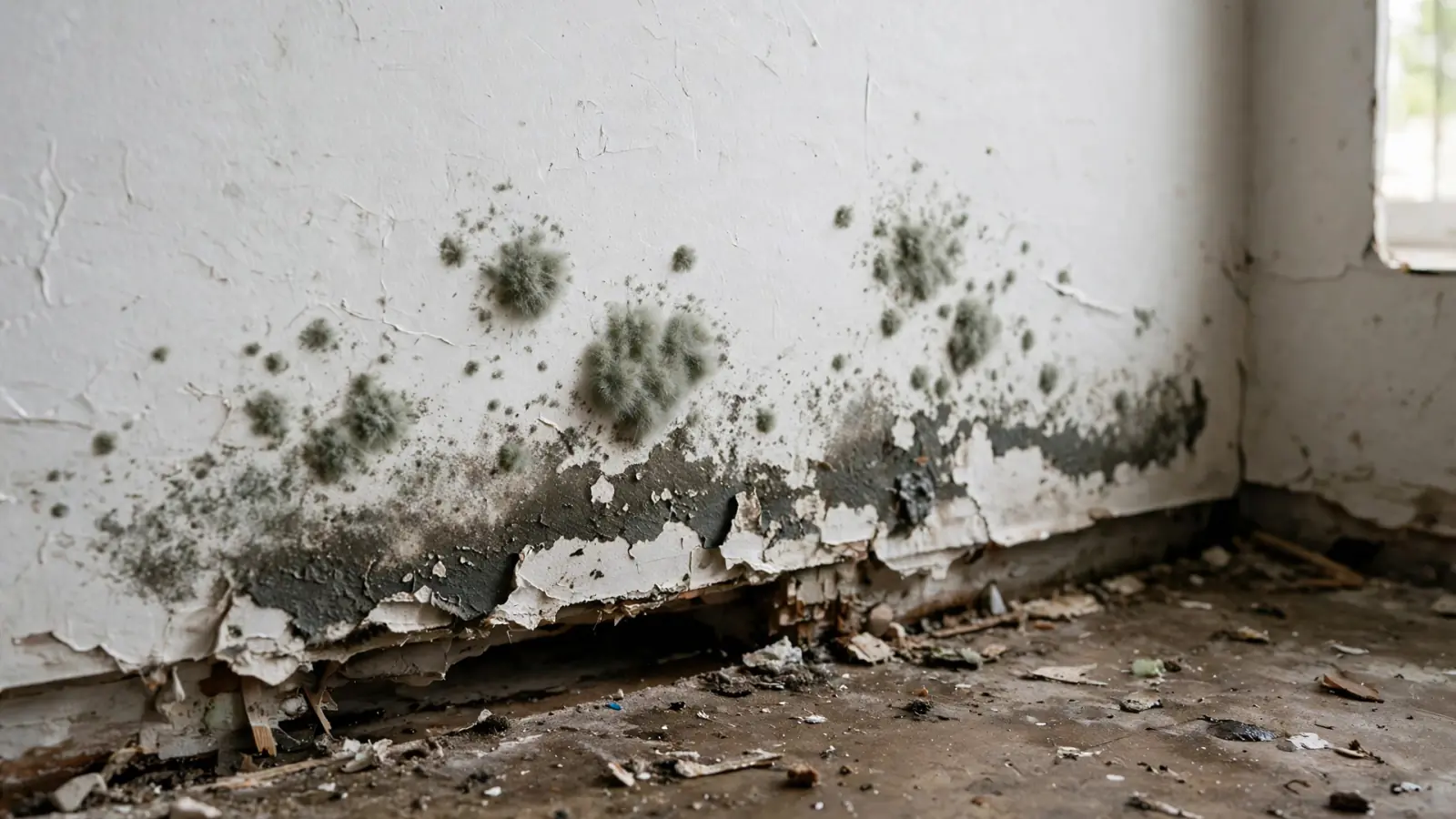
- Spots or fuzzy growth in black, green, white, gray or other colors.
- Discoloration that spreads or returns after cleaning.
- Paint that bubbles and darkens, or baseboards with dark marks.
- Allergy-like symptoms such as stuffy nose, wheezing or irritated eyes that improve when away from home; the CDC lists these as possible effects of mold.
Materials and how they respond
Porous materials are hardest to save once mold grows into them.
| Material | If dried quickly | If moldy |
|---|---|---|
| Drywall and ceiling tiles | Often saved | Usually cut out and replaced |
| Carpet and pad | Carpet often saved; pad often replaced | Usually discarded |
| Wood framing | Dried and monitored | Cleaned or sanded, dried, sometimes replaced |
| Hard surfaces (tile, metal, glass) | Cleaned | Cleaned with detergent and water |
Dealing with this right now?
Call to be connected with an independent restoration company serving Fort Pierce and St. Lucie County.
How to stop mold before it starts
- Stop the water source.
- Remove standing water right away.
- Move wet rugs, boxes and furniture out of the area.
- Run dehumidifiers and the AC; keep humid outdoor air out.
- Remove wet pad and soaked insulation.
- Have moisture levels measured so hidden wet areas are not missed.
If mold has already grown
The EPA suggests that if the moldy area is more than about 10 square feet, you consult its guidance on larger cleanups, and many homeowners hire a professional. Fix the moisture problem first, or the mold will return. In Florida, mold assessment and mold remediation are licensed activities under state law, so ask any company you hire for its license.
Testing
The EPA notes that if mold is visible, sampling is usually unnecessary, because the priority is removing it and fixing the moisture. Testing can help in specific situations, such as finding hidden mold, health concerns or post-remediation clearance. A licensed mold assessor can advise.
Related services
Services that go with this guide
Mold Remediation
Mold remediation across St.
Mold Inspection and Testing
What a Fort Pierce mold inspection or assessment includes, when testing helps, Florida's mold assessor license and why assessor and remediator differ..
Structural Drying & Dehumidification
How structural drying works in Fort Pierce's humid climate: air movers, dehumidifiers, daily moisture readings and drying logs insurers expect..
Guides
Keep reading
- How Long Does Water Damage Take to Dry?How long water damage takes to dry by severity, why Florida humidity slows drying, and how moisture readings confirm a home is dry before repairs.
- The Best Indoor Humidity to Prevent Mold in FloridaThe indoor humidity range the EPA recommends to prevent mold, how to measure it, and how Florida homes keep it down with AC and dehumidifiers.
- Does Bleach Kill Mold?When bleach works on mold and when it does not, the CDC's safe mixing limit, why porous materials are removed, and safer cleanup steps.
FAQ
Questions people ask
Still unsure? Describe the problem on the phone and you will be connected with a restoration company serving your area.
How long does it take for mold to grow after water damage?
Mold can start quickly, which is why the EPA advises drying wet materials within 24 to 48 hours to prevent growth.
Can mold grow in 24 hours?
Growth can begin quickly in warm, humid conditions, though visible colonies usually take longer to appear.
How long before mold is visible?
It varies. By the time it is visible, growth may already be inside walls or under flooring.
Does Florida humidity make mold grow faster?
Warm, humid conditions favor mold, which is why fast drying matters in Fort Pierce.
Will mold grow if I dry everything in 48 hours?
Drying quickly greatly reduces the risk, but the EPA notes some growth may still occur. Watch for odors and spots.
What does mold smell like?
Musty or earthy. A persistent musty odor is often the first sign.
Can mold grow behind walls after a leak?
Yes. Wall cavities stay damp and dark, which is why moisture readings matter.
What humidity prevents mold?
The EPA recommends below 60 percent, ideally 30 to 50 percent.
Do I need a mold test after water damage?
Often not if mold is visible. Testing can help find hidden mold or confirm cleanup.
Can I remove mold myself?
Small areas, often yes. The EPA suggests consulting its larger-cleanup guidance for areas over about 10 square feet.
Is mold remediation licensed in Florida?
Yes. Florida licenses mold assessors and mold remediators.
Can mold make you sick?
The CDC says mold can cause stuffy nose, wheezing and irritated eyes or skin, and more serious effects in some people.
Does insurance cover mold after water damage?
Many policies limit mold coverage. Coverage often depends on whether the original water damage was covered.
Will running the AC prevent mold?
It helps by removing moisture, but wet materials still need to be dried.
Who handles mold after water damage in Fort Pierce?
Call the number on this page to be connected with an independent licensed company serving Fort Pierce.
Talk to a restoration company serving Fort Pierce
Free referral. No obligation to hire.