
Mold guide
The Best Indoor Humidity to Prevent Mold in Florida
The indoor humidity range the EPA recommends to prevent mold, how to measure it, and how Florida homes keep it down with AC and dehumidifiers.
Short answer
Short answer: The Best Indoor Humidity to Prevent Mold in Florida
The EPA recommends keeping indoor relative humidity below 60 percent, ideally between 30 and 50 percent, to discourage mold. In a Florida home that usually means running the air conditioning consistently, using bathroom and kitchen exhaust fans, fixing leaks quickly and, where needed, adding a dehumidifier. An inexpensive hygrometer lets you check the number instead of guessing.
- Call (772) 218-9226
- Mold Remediation
- Mold Inspection & Testing
- AC & Air Handler Leaks
In this guide
- 1The target range
- 2Measure it
- 3Why Florida homes struggle
- 4Ways to bring humidity down
- 5Homes left empty
- 6Can humidity be too low?
- 7When high humidity has already caused damage
The target range
Relative humidity is how much moisture the air holds compared with the most it could hold at that temperature. The EPA's guidance is to keep indoor relative humidity below 60 percent, and ideally between 30 and 50 percent. Above that, condensation forms more easily on cool surfaces and mold, dust mites and mildew thrive.
Measure it
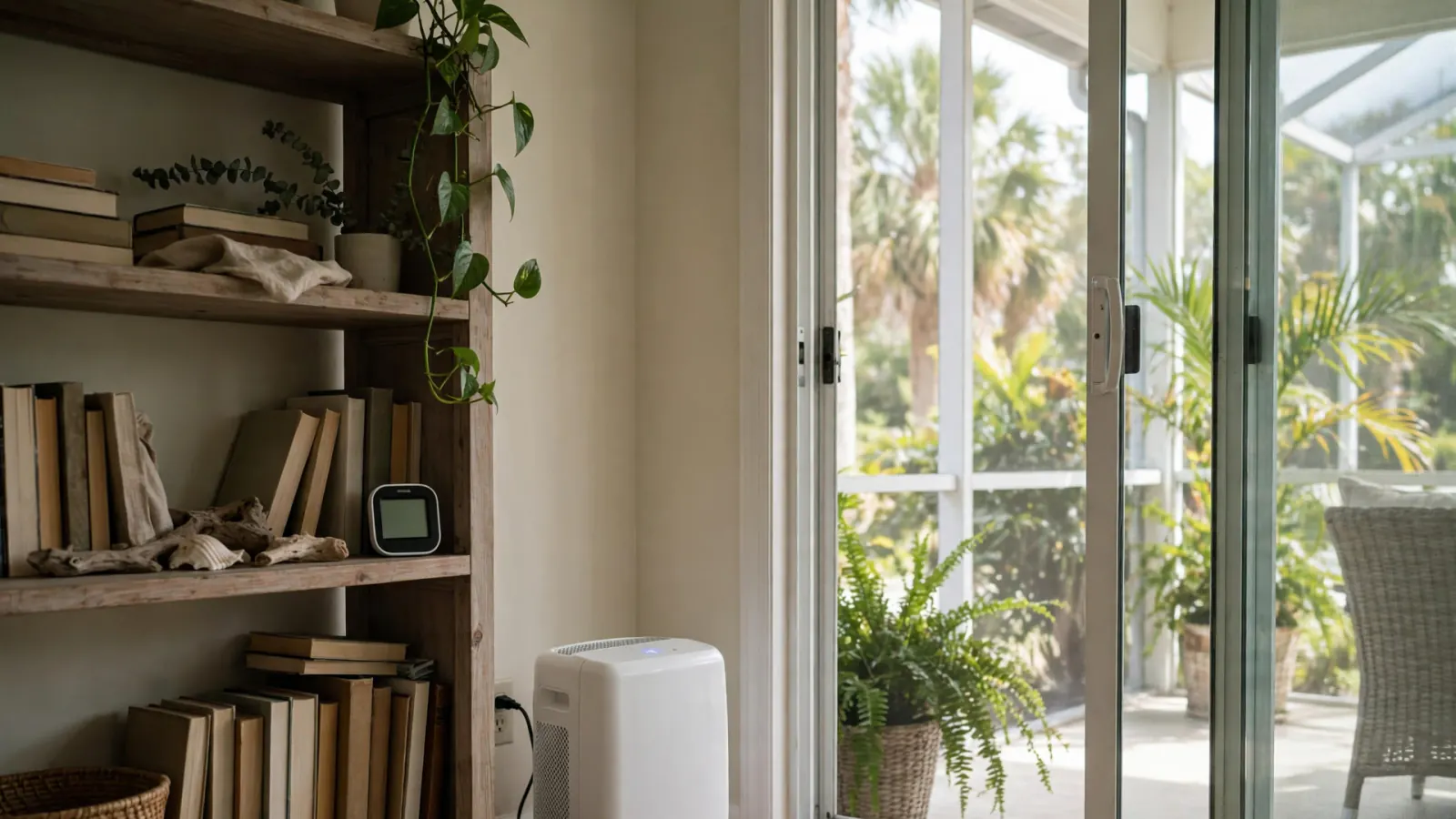
A hygrometer is a small, inexpensive device that shows relative humidity; many digital thermostats and indoor weather stations include one. Check several rooms, including closets and bathrooms, at different times of day. Readings that stay above 60 percent point to a problem worth fixing.
Why Florida homes struggle
- Outdoor air on the Treasure Coast is humid much of the year.
- Opening windows lets that humid air in.
- An oversized AC can cool quickly and shut off before removing enough moisture.
- Setting the thermostat very high or turning the AC off while away lets humidity build.
- Leaky ducts in a hot attic can pull in humid air.
- Showers, cooking, laundry and houseplants add moisture inside.
Ways to bring humidity down
| Fix | How it helps |
|---|---|
| Run the AC consistently | Air conditioners remove moisture as they cool |
| Keep the AC well maintained | Clean coils, filters and drain lines help it dehumidify |
| Use exhaust fans | Remove moisture at the source in bathrooms and kitchens |
| Add a dehumidifier | Useful in problem rooms, closets or when the AC alone cannot keep up |
| Keep windows closed on humid days | Stops humid outdoor air from entering |
| Fix leaks and drainage | Removes the water that feeds humidity and mold |
| Ask an HVAC pro about whole-home dehumidification | An option for homes that stay humid despite the basics |
Dealing with this right now?
Call to be connected with an independent restoration company serving Fort Pierce and St. Lucie County.
Homes left empty
Seasonal residents often close up Florida homes for months. Turning the AC off can let humidity climb and mold grow. Many HVAC contractors suggest leaving the AC on at a moderate setting or using a dehumidistat or humidity-control setting while away, and having someone check the home periodically. Ask your HVAC contractor what setting is right for your system.
Can humidity be too low?
Below about 30 percent, some people notice dry skin, irritated sinuses or static. That is rare in Florida homes most of the year, but the EPA's 30 to 50 percent range is a comfortable balance.
When high humidity has already caused damage
Musty odors, condensation on windows and vents, sweating ducts and mold on walls or closet items mean moisture has already built up. Fix the humidity source, then clean or remove affected materials. If mold covers a large area or is inside walls, a licensed mold remediator can help.
Related services
Services that go with this guide
Mold Remediation
Mold remediation across St.
Mold Inspection and Testing
What a Fort Pierce mold inspection or assessment includes, when testing helps, Florida's mold assessor license and why assessor and remediator differ..
AC & Air Handler Leak Water Damage
Clogged condensate lines and overflowing air handler pans are a common Fort Pierce leak source: what to do first, drying and preventing repeats..
Guides
Keep reading
- How to Prevent AC Condensate LeaksWhy AC air handlers leak water, how to keep the condensate drain clear, what overflow protection Florida code requires, and when to call a pro.
- Mold vs. Mildew: How to Tell the DifferenceMold vs. mildew: how each looks, where they grow in Florida homes, how to clean surface mildew safely, and when growth signals a moisture problem.
- How Long Does Mold Take to Grow After Water Damage?How quickly mold can start after a leak or flood, why the EPA's 24 to 48 hour drying window matters, and early signs to watch for in Florida.
FAQ
Questions people ask
Still unsure? Describe the problem on the phone and you will be connected with a restoration company serving your area.
What indoor humidity prevents mold?
The EPA recommends below 60 percent, ideally between 30 and 50 percent.
What is a good humidity level for a Florida home?
Aim for the EPA's 30 to 50 percent range, and keep it below 60 percent.
How do I measure humidity in my house?
Use a hygrometer, a small device that shows relative humidity.
Does air conditioning reduce humidity?
Yes. AC removes moisture as it cools, especially when properly sized and maintained.
Should I run a dehumidifier in Florida?
In rooms or homes that stay above 60 percent despite the AC, a dehumidifier can help.
Should I turn off my AC when I leave my Florida home?
Many HVAC contractors advise leaving it on at a moderate setting or using humidity control to prevent mold.
Why is my house humid even with the AC on?
An oversized system, leaky ducts, open windows or a maintenance issue can limit moisture removal. Ask an HVAC contractor.
Can high humidity cause mold?
Yes. Sustained high humidity and condensation can support mold growth.
Why do my windows sweat?
Cool glass meets humid indoor air. Lowering indoor humidity reduces condensation.
Do exhaust fans help with humidity?
Yes. Run bathroom fans during and after showers and kitchen fans while cooking.
Is 70 percent humidity too high indoors?
Yes. It is above the EPA's recommended maximum of 60 percent.
Can humidity be too low?
Below about 30 percent some people feel dry skin and sinuses, though this is uncommon in Florida.
Does a whole-home dehumidifier help?
It can for homes that stay humid. An HVAC contractor can tell you if it suits your system.
Do houseplants raise humidity?
They add some moisture. In a humid home, keep watering moderate.
Who handles mold from high humidity in Fort Pierce?
Call the number on this page to be connected with an independent licensed company serving Fort Pierce.
Talk to a restoration company serving Fort Pierce
Free referral. No obligation to hire.