
Leak prevention guide
How to Prevent AC Condensate Leaks
Why AC air handlers leak water, how to keep the condensate drain clear, what overflow protection Florida code requires, and when to call a pro.
Short answer
Short answer: How to Prevent AC Condensate Leaks
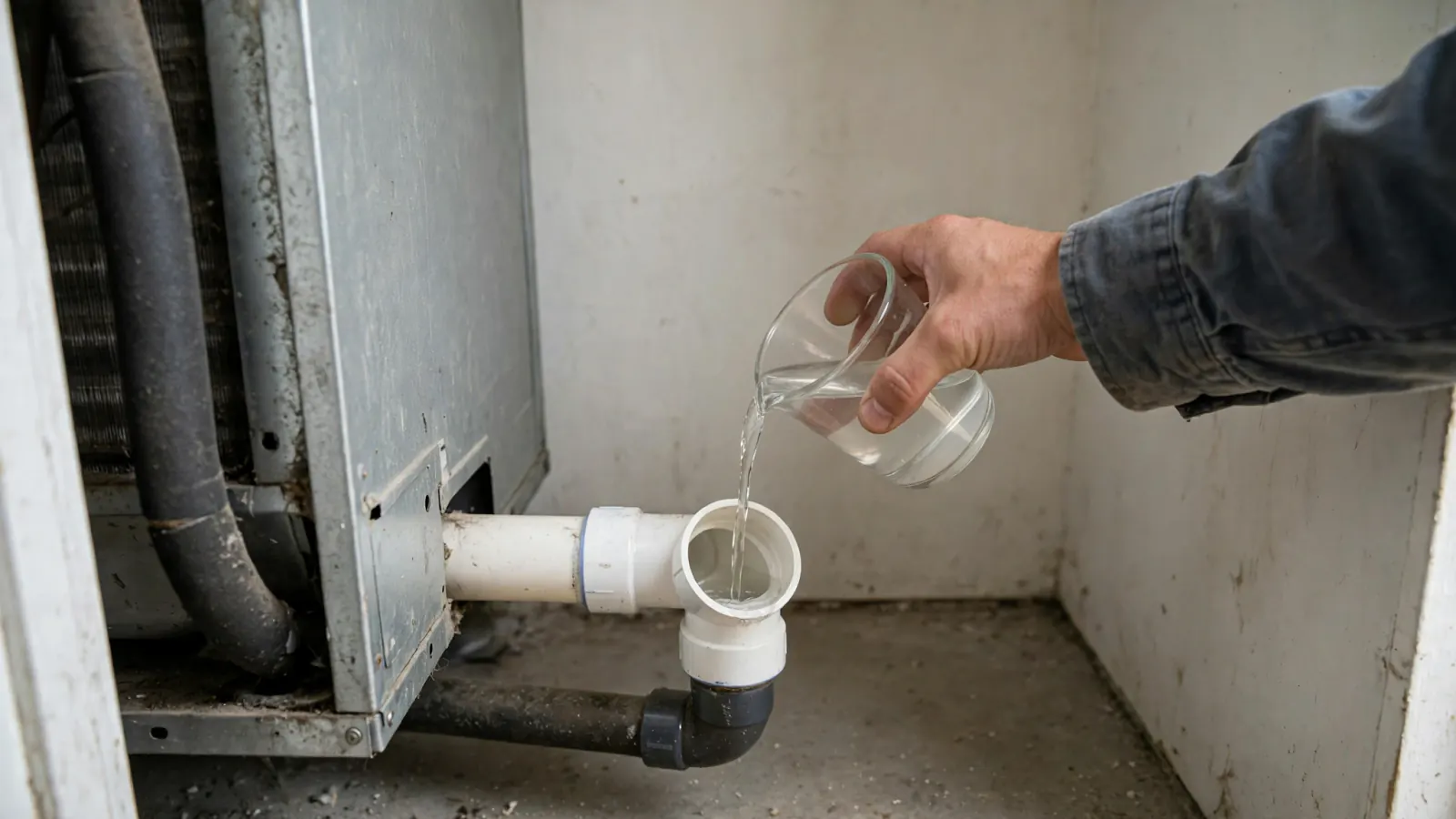
Most AC water leaks happen when the condensate drain line clogs with algae, sludge or debris and the drain pan overflows. Prevent them by changing filters on schedule, flushing the drain line regularly (many HVAC technicians suggest a cup of white vinegar through the cleanout every few months), keeping the overflow float switch working, and having the system serviced at least once a year.
- Call (772) 218-9226
- AC & Air Handler Leaks
- Mold Remediation
- Moisture Detection
In this guide
- 1Why Florida air conditioners make so much water
- 2Common causes of AC leaks
- 3What Florida code requires for overflow protection
- 4Simple maintenance homeowners can do
- 5Signs your AC drain is about to cause damage
- 6If your AC is already leaking
- 7When to call a professional
Why Florida air conditioners make so much water
An air conditioner removes moisture from the air as it cools. In a humid climate like Fort Pierce's, the coil can produce several gallons of condensate on a hot, sticky day. That water drips into a pan under the coil and leaves through a PVC drain line to the outside. Anything that slows that flow, such as algae growth in the line, a cracked pan or a disconnected fitting, can send water into closets, ceilings and floors.
Common causes of AC leaks
- Clogged condensate drain line: algae and sludge build up inside the pipe, especially in warm, humid months.
- Rusted or cracked drain pan under the coil.
- A dirty air filter, which can make the coil freeze and then overflow the pan when it thaws.
- A disconnected or poorly sloped drain line.
- A failed or missing float (overflow) switch.
- Low refrigerant, which can also cause coil icing; this needs a licensed technician.
What Florida code requires for overflow protection
Section 307.2.3 of the Florida Building Code, Mechanical, requires additional (auxiliary) protection where an overflow from the primary drain could damage the building, such as an air handler in an attic or above a finished ceiling. Typical methods are a secondary drain pan with its own drain to a visible spot, or a water-level detection device (float switch) that shuts the unit off before the pan overflows. Requirements and local amendments change between code editions, so confirm details with a licensed HVAC contractor or your building department.
A secondary drain that discharges somewhere visible, such as over a window, is designed to get your attention. If you see water dripping from that outlet, the primary line is likely clogged.
Simple maintenance homeowners can do
Turn the system off at the thermostat before working near the air handler.
- Change or clean the air filter on the schedule the filter manufacturer recommends, more often with pets or dust.
- Find the condensate cleanout (often a capped PVC tee near the air handler) and pour a cup of white vinegar or plain water through it every few months; many HVAC technicians recommend this, but follow your equipment manufacturer's guidance.
- Check that water drips freely from the outdoor end of the drain line while the AC runs.
- Look in the drain pan and around the air handler closet for standing water or rust.
- Test the float switch if you can reach it safely, or ask your technician to test it at service.
Dealing with this right now?
Call to be connected with an independent restoration company serving Fort Pierce and St. Lucie County.
Signs your AC drain is about to cause damage
- Water dripping from the secondary drain outlet outside.
- The AC shuts off unexpectedly, which can mean the float switch tripped.
- Water in the pan or on the floor of the air handler closet.
- Stains on the ceiling below an attic unit.
- A musty smell from vents or the AC closet.
If your AC is already leaking
- Turn the system off at the thermostat.
- Soak up standing water and protect flooring and belongings.
- Check and clear the drain line if you can do it safely, or call an HVAC technician.
- Check walls, baseboards and the ceiling below for wet drywall.
- If drywall, flooring or ceilings got wet, call a restoration company to dry them before mold starts.
When to call a professional
Call a licensed HVAC contractor for refrigerant problems, frozen coils, cracked pans, repeated clogs or an air handler in a hard-to-reach attic. Call a restoration company when water has reached walls, ceilings or floors, because hidden moisture in a humid climate can quickly lead to mold.
Related services
Services that go with this guide
AC & Air Handler Leak Water Damage
Clogged condensate lines and overflowing air handler pans are a common Fort Pierce leak source: what to do first, drying and preventing repeats..
Mold Remediation
Mold remediation across St.
Moisture Detection & Hidden Water Damage Assessment
Finding water you can't see in Fort Pierce homes: moisture meters, thermal imaging and moisture maps that show where water went and when it is dry..
Guides
Keep reading
- The Best Indoor Humidity to Prevent Mold in FloridaThe indoor humidity range the EPA recommends to prevent mold, how to measure it, and how Florida homes keep it down with AC and dehumidifiers.
- Signs of Hidden Water Damage in Walls, Floors and CeilingsWarning signs of hidden water damage in walls, floors and ceilings, what each one usually means, and how to confirm a leak before it spreads.
- What to Do When Your Ceiling Is LeakingWhat to do when your ceiling is leaking: protect people and belongings, handle a bulging ceiling safely, find the source and document it.
FAQ
Questions people ask
Still unsure? Describe the problem on the phone and you will be connected with a restoration company serving your area.
Why is my AC leaking water inside the house?
Most often because the condensate drain line is clogged and the drain pan is overflowing.
How do I unclog an AC condensate line?
Turn the AC off, then flush the line through the cleanout with water or vinegar, or use a wet vacuum on the outdoor end. Call an HVAC pro if it stays clogged.
How often should I clean my AC drain line in Florida?
Many HVAC technicians suggest flushing it every few months in Florida's humid climate, plus a professional check at annual service.
Is vinegar safe for AC drain lines?
Many technicians recommend plain white vinegar for PVC lines, but follow your equipment manufacturer's guidance.
What is an AC float switch?
A sensor that shuts off the system when water rises in the pan or line, before it overflows.
Why is water dripping from a pipe above my window?
That is often the secondary drain, which means the primary drain line is likely clogged.
Can a dirty air filter cause AC leaks?
Yes. Restricted airflow can freeze the coil, and the melting ice can overflow the drain pan.
Does Florida code require an AC overflow switch?
Where an overflow could damage the building, the Florida Building Code requires auxiliary protection such as a secondary pan or a water-level shut-off device.
Can an AC leak cause mold?
Yes. Wet drywall, insulation and flooring in a humid home can support mold growth within a day or two.
Should I turn off my AC if it is leaking?
Yes, turn it off at the thermostat until the drain problem is fixed.
How much water does an AC make in Florida?
On hot, humid days a residential system can produce several gallons of condensate.
Can I fix an AC leak myself?
You can often clear a clogged drain line. Refrigerant, frozen coils and cracked pans need a licensed technician.
Does homeowners insurance cover AC leak damage?
Sudden water damage is commonly covered, but repeated leaks or lack of maintenance may be excluded. Check your policy.
How do I know if water got into my walls from the AC?
Look for soft or stained drywall and swollen baseboards near the AC closet, and confirm with a moisture meter.
Who dries AC leak water damage in Fort Pierce?
Call the number on this page to be connected with an independent restoration company serving Fort Pierce.
Talk to a restoration company serving Fort Pierce
Free referral. No obligation to hire.