
Water damage guide
Signs of Hidden Water Damage in Walls, Floors and Ceilings
Warning signs of hidden water damage in walls, floors and ceilings, what each one usually means, and how to confirm a leak before it spreads.
Short answer
Short answer: Signs of Hidden Water Damage in Walls, Floors and Ceilings
Hidden water damage usually shows up as indirect clues: stains or discoloration, bubbling or peeling paint, swollen baseboards, soft or warped floors, a musty smell, or a water bill that rises for no reason. One sign alone can have other causes, so the reliable next step is a moisture check with meters or thermal imaging to find where the water is and where it is coming from.
- Call (772) 218-9226
- Moisture Detection
- Burst Pipes & Plumbing Leaks
- Mold Inspection & Testing
In this guide
- 1Signs on walls
- 2Signs on floors
- 3Signs on ceilings
- 4Signs you can smell or measure
- 5How to check for a hidden leak yourself
- 6How professionals find it
- 7When to act quickly
Signs on walls
Water inside a wall cavity soaks the back of the drywall first, so the surface changes before you ever see a drip.
- Yellow or brown stains, often with a darker edge, that slowly grow.
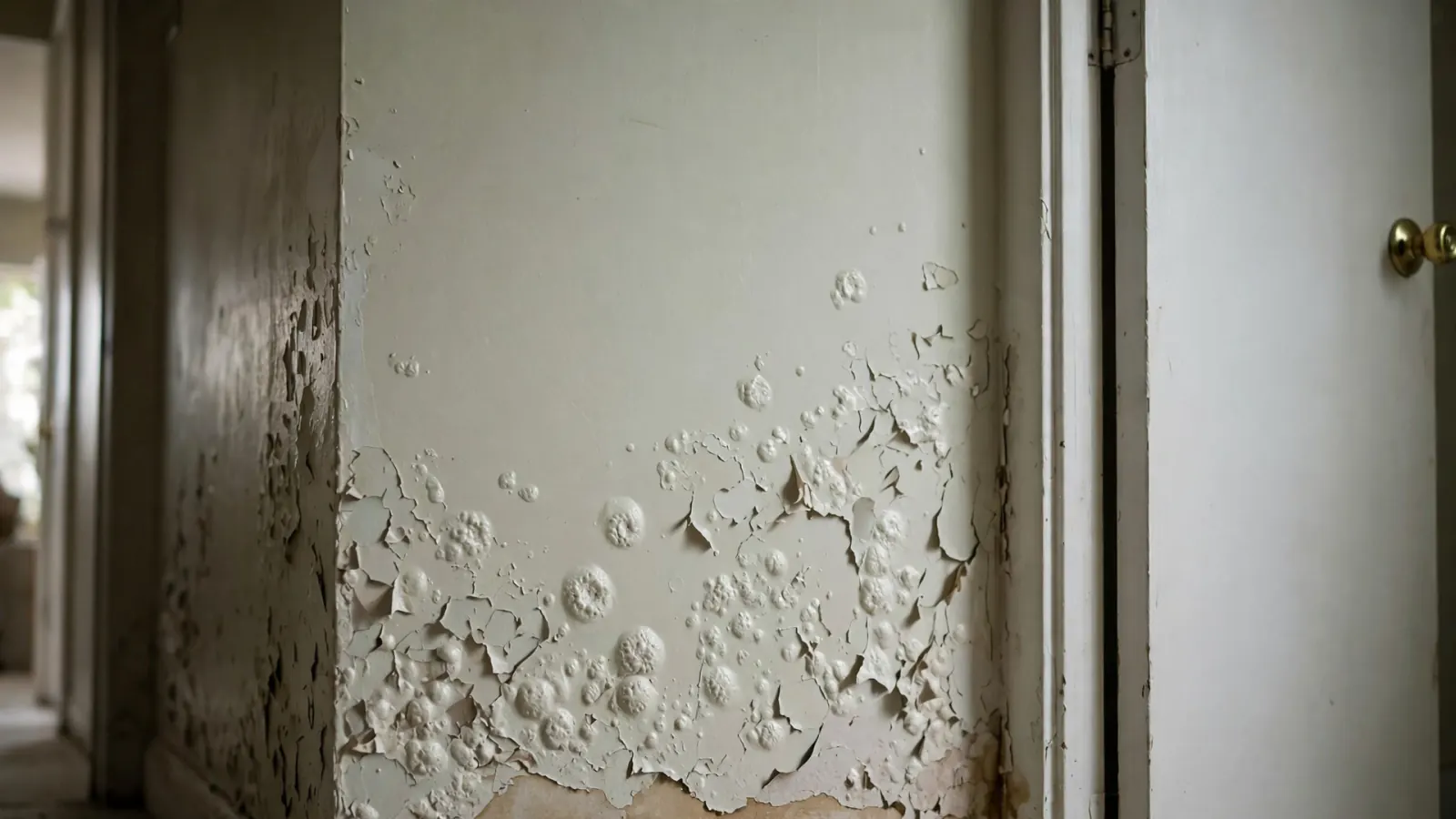
- Paint that bubbles, blisters or peels away from the wall.
- Drywall that looks rippled when light hits it at a low angle, or feels soft when pressed.
- Baseboards that swell, separate from the wall or have dark marks along the bottom.
- Wallpaper that lifts at the seams.
Signs on floors
Floors often reveal slow leaks from appliances, plumbing under slabs or water traveling from a nearby wall.
- Hardwood or laminate that cups (edges higher than the center), crowns or buckles.
- Tile that loosens or grout that darkens and stays damp.
- A soft, spongy spot near a toilet, tub, dishwasher or exterior wall.
- Carpet that feels damp or smells musty in one area.
- A warm spot on a tile or concrete floor, which can point to a hot-water slab leak.
Signs on ceilings
Ceiling stains usually come from a roof leak, an AC air handler or drain line in the attic, or plumbing in the floor above. In Florida homes with attic air handlers, a clogged condensate line is a common culprit.
- Circular or irregular brown rings that reappear after painting.
- A sagging or bulging section of drywall, which can hold a significant amount of water and should be treated as urgent.
- Popcorn or textured ceiling that loosens or falls in one area.
- Drips around light fixtures or ceiling vents.
Signs you can smell or measure
Some of the earliest clues are not visible at all.
- A persistent musty or earthy odor in one room, closet or cabinet.
- A water bill that rises without a change in household use.
- The water meter moving when every fixture in the house is off.
- Higher humidity or condensation in one area of the home.
- Visible mold in places that should be dry.
Dealing with this right now?
Call to be connected with an independent restoration company serving Fort Pierce and St. Lucie County.
How to check for a hidden leak yourself
These simple checks help you decide whether to call a plumber, a restoration company or both.
- Turn off every faucet and appliance, then watch the water meter for 15 to 30 minutes. If it moves, water is going somewhere.
- Check under sinks, behind the toilet, around the water heater and in the AC closet with a flashlight.
- Feel baseboards and the bottom of drywall near bathrooms and kitchens for softness.
- Look at the ceiling below bathrooms and below the attic air handler.
- Use your nose: musty smells are often strongest near the source.
How professionals find it
Restoration technicians and plumbers use pin and pinless moisture meters, thermal imaging cameras that show cooler wet areas, and moisture mapping to trace water back toward its source. Plumbers may also pressure-test lines or use acoustic leak detection for slab leaks.
Finding the source matters as much as drying. If the leak is not fixed, the damage and any mold will come back.
When to act quickly
Call promptly if a ceiling is sagging, if water is near electrical fixtures, if you smell sewage, if a stain is growing day by day, or if you see mold. The EPA advises drying wet materials within 24 to 48 hours to prevent mold growth, and hidden leaks often have already passed that window.
Related services
Services that go with this guide
Moisture Detection & Hidden Water Damage Assessment
Finding water you can't see in Fort Pierce homes: moisture meters, thermal imaging and moisture maps that show where water went and when it is dry..
Burst Pipe & Plumbing Leak Water Damage
Burst supply lines, slab leaks and hidden plumbing leaks in Fort Pierce: what to do first, how cleanup and drying work and what insurance often covers..
Mold Inspection and Testing
What a Fort Pierce mold inspection or assessment includes, when testing helps, Florida's mold assessor license and why assessor and remediator differ..
Guides
Keep reading
- Signs of a Slab Leak and What to Do NextHow to spot a slab leak in a Florida home: warm floor spots, running water sounds, high bills and damp flooring, plus how leaks are found and fixed.
- How Long Does Water Damage Take to Dry?How long water damage takes to dry by severity, why Florida humidity slows drying, and how moisture readings confirm a home is dry before repairs.
- How to Prevent AC Condensate LeaksWhy AC air handlers leak water, how to keep the condensate drain clear, what overflow protection Florida code requires, and when to call a pro.
- What to Do When Your Ceiling Is LeakingWhat to do when your ceiling is leaking: protect people and belongings, handle a bulging ceiling safely, find the source and document it.
FAQ
Questions people ask
Still unsure? Describe the problem on the phone and you will be connected with a restoration company serving your area.
What are the first signs of water damage in a wall?
Stains, bubbling or peeling paint, swollen baseboards and a musty smell are the most common early signs.
How do I know if water is leaking inside my walls?
Watch the water meter with everything turned off, look for stains and soft drywall, and confirm with a moisture meter or thermal imaging.
What does water damage on a ceiling look like?
Brown or yellow rings, bubbling paint, sagging drywall or drips around fixtures.
Can water damage be hidden behind tile?
Yes. Water can travel under tile and through grout, showing up as loose tiles, dark grout or a musty smell.
Why does my house smell musty but I see no leak?
Moisture may be trapped in a wall, under flooring or in the AC system. A moisture check can locate it.
Can a high water bill mean a hidden leak?
Yes. A bill that rises without a change in use is a common sign of a leak, including slab leaks.
How do I check my water meter for a leak?
Turn off all water use, note the meter reading or leak indicator, and check again after 15 to 30 minutes.
Do ceiling stains always mean a roof leak?
No. In Florida homes, AC condensate lines in the attic and plumbing above are frequent causes too.
Is a sagging ceiling dangerous?
It can be. Wet drywall is heavy and can collapse. Keep people away and call for help.
Can I paint over a water stain?
Not until the leak is fixed and the area is confirmed dry. Otherwise the stain returns and moisture stays trapped.
Does homeowners insurance cover hidden water damage?
It depends on the policy. Long-term or repeated leaks are often excluded, while sudden leaks are commonly covered. Read your policy.
What tools find hidden water damage?
Moisture meters, thermal imaging cameras and, for plumbing, pressure tests and acoustic leak detection.
Can hidden water damage cause mold?
Yes. Materials that stay wet for more than a day or two can support mold growth.
Should I call a plumber or a restoration company first?
If water is actively leaking, a plumber to stop it. If materials are wet, a restoration company to dry them. Often you need both.
Who checks for hidden water damage in Fort Pierce?
Call the number on this page to be connected with an independent restoration company that serves Fort Pierce.
Talk to a restoration company serving Fort Pierce
Free referral. No obligation to hire.