
Water damage guide
What to Do When Your Ceiling Is Leaking
What to do when your ceiling is leaking: protect people and belongings, handle a bulging ceiling safely, find the source and document it.
Short answer
Short answer: What to Do When Your Ceiling Is Leaking
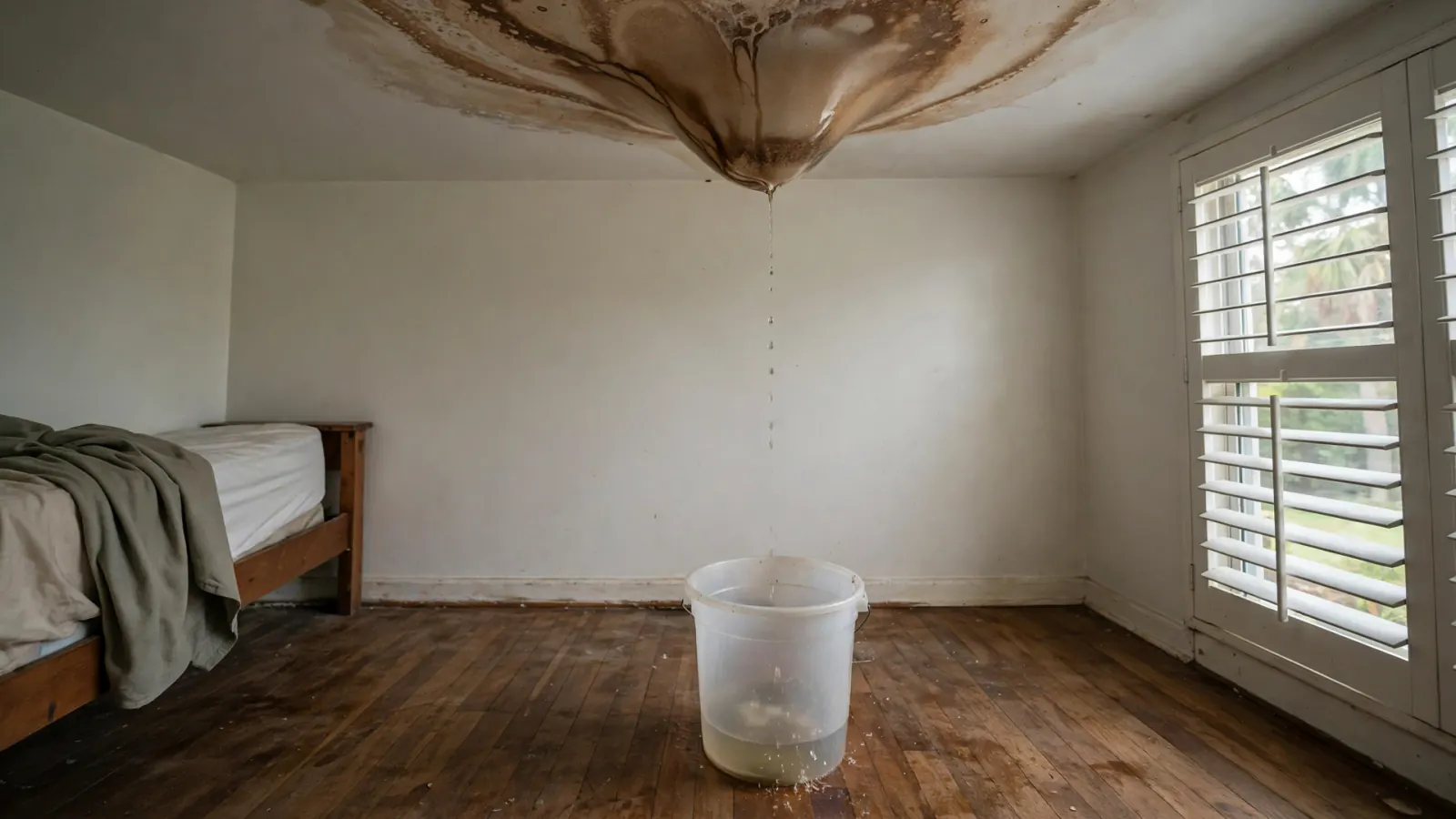
Move people and belongings away, put a bucket under the drip, and turn off power to any light fixture or fan near the leak at the breaker. If the ceiling is bulging with water, keep everyone out from under it. Then find the source: in Florida homes it is usually the roof, an attic AC unit or its drain line, or plumbing above. Photograph everything, stop the source, and get the wet ceiling dried before mold starts.
- Call (772) 218-9226
- Ceiling Damage & Roof Leaks
- AC & Air Handler Leaks
- Drywall & Wall Damage
In this guide
- 1First five minutes
- 2A bulging ceiling
- 3Finding the source
- 4Roof leaks during a storm
- 5Document it before cleanup
- 6Drying and repairing the ceiling
- 7When to call for help
First five minutes
- Move people, pets, electronics and furniture out from under the leak.
- Put a bucket or trash can under the drip and towels around it.
- If water is near a light fixture, ceiling fan or outlet, switch that circuit off at the breaker from a dry spot.
- If the ceiling is sagging or bulging, keep everyone out from under it.
- If the leak is from plumbing, shut off the water supply.
- If the AC is the source, turn the system off at the thermostat.
A bulging ceiling
Water can pool on top of drywall and make it sag. Wet drywall is heavy and can give way. Some contractors relieve a small, low bulge by poking a small hole at its lowest point with a screwdriver so water drains into a bucket in a controlled way, but this is not a job for a ladder under a large or badly sagging ceiling. If the bulge is large, the drywall is cracking, or you cannot reach it safely, stay out of the room and call for help.
Finding the source
Where the stain sits gives you a strong clue.
| Stain location | Common sources |
|---|---|
| Near an exterior wall or below a roof valley, worse during rain | Roof leak, flashing, damaged shingles or tile |
| Near the AC closet or the attic air handler, worse on hot days | Clogged condensate drain line or overflowing drain pan |
| Below a bathroom | Toilet seal, tub or shower drain, supply line |
| Around a vent or light fixture in a dry spell | Condensation on ducts or a leaking AC component |
| After a hurricane or tropical storm | Wind-driven rain, roof damage, soffits or vents |
Roof leaks during a storm
Do not go on the roof during wind, rain or lightning. Catch the water inside and wait until conditions are safe. After the storm, a roofer can tarp or repair the damaged area. If the leak followed a named storm, document the damage promptly and contact your insurer; Florida insurance policies have deadlines for reporting claims.
Dealing with this right now?
Call to be connected with an independent restoration company serving Fort Pierce and St. Lucie County.
Document it before cleanup
- Photos and video of the stain, the drip, the source and any damaged belongings.
- The date and time you noticed it.
- Receipts for buckets, tarps and emergency repairs.
- Any reports from the roofer, plumber or HVAC technician that found the cause.
Drying and repairing the ceiling
Ceiling drywall that got only slightly wet from clean water can often be dried in place with air movers and dehumidifiers, and attic insulation above it should be checked too. Drywall that sagged, crumbled or stayed wet for more than a day or two is usually cut out and replaced. Wet blown-in or batt insulation often has to be removed because it holds water and dries poorly.
Restoration crews confirm with moisture readings that the ceiling, framing and insulation are dry before patching and painting. Painting over a stain before the area is dry can trap moisture and the stain will come back.
When to call for help
Call a restoration company if the ceiling is sagging, if water reached walls or flooring below, if insulation got wet, if the stain is large, or if you smell a musty odor. Call a roofer, plumber or HVAC contractor to fix the source.
Related services
Services that go with this guide
Roof Leak & Ceiling Water Damage
Water stains, sagging ceilings and wet attic insulation after a Fort Pierce roof leak or storm: what to do first, drying, repairs and insurance..
AC & Air Handler Leak Water Damage
Clogged condensate lines and overflowing air handler pans are a common Fort Pierce leak source: what to do first, drying and preventing repeats..
Drywall & Wall Water Damage
Wet drywall after a Fort Pierce leak or flood: when it can be dried in place, when it must be cut out, and how flood cuts are repaired..
Guides
Keep reading
- How to Prevent AC Condensate LeaksWhy AC air handlers leak water, how to keep the condensate drain clear, what overflow protection Florida code requires, and when to call a pro.
- Signs of Hidden Water Damage in Walls, Floors and CeilingsWarning signs of hidden water damage in walls, floors and ceilings, what each one usually means, and how to confirm a leak before it spreads.
FAQ
Questions people ask
Still unsure? Describe the problem on the phone and you will be connected with a restoration company serving your area.
What should I do first when my ceiling leaks?
Move people and belongings away, catch the water, and turn off power to nearby fixtures at the breaker.
Is a leaking ceiling an emergency?
It can be, especially if the ceiling is sagging or water is near electrical fixtures.
Should I poke a hole in a bulging ceiling?
Some contractors drain a small, low bulge through a small hole into a bucket. Do not stand under a large or cracking bulge; call for help instead.
Why is my ceiling leaking when it is not raining?
In Florida, an attic AC drain line or plumbing above is a common cause.
Can a ceiling collapse from a leak?
Yes. Wet drywall is heavy and can fall, which is why you should stay out from under a sagging ceiling.
Can I go on my roof to stop a leak?
Not during wind, rain or lightning. Wait for safe conditions or call a roofer.
Can water-damaged ceiling drywall be dried?
Slightly wet drywall from clean water often can. Sagging or crumbling drywall is usually replaced.
Does wet attic insulation need to be replaced?
Often, because it holds water and dries poorly.
Can I paint over a ceiling water stain?
Only after the source is fixed and the area is dry, using a stain-blocking primer.
Does homeowners insurance cover a leaking ceiling?
Sudden leaks are commonly covered, but wear and tear and long-term leaks are often excluded. Check your policy.
How do I know if the leak is from the AC?
Check the drain pan and the condensate line near the air handler, and look for water from the secondary drain outlet outside.
How long does a wet ceiling take to dry?
Often a few days with equipment, longer if insulation is wet.
Can a leaking ceiling cause mold?
Yes, if drywall or insulation stays wet for more than a day or two.
Who fixes the source of the leak?
A roofer, plumber or HVAC contractor, depending on the cause.
Who repairs ceiling water damage in Fort Pierce?
Call the number on this page to be connected with an independent restoration company serving Fort Pierce.
Talk to a restoration company serving Fort Pierce
Free referral. No obligation to hire.